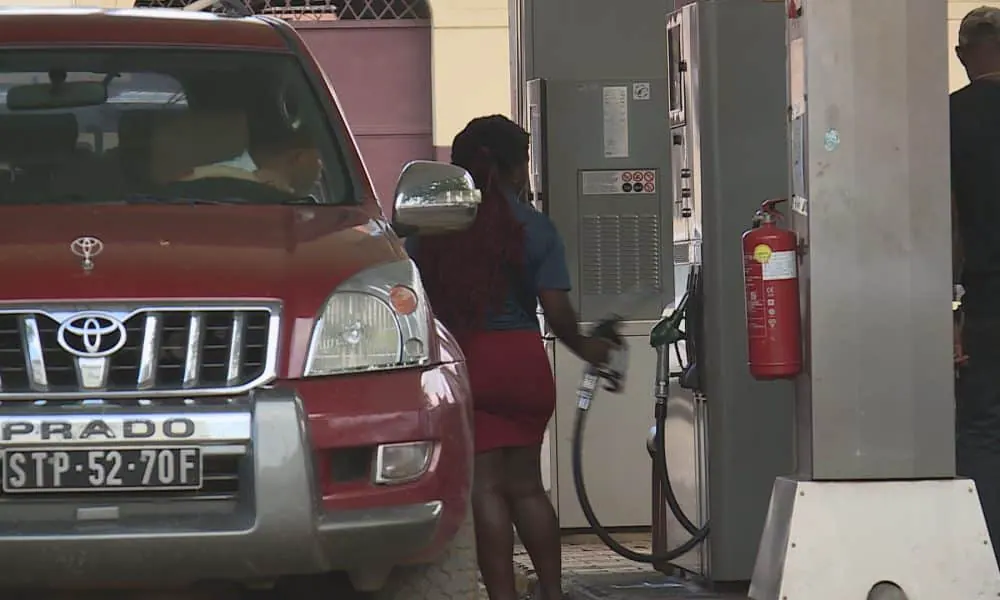
A prolonged fuel crisis has gripped Sao Tome and Principe, with severe consequences for the economy and daily life. Claudino Sousa, a four-year motorcycle taxi driver, laments the scarcity of gasoline at fuel stations, forcing him to rely on the parallel market where prices are triple the official rate. He buys fuel at 100 dobras per liter to maintain his client base. This crisis extends beyond gasoline, as the shortage of domestic petroleum aggravates difficulties for thousands of families, especially those relying on it for daily meals.
The shortage of fuel has significantly impacted the livelihoods of many, particularly women. Neyde Bandeira, a market vendor, describes a scene of growing distress. With transportation costs soaring, she hasn't cooked at home in two days. The rain has made charcoal unusable, and when petroleum appears on the black market, it's sold at 40 or 50 dobras per liter. Many mothers find the situation particularly distressing, as not all can afford gas, which they see as a luxury for the wealthy, not the poor.
As prices for available alternatives rise, people are forced to resort to using firewood or charcoal, which have also increased in price. Elka da Cruz notes that while firewood and charcoal prices have gone up, salaries have not. The effects of the shortage are evident in the capital's daily life, with reduced vehicle and passenger movement. Claudino Sousa observes that while some taxis are seen in the morning, they disappear in the afternoon.
For many citizens, the fuel crisis signals a worsening economic situation in the country. Elka da Cruz believes Sao Tome and Principe is sinking deeper, having hit rock bottom. As a key regulator of prices, fuel scarcity has driven up transportation and distribution costs, contributing to a general increase in prices of goods and services across the archipelago.
The crisis is taking a toll on the most vulnerable populations. With limited access to affordable fuel, families struggle to prepare meals, and the economic strain is palpable. The situation is further complicated by the lack of viable alternatives, leaving many to cope with the rising costs of basic necessities.
The fuel shortage has become a recurring issue in Sao Tome and Principe, with long-term implications for the economy and social stability. Efforts to address the crisis are necessary to mitigate its effects on the population. The government and other stakeholders must work together to find a solution to this pressing issue.
The economic and social impacts of the fuel crisis are widespread, affecting various sectors and populations. As the situation continues to unfold, it is essential to monitor developments and assess the effectiveness of any measures implemented to address the crisis. The well-being of the population depends on finding a sustainable solution to this critical issue.
Key points
- The fuel shortage has driven up costs of transportation and distribution, contributing to a general increase in prices of goods and services.
- Many families, especially women, are severely affected by the shortage of domestic petroleum, struggling to prepare daily meals.
- The crisis has significant implications for the economy and social stability, necessitating efforts from the government and stakeholders to find a solution.