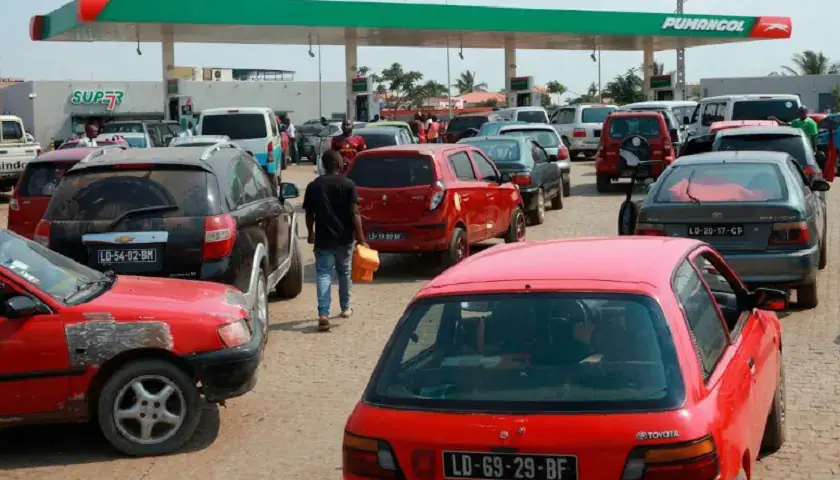
A fuel shortage that began on November 1 has continued to severely impact various points in Luanda province. As a result, drivers and transportation operators are growing increasingly concerned. The shortage has been affecting consumers for several days, with many struggling to find fuel at different gas stations in the capital. This situation has led to long lines of vehicles and road traffic congestion.
At several gas stations, diesel is still available, but gasoline is in short supply. This has forced drivers to travel to different parts of the city in search of fuel for their vehicles. The situation has caused significant crowds at gas stations where fuel is still available, with some drivers waiting for hours for their turn. Drivers who rely on their vehicles daily to make a living are particularly worried.
André Feliciano, a driver experiencing difficulties finding fuel, believes the situation is compromising his professional activity. "We're wasting a lot of time looking for gasoline. We leave home intending to work but end up spending most of the day in line at gas stations. This represents losses for those who live off daily work," he lamented. Mauro Valente, another driver, thinks authorities should provide explanations for the shortage and present measures to resolve the problem.
In the Cazenga area, the few service stations that still have fuel are experiencing long lines that block the streets, causing significant traffic congestion. "Many gas stations are closed, and those that are open limit the amount of fuel per vehicle," said António Silva, a public transportation driver. The situation is similar in Golfe 1, where drivers are visibly frustrated.
Drivers are complaining about the lack of official information and fear that the forced paralysis of their vehicles will suffocate their daily income. Several gas stations in the area have cones signaling the lack of fuel. In Calemba 2, the shortage has led to informal fuel trading, with prices skyrocketing to prohibitive levels. "We have no choice but to wait for hours or buy more expensive fuel on the street to avoid leaving our clients stranded," explained a young motorcycle taxi driver.
Amadeu Caetano, a taxi driver, believes the lack of gasoline is reducing the number of trips and, consequently, daily earnings. "Our work depends directly on fuel. When we can't refuel, we stop and lose money. We have daily expenses to meet, and this situation is making our lives even harder," he explained. António José, another driver, fears that the situation will lead to increased transportation prices and other services if the shortage persists.
The situation has caused economic losses and difficulties in urban mobility, particularly near gas stations where long lines of vehicles occupy part of the public road. Citizens are calling for greater transparency in fuel supply management, urging competent authorities to clarify the causes of the stock rupture and inform about measures to ensure the regularization of fuel supply.
Key points
- The fuel shortage has caused significant disruptions in Luanda, with drivers experiencing long lines and economic losses.
- Authorities have not provided official information on the causes of the shortage or the expected timeline for normalization.
- The situation has led to informal fuel trading at high prices, further exacerbating the problem.