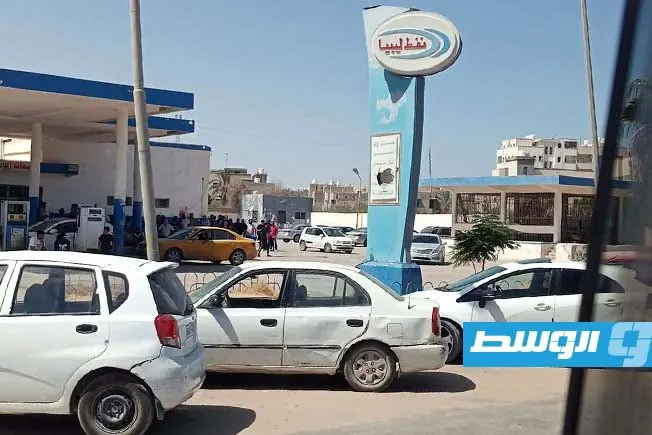
Long queues of cars have reappeared at fuel stations in Tripoli, Libya, with citizens waiting for hours to fill up their tanks. On Thursday, queues were seen in several areas of the city, with one queue stretching over three kilometers in the western suburb of Janzur. Motorists have expressed frustration over the long wait times, with some waiting for up to five hours.
In the eastern part of the city, a queue of around 350 cars was seen at a fuel station on the road to Mitiga airport. Citizens have raised concerns over the repeated fuel shortages and the reasons behind the closure of some fuel stations. The Libyan government has not provided a clear explanation for the shortages, leading to speculation and frustration among the public.
Some fuel stations have been closed, with owners citing a lack of fuel supplies from the state-owned oil marketing company, Brega. However, Brega has denied that there are any disruptions to fuel supplies, stating that they are continuing to provide fuel to stations across the country. The company has not provided details on the quantities of fuel being supplied or the reasons behind the closures.
The fuel shortages have caused significant disruptions to daily life in Tripoli, with citizens struggling to access fuel for their vehicles. The situation has also led to concerns over the impact on the economy and the potential for social unrest. The government has urged citizens to remain calm and has promised to work towards resolving the crisis.
The fuel crisis in Libya has been a recurring problem in recent years, with the country's oil production and distribution infrastructure struggling to meet demand. The situation has been exacerbated by the ongoing conflict in the country, which has disrupted oil production and led to shortages of fuel and other essential goods.
Libyan citizens are calling for the government to take action to address the fuel shortages and ensure a stable supply of fuel to the country. They are also demanding greater transparency and accountability from the government and state-owned oil companies over the management of the country's oil resources.
The fuel shortages have also highlighted the need for Libya to develop its oil production and distribution infrastructure, as well as to implement reforms to the oil sector to ensure a more stable and sustainable supply of fuel to the country. The government has promised to work towards addressing these issues, but progress has been slow.
Key points
- The fuel shortages in Libya have caused significant disruptions to daily life, with citizens struggling to access fuel for their vehicles.
- The Libyan government has not provided a clear explanation for the shortages, leading to speculation and frustration among the public.
- The situation has also led to concerns over the impact on the economy and the potential for social unrest.