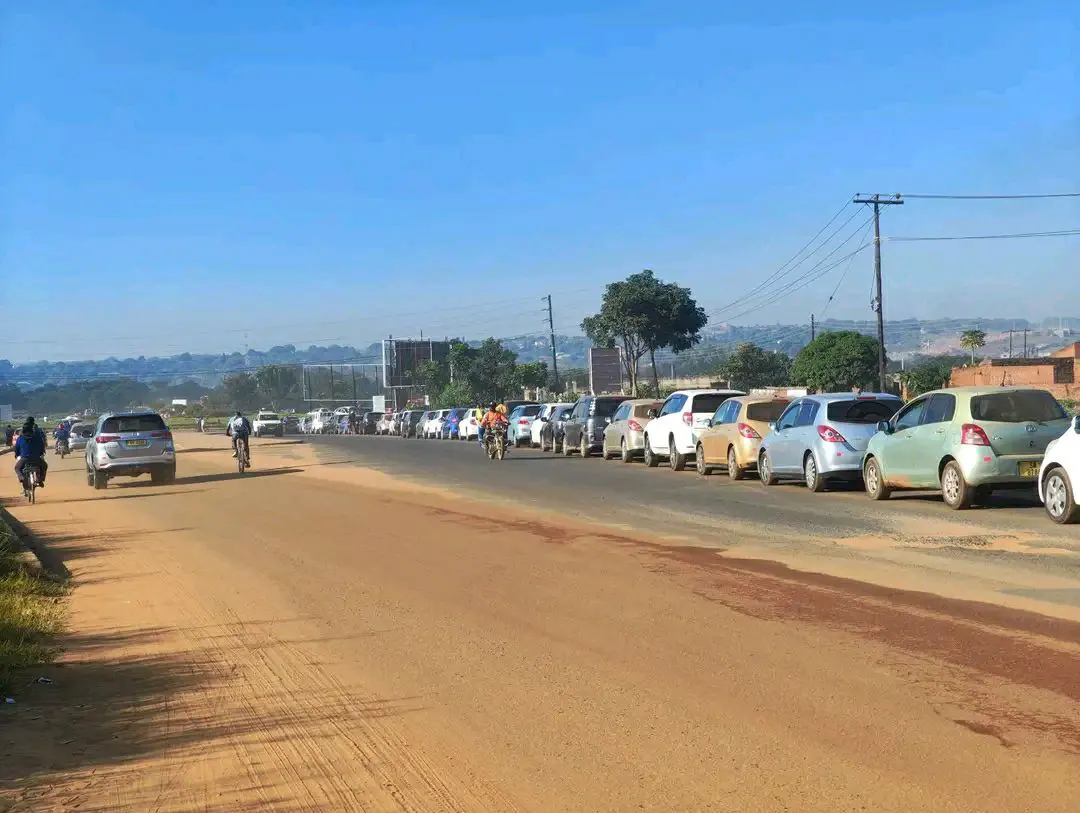
Fuel queues have reappeared in Malawi, with diesel facing a critical shortage and petrol availability becoming increasingly erratic. The country is struggling with perennial foreign exchange scarcity, which is choking import financing. As a result, queues of diesel vehicles waiting for supply at service stations have become a common sight. Petrol, while often available, is in short supply, with many service stations having no stocks.
The scarcity has led to the revival of the parallel market, with vendors selling diesel at inflated prices. Diesel is being sold at between K10,000 and K15,000 per litre, against the official pump price of K5,863 per litre. The Fuel Retailers Association chairperson, Happy Jere, stated that diesel supplies have been constrained for about three weeks, while petrol shortages worsened last week. The situation is particularly dire at service stations outside major urban centres.
Jere attributed the shortages to the country's structural foreign exchange shortage, which can be addressed by boosting exports and tightening management of the scarce resource. He suggested that Malawi needs to take farming of cash crops and mining seriously, and that the Reserve Bank of Malawi should be more effective in its forex controls. The association believes that the black market is also exacerbating the problem.
The fuel shortages have already disrupted transport and commercial activity, with haulage operators reporting lengthy queues and rising reliance on fuel from neighbouring countries. Truck Drivers Union vice-president Francis Mkandawire stated that some trucks are spending up to a week in fuel queues, affecting the movement of goods. The black-market diesel is being sold at around K12,000, which is smuggled into the country from neighbouring countries.
The Transporters Association of Malawi spokesperson, Frank Banda, attributed the scarcity to the Russia-Ukraine War, which has disrupted supply since February 24, 2022. He stated that trucks were dispatched to Beira Port in Mozambique and Dar es Salaam in Tanzania for loading, but it is unclear when they will load. The construction industry is also feeling the effects of the shortages, with the sector expanding significantly due to the rollout of the Reformed K5 billion Constituency Development Fund (CDF)-funded projects.
The Ministry of Energy spokesperson, Joan Thaundi, stated that Malawi imports all petroleum products and the industry has to compete with others for forex. She attributed the disruption to unhonoured Letters of Credit with banks, but expressed confidence that the situation will start normalising within the week. The Malawi Energy Regulatory Authority (Mera) consumer affairs and public relations manager, Fitina Khonje, admitted that the shortages are directly linked to the country's wider foreign exchange constraints.
In December last year, the National Oil Company of Malawi (Nocma) said it would import about 412,000 metric tonnes of fuel, equivalent to about 549 million litres, in the 2026/27 financial year. The quantity is equivalent to 60 percent of the country's consumption. On average, Malawi consumes one million litres of petrol and one million litres of diesel per day, translating to 60 million litres of petrol and diesel per month and 720 million litres of both items per year.
Key points
- Malawi is experiencing fuel shortages due to foreign exchange constraints.
- The shortages have disrupted transport and commercial activity.
- The situation is expected to normalise within the week as Letters of Credit are honoured.