A recent report by the United Nations Conference on Trade and Development (UNCTAD) reveals that rising petroleum costs have intensified inflation, straining household incomes and increasing pressure on public finances in developing economies. The report, Strait of Hormuz Disruptions: Soaring Fuel Prices and the Burden of Inflation, highlights the uneven impact of the energy crisis across regions. Global diesel prices rose 81 per cent between February 28 and October 20, 2026, compared with the six months before the conflict.
The report attributes the increases to persistent disruptions in the Strait of Hormuz, constrained refining capacity, rising shipping costs and barriers to international trade. Reduced vessel availability, longer shipping routes and time-consuming transfers in the Middle East have further increased the cost of transporting petroleum products. This has led to significantly higher domestic fuel costs, particularly in low-income countries where households and businesses have limited capacity to absorb external economic shocks.
UNCTAD's analysis of the additional cost of purchasing 40 litres of diesel, measured against monthly gross domestic product per capita, illustrates the disparity. The increase amounted to 10.9 per cent in low-income countries, compared with 3.3 per cent in lower-middle-income countries, 1.3 per cent in upper-middle-income countries and just 0.4 per cent in high-income economies. This demonstrates how the same international energy shock can have vastly different consequences depending on a country's income level and capacity to absorb higher import costs.
The report identifies substantial increases in domestic fuel prices across several developing economies since the beginning of the Middle East conflict. Among the least developed countries examined, diesel prices increased by 42 per cent in Tanzania, 47 per cent in Ethiopia, 67 per cent in Malawi and 77 per cent in Myanmar. Rwanda recorded a 39 per cent increase in diesel prices and a 42 per cent increase in gasoline prices. More broadly, retail gasoline prices increased by more than 20 per cent in 60 countries, while diesel prices rose by more than 20 per cent in 95 countries.
UNCTAD's findings indicate that disruptions to international energy markets are not confined to countries directly affected by the conflict. Instead, the effects are being transmitted through global supply chains, exposing fuel-importing economies to rising transportation, production and import costs. For developing countries, the consequences extend beyond the cost of filling vehicle tanks. Fuel is a critical input in transportation, manufacturing, agriculture and electricity generation.
Higher petroleum prices therefore increase the cost of moving goods, operating machinery, producing food and running businesses. Diesel price increases are particularly consequential because the fuel powers commercial trucks, buses, agricultural equipment, generators and industrial machinery. As transportation and production costs rise, businesses may pass the additional expenses on to consumers through higher prices for food, manufactured goods and services.
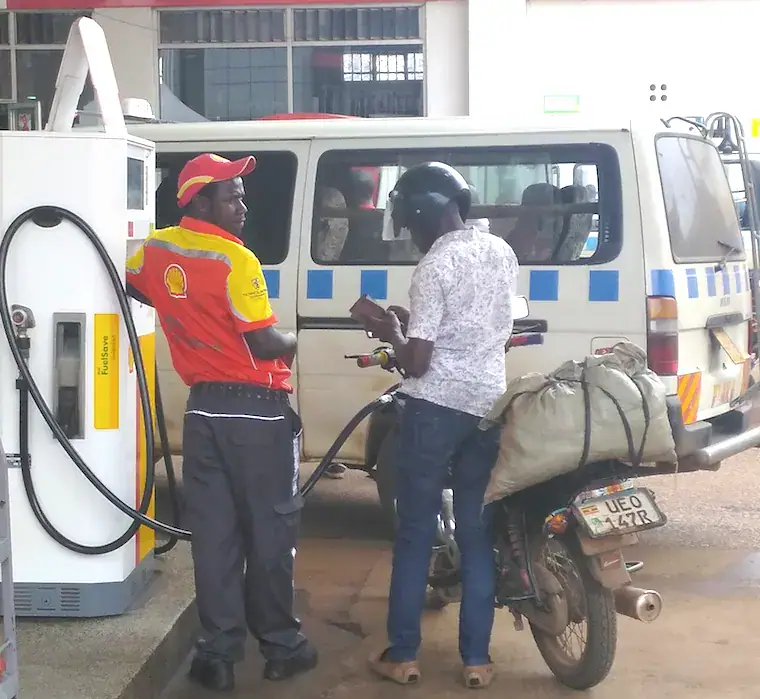
Uganda's experience provides an example of how the international fuel price shock is being transmitted into domestic economic pressures. Diesel prices have surged beyond Shs 7,000 per litre at several filling stations, while petrol is selling at about Shs 6,900. The increases have coincided with a sharp depreciation of the Ugandan shilling, which has weakened from around Shs 3,600 to Shs 4,500 against the US dollar in recent weeks.
Key points
- The energy crisis is emerging as a broader development challenge, with implications for economic growth, public finances, household welfare and the stability of domestic markets.