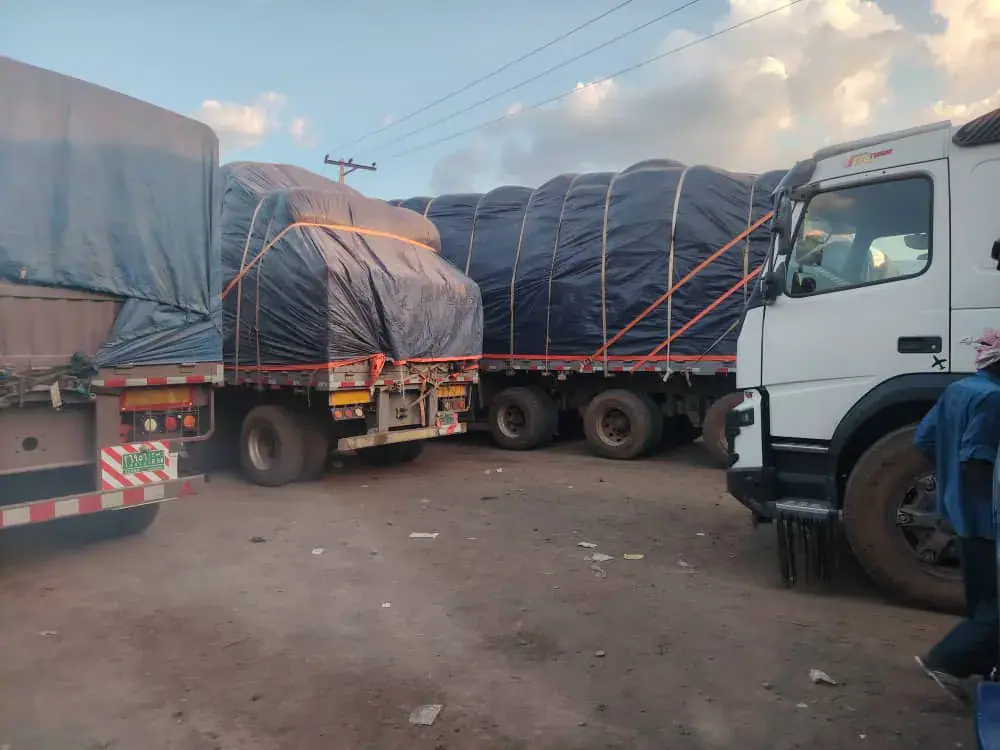
A recent survey in Al-Qadarif region revealed that trucks loaded with agricultural exports, including sesame and melon seeds, are stranded at fuel stations due to a shortage of diesel. This has brought export operations to a complete halt. Local business owners report that around 10 trucks, carrying 450 tons of exports valued at approximately 3.2 trillion Sudanese pounds, have been waiting for fuel for five days.
Yaser Al-Tom Abdalsalam, owner of Al-Lord Transport Company, stated that his trucks, loaded with 410 tons of melon seeds and 40 tons of sesame, have been stuck for five days. Despite meeting with the regional governor's office and the petroleum department, no solution has been provided. The delay may result in financial penalties and cancellation of export contracts.
The region's fuel shortage has significant implications for the local economy, as agricultural exports are a major source of foreign currency. Exporters and importers in destination countries may choose to avoid Al-Qadarif and Sudan due to the unreliable logistics. Al-Tom emphasized the need for a prompt solution to the fuel crisis to prevent disruptions to export operations.
According to Al-Tom, the deadline for exporting goods to the port is October 30. Failure to meet this deadline may incur penalties and fines. The situation has raised concerns among exporters, who rely on the smooth transportation of goods to maintain their business relationships with international partners.
A government official in Al-Qadarif's Ministry of Finance announced that the petroleum department will allocate fuel for export transportation on Wednesday. This move aims to resolve the crisis and ensure the continuation of agricultural exports. The government has expressed its commitment to facilitating export operations and providing support to local businesses.
The fuel shortage has also raised concerns about the security of trucks and cargo, as drivers are forced to guard their vehicles around the clock to prevent theft. The situation highlights the need for a stable and efficient logistics system to support the region's agricultural sector.
Local businesses have praised the efforts of the Ministry of Finance and the unified collection device in facilitating export procedures. However, they stress the need for a reliable fuel supply to maintain the smooth transportation of goods. The crisis has underscored the importance of addressing infrastructure challenges to support economic growth in the region.
Key points
- A fuel shortage in Al-Qadarif region has halted the export of 450 tons of agricultural products.
- The delay may result in financial penalties and cancellation of export contracts.
- The government has announced plans to allocate fuel for export transportation to resolve the crisis.