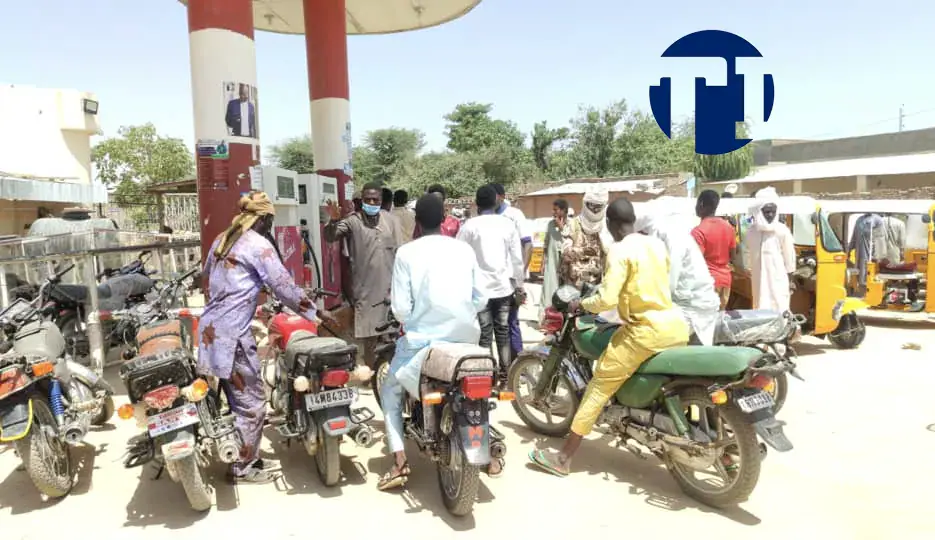
According to the monthly report by the Chadian Authority for the Regulation of the Downstream Oil Sector (ARSAT), Chad's national consumption of petroleum products declined overall in September 2026 compared to August. The report highlights a mixed trend, with LPG being the only exception, showing a significant increase. This change is reflected in the refining and import data for the period. The national consumption of diesel (gasole) dropped by 19.5%, from 33.1 million liters in August to 27.7 million liters in September.
The consumption of other petroleum products also experienced a decline. Gasoline (essence) consumption decreased by 6.8% to 29.9 million liters. Heavy fuel oil (fioul lourd) saw a substantial drop of 70.9%, while polypropylene (PP) declined by 10.8%, and Jet A1 slightly decreased by 1%. These reductions indicate a general trend of decreased consumption of liquid fuels and heavy fuel oil in the country during September.
In contrast, LPG consumption showed a notable increase of 13.9%, reaching 10.95 million kilograms. This rise is attributed to a 24% increase in LPG imports and sustained strong demand for LPG in cylinders. The growth in LPG consumption underscores its growing importance in the energy mix of Chadian households.
The quantities of petroleum products lifted from the Djarmaya Refinery (NRC) also recorded decreases across the board compared to August. Diesel saw a 42% drop to 14.4 million liters, while gasoline decreased by 4% to 22.6 million liters. Jet A1 and heavy fuel oil experienced declines of 1% and 71%, respectively. LPG and polypropylene also saw reductions of 6% and 11%, respectively.
Despite these decreases, diesel and gasoline remain dominant, accounting for 75% of the total volume of products lifted from the refinery. The import profile presented a mixed picture, with diesel increasing by 5% to 13.3 million liters and LPG surging by 24% to 7.3 million kilograms. However, gasoline imports declined by 15% to 7.3 million liters.
The main import corridors for Chad include Cameroon, particularly from Douala and Limbé to Koutéré, as well as Nigeria and Niger. In the LPG segment, 9.46 million kilograms of LPG were recharged into cylinders in September. Cylinders of 6 kg dominated the market with 96.9%, significantly ahead of 12.5 kg cylinders at 1.79%. The 6 kg kits experienced a substantial increase of 42.5%.
These statistics illustrate a general decrease in the consumption of liquid fuels and heavy fuel oil in September 2026, while LPG continues to grow and consolidate its position in the energy mix of Chadian households. The trends reflect changes in consumption patterns and the ongoing importance of LPG as a household energy source.
Key points
- Chad's overall fuel consumption declined in September 2026, except for LPG, which increased by nearly 14%.
- Diesel and gasoline remain the most consumed products, accounting for 75% of total refinery liftings.
- LPG consumption growth is driven by increased imports and strong demand for household use.