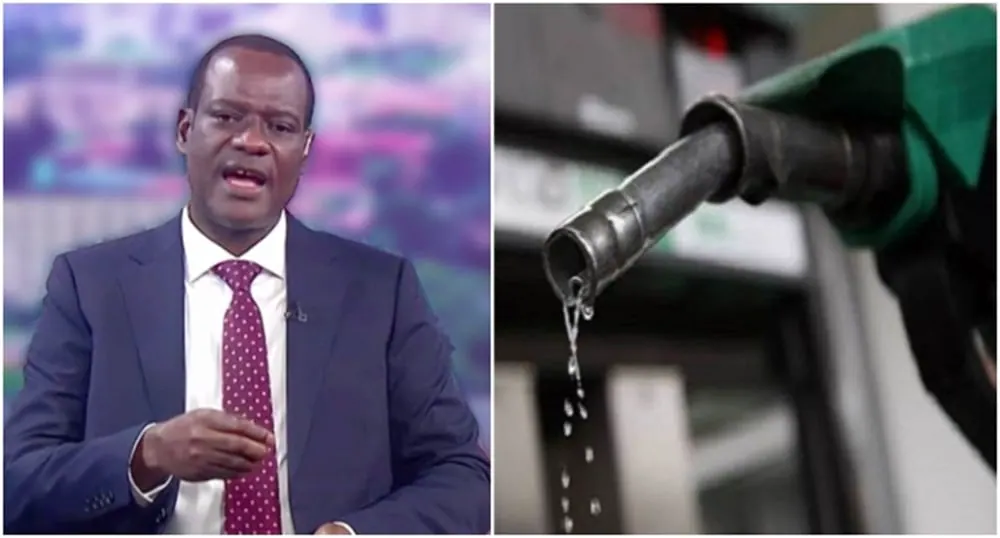
Nigeria's Minister of Finance and Coordinating Minister of Economy, Prof. Taiwo Oyedele, has revealed that reinstating fuel subsidy would have severe financial implications for the country. According to Oyedele, if fuel is sold at N500 per liter, it would cost the Nigerian government over N16 trillion per year. This significant financial burden would have far-reaching consequences for the country's economy, including its impact on salaries, pensions, schools, hospitals, and security.
Oyedele explained that the cost of fuel subsidy is directly linked to the global price of crude oil, freight, and refining inputs, which are all priced in dollars. To maintain a fixed pump price, the government would have to subsidize the foreign exchange, effectively introducing a multiple exchange rate system. This system had previously brought the economy to the brink of collapse before the current administration reformed it in 2023.
The Minister highlighted that Nigeria's current fuel price is already relatively low compared to neighboring countries. If the price gap is widened, Nigerian taxpayers would essentially be subsidizing motorists from other countries. Furthermore, cheaper fuel would lead to increased consumption, which would exacerbate the issue of imported inflation. Oyedele emphasized that subsidy removal has released significant revenue to the Federation Account, with 10.4 trillion naira going to states and local governments between June 2023 and December 2025.
Oyedele warned that returning to a subsidy regime would lead to a familiar sequence of economic challenges, including a sovereign credit downgrade, costlier borrowing, capital flight, and a weakening naira. He estimated that the exchange rate could reach 3,000 naira to the dollar within months if subsidy is reinstated. This would make subsidized petrol cost at least 2,000 naira per liter, far above what Nigerians currently pay.
The Minister emphasized that subsidy does not reduce the cost of fuel but merely changes how it is paid and when. He noted that Nigerians have previously paid the subsidy bill in the form of scarcity, inflation, and a collapsing currency. Oyedele stressed that financing a subsidy through salaries and pensions not paid on time, higher taxes, or printing money would have severe long-term consequences for the economy.
Oyedele attributed the current pressure on fuel prices to the global conflict in the Gulf, which has disrupted crude oil supply and driven up prices. He noted that the International Energy Agency expects the pressure on refined products to persist for months. The Minister cited examples of countries that have attempted to hold prices down, only to experience significant price increases when relief measures ended.
Despite the challenges, Oyedele promised that the federal government is working on measures to ease the pressure of fuel prices on households. He highlighted that fuel availability has remained stable, with no queues reported in any state. The Minister expressed optimism that the government's initiatives will help mitigate the impact of higher fuel prices on vulnerable households and businesses.
Key points
- Returning fuel subsidy would cost Nigeria over N16 trillion per year.
- Subsidy removal has released significant revenue to the Federation Account.
- Reinstating subsidy would lead to a sovereign credit downgrade and costlier borrowing.