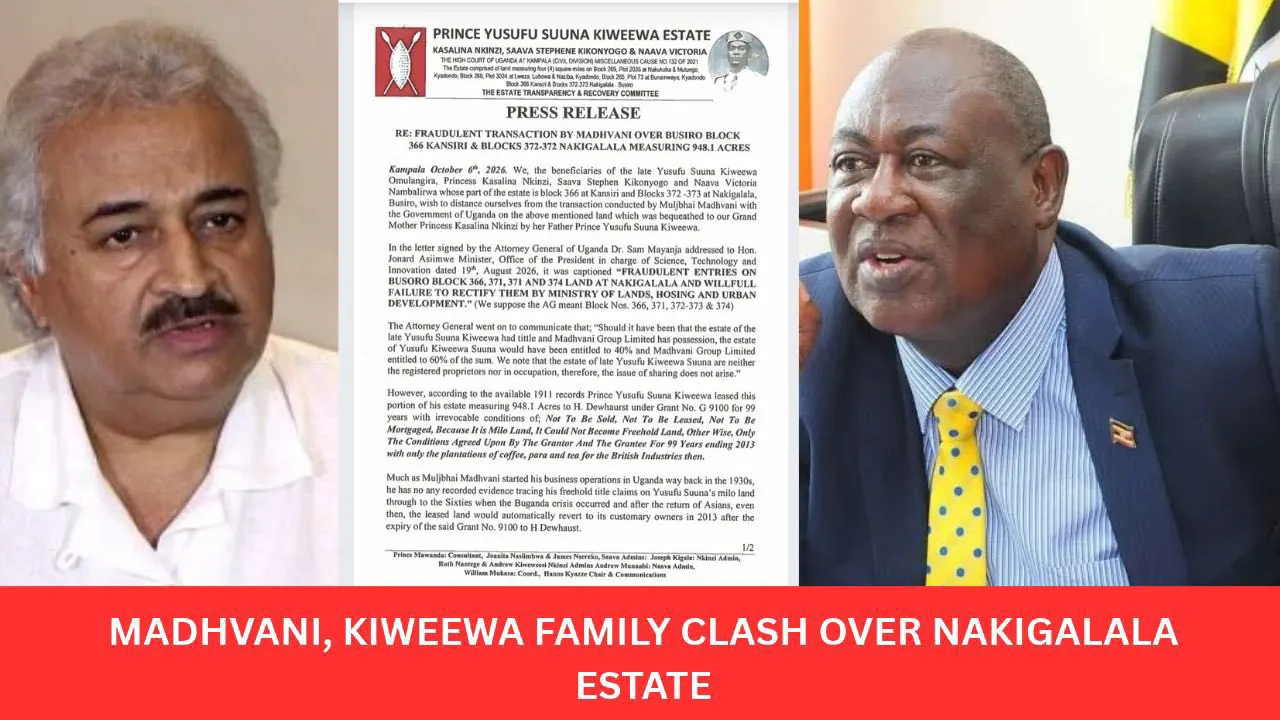
Muljibhai Madhavani, an Indian migrant who arrived in Uganda in 1908 at the age of 14, was hired by H. Dewhurst as a nanny/house boy. Madhavani's life took a dramatic turn when Dewhurst was going on a holiday in the UK, and Madhavani allegedly poisoned bread that Dewhurst ate on the plane, leading to his death on July 1, 1916. This event marked the beginning of Madhavani's rise to becoming a prominent landowner in Uganda.
Dewhurst had acquired vast pieces of land in Uganda, including areas in Nakigalala, Kansiri, Lugazi, and Mityana, from Buganda royals like Prince Yusuf Suuna Kiweewa in 1911. The land was initially leased for 99 years for plantation purposes, including coffee, para rubber, and tea. After Dewhurst's death, Madhavani took over the estate and continued the agricultural developments, eventually establishing the sugar operations that became the foundation of the Madhvani Group.
By 1918, Madhavani had consolidated and acquired all the land that had belonged to Dewhurst, including the Kakira, Lugazi, Nakigalala, Kansiri, Mityana, and Jinja estates. The land grants, including a 99-year lease of approximately 948 acres under Grant No. G9100, were initially given to Dewhurst for plantation purposes. Madhavani's acquisition of the land sparked a long-standing dispute over ownership, particularly among the indigenous Ugandans and the descendants of the original landowners.
The land ownership dispute gained momentum in the 1970s when the Ugandan government introduced the Land Reform Decree, which vested all land in the government and led to the expulsion of non-native Indians, including Madhavani. However, in 1991, three Certificates of Repossession were issued in the name of Muljbhai Madhvani & Co. Ltd., allowing Madhavani to regain control of the estate. The legitimacy of the repossession certificates has been questioned, with many arguing that they were issued in the wrong company name.
Since 1991, the Madhvani Group has continued to operate on the land, treating it as freehold. However, multiple families, including the Kiweewa descendants and Muwanga Omuweesi descendants, have challenged the freehold titles in court, arguing that the original 1911 mailo lease should have reverted on expiry and that the freehold was improperly created over mailo land. The disputes have led to a complex and contentious situation, with various parties claiming ownership of the land.
In recent years, the dispute has taken a new turn, with allegations that Madhavani has formed an alliance with the current Government of Uganda to defeat the interests of the indigenous Ugandans by granting freehold title to non-natives. The situation remains unresolved, with many calling for a fair and transparent resolution to the land ownership dispute.
The case of Muljibhai Madhavani serves as a reminder of the complex and often contentious history of land ownership in Uganda. As the country continues to grapple with issues of land rights and ownership, the Madhavani case highlights the need for a fair and transparent system that balances the interests of all parties involved. The outcome of this dispute will have significant implications for the future of land ownership in Uganda.
Key points
- Madhavani Muljibhai allegedly poisoned his former boss H. Dewhurst to acquire his vast estate in Uganda.
- The land ownership dispute has been ongoing for decades, with multiple parties claiming ownership of the land.
- The situation remains unresolved, with allegations of an alliance between Madhavani and the current Government of Uganda to grant freehold title to non-natives.