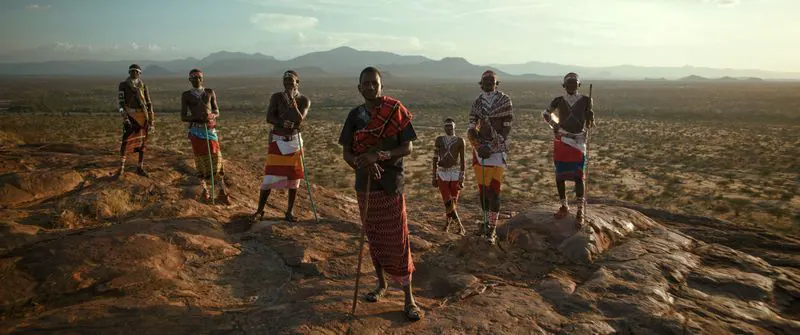
In northern Kenya, a group of Samburu warriors has transformed their traditional role from lion hunters to lion protectors. This change was sparked by Jeneria Lekilelei, a Samburu warrior and National Geographic Explorer, who founded Warrior Watch, a flagship program of Ewaso Lions. Lekilelei's journey into lion conservation began in 2008 when he met Dr. Shivani Bhalla, founder of Ewaso Lions and a National Geographic Explorer.
Growing up in Samburu, Lekilelei was trained to hunt lions and other animals to protect his community's livestock. However, his perspective shifted when he met Dr. Bhalla, and he became interested in lion conservation. In 2010, he founded Warrior Watch, bringing fellow Samburu warriors into the effort. The warriors now track lions to ensure their safety and prevent human-lion conflicts. This new role has not only changed their relationship with lions but also helped to increase the lion population in their community.
The National Geographic documentary, Pride of Samburu, showcases the conservation efforts of Lekilelei and his team. The film, made in collaboration with Kenyan filmmakers, offers a unique perspective on wildlife conservation by highlighting the role of local communities. Dr. Bhalla emphasized that the documentary shows "local people doing the conservation work themselves." The film features the Samburu warriors as they patrol the landscape, track lions, and work with Kenya Wildlife Service veterinarians to collar lions with GPS trackers.
Lekilelei's knowledge of the landscape and lion behavior has been crucial to the conservation effort. He can identify individual lions by their tracks and often knows where they are likely to go. This expertise allows him to track lions and prevent potential conflicts between humans and lions. Lekilelei's love for lions has grown over time, and he now knows them better than he knows his own cows. His deep understanding of the lions has also helped to change his community's perception of these animals.
The conservation efforts led by Lekilelei and his team have been successful, with the lion population in their community increasing from 11 to 60. Lekilelei believes that his father's legacy has been carried forward through his conservation work. His father, who traditionally killed lions to protect their livestock, would be proud of the work Lekilelei is doing today. Lekilelei sees his role as a warrior as still respected in his society, but the way bravery is demonstrated has changed.
Lekilelei envisions a future where Samburu warriors use their skills to protect lions rather than hunt them. He hopes that in a few generations, warriors will be known for their conservation efforts rather than their hunting prowess. This change in perspective has not only helped to conserve lions but also promoted coexistence between humans and lions. The Samburu community has come to understand the importance of lions in their ecosystem and culture.
The Pride of Samburu documentary and Lekilelei's conservation efforts have shown that local communities can play a crucial role in wildlife conservation. By working together, communities can protect their natural resources and promote sustainable coexistence with wildlife. Lekilelei's story serves as an inspiration for other communities to take charge of their conservation efforts and work towards a future where humans and wildlife can thrive together.
Key points
- Samburu warriors in Kenya have shifted from hunting lions to protecting them through a conservation effort led by Jeneria Lekilelei and supported by National Geographic.
- The lion population in the Samburu community has increased from 11 to 60 since Lekilelei and his team began their conservation efforts.
- Lekilelei envisions a future where Samburu warriors use their skills to protect lions rather than hunt them, promoting coexistence between humans and lions.