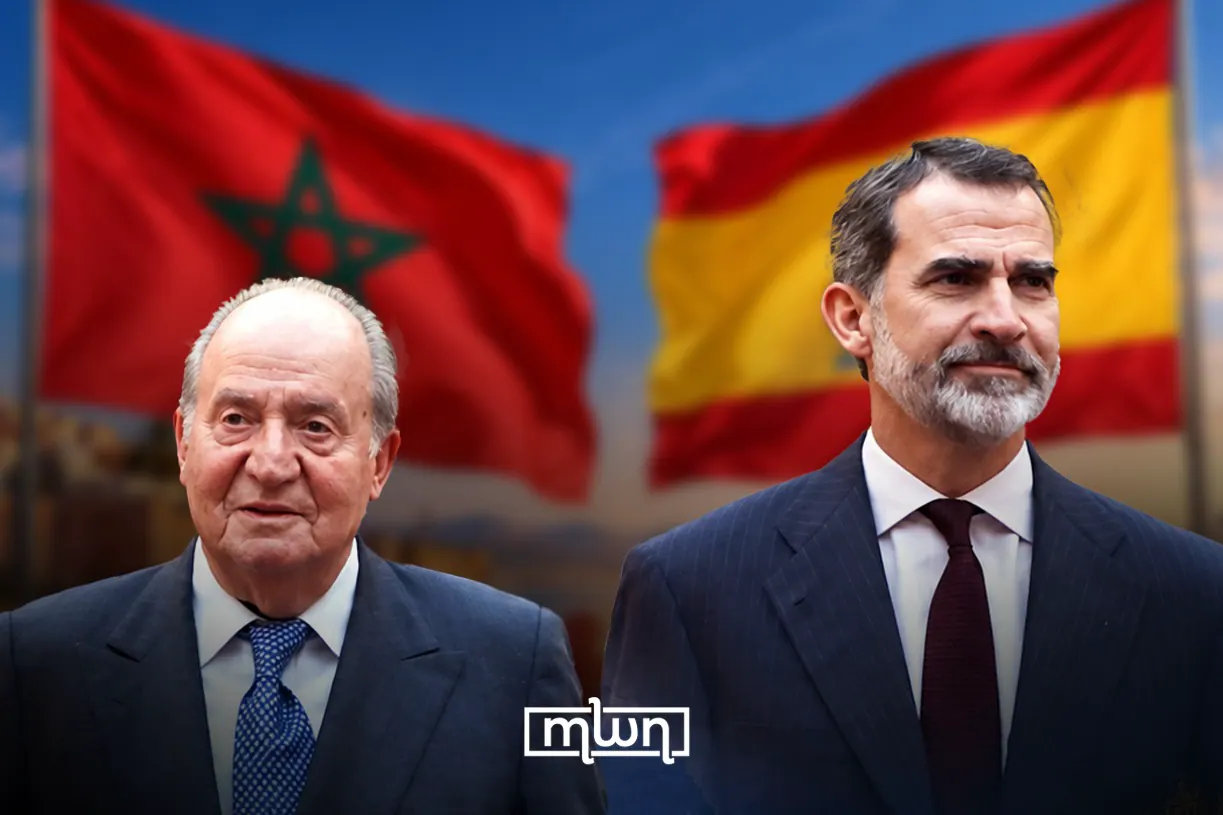
The Spanish monarchy's approach to managing crises with Morocco has undergone a significant transformation between Juan Carlos I and Felipe VI. In 2005, when migrants stormed the fences of Ceuta and Melilla, Juan Carlos I opted for discreet diplomacy, using his personal relationship with King Mohammed VI to defuse the crisis. He made three phone calls to the Moroccan monarch, asking for help to stem the flow of migrants. This approach allowed Morocco to respond by reinforcing its border security and agreeing to the return of 73 sub-Saharan migrants under a bilateral readmission agreement.
In contrast, Felipe VI has chosen a more public approach to address the crisis. Two months after the mass entry of migrants into Ceuta, Felipe VI publicly described the event as "unacceptable" and emphasized the need for greater European Union involvement in protecting the border. He made these comments in front of French President Emmanuel Macron, reaffirming the Spanish and European character of the border. This public statement is significant, as it marks a departure from the discreet diplomacy of his father.
The 2005 crisis had a strikingly similar precedent, with hundreds of Sub-Saharan migrants attempting to storm the border fences of Ceuta and Melilla. The episode triggered a discourse against Morocco in Spain, with accusations that Morocco was using immigration as an "instrument of pressure" on Spain. Javier Arenas, then president of the Popular Party in Andalusia, considered it "possible" that Morocco was using the surges to "pressure" the Spanish government.
The Moroccan government rejected these accusations, with Taieb Fassi Fihri, then Minister of Foreign Affairs, pointing out that "in Spain, the immediate neighbor is frequently blamed." He also rejected the notion that Morocco was using migrants to advance its territorial claim, comparing it to the 1975 Green March in which 350,000 Moroccans crossed into Western Sahara.
The personal relationship between Juan Carlos I and King Mohammed VI was a key factor in resolving the 2005 crisis. The Spanish monarch had cultivated close ties with the Alaouite dynasty for decades, first with King Hassan II and then with his son. This relationship allowed for discreet diplomacy and problem-solving by phone rather than through press statements.
Felipe VI's public assertion on the Ceuta crisis comes at a time when the Spanish monarchy is undergoing a clear erosion of its institutional legitimacy. The King has spent much of his reign distancing himself from his father's legacy and rebuilding the Crown's image around ideas of exemplarity, institutional rigor, and national unity. A firm stance on Ceuta offers an opportunity for Felipe VI to appear in tune with public opinion.
The difference in approach between Juan Carlos I and Felipe VI reflects a changing landscape in the Spanish monarchy's relationship with Morocco. While Juan Carlos I's discreet diplomacy helped to contain the 2005 crisis, Felipe VI's public assertion may have implications for the future of Spanish-Moroccan relations. The Spanish monarchy's approach will likely continue to evolve in response to changing circumstances and priorities.
Key points
- Felipe VI has chosen a more public approach to address the Ceuta crisis, marking a departure from his father's discreet diplomacy.
- The 2005 crisis had a strikingly similar precedent, with hundreds of Sub-Saharan migrants attempting to storm the border fences of Ceuta and Melilla.
- The personal relationship between Juan Carlos I and King Mohammed VI was a key factor in resolving the 2005 crisis.