Nigeria is approaching a defining demographic moment with more than 220 million people and nearly 68 percent of its population below the age of 30. The African Development Bank describes this demographic structure as a potentially historic opportunity. However, opportunity is not the same thing as achievement. A young population becomes an economic dividend only when young people are healthy, educated, skilled, employed and able to create value.
The World Bank’s 2026 human-capital assessment estimates that existing deficits in health, education and workplace skills are costing Nigeria 111 per cent of its future labour earnings. Nigeria’s education pillar score of 64 is also significantly below the 88 median for lower-middle-income countries. This situation is sobering and should fundamentally change how Nigeria understands youth empowerment.
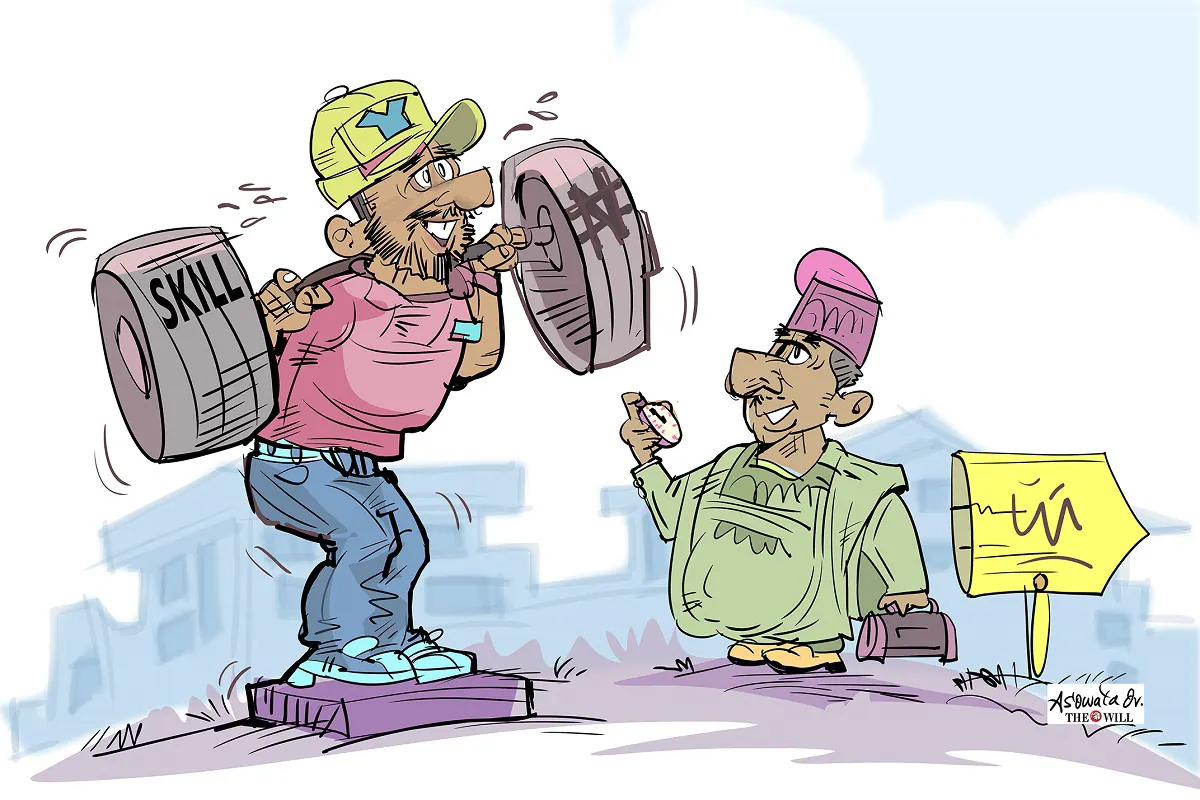
Youth empowerment should not mean distributing small grants, organising occasional training workshops or handing young people certificates that do not translate into income. It should mean building the capabilities, opportunities and economic systems that enable young Nigerians to become productive citizens, entrepreneurs, skilled workers, innovators and employers of labour.
One of the weaknesses in Nigeria’s youth debate is the excessive focus on the unemployment rate. The National Bureau of Statistics reported that 15.6 percent of Nigerians aged 15–24 were neither in employment, education nor training (NEET). That represented about 6.5 million young people. The rate was higher among females, at 17.3 per cent, compared with 14.1 per cent for males.
Nigeria’s labour market is overwhelmingly informal, with informal employment accounting for more than 90 per cent of employment. This means that simply telling young Nigerians to “get a job” is inadequate. Many already work, but are trapped in low-productivity work. Youth development must therefore move from counting jobs to measuring productivity, income, resilience and upward mobility.
Nigeria has spent decades expanding access to formal education, but access alone does not guarantee employability. A university certificate may demonstrate that someone completed a programme, but it does not necessarily demonstrate that the graduate can solve a business problem or create a commercially viable enterprise. Evidence from Nigeria shows that large-scale apprenticeship interventions have increased young people’s earnings and skills.
To achieve the desired development, every young Nigerian should have a realistic pathway – from learning to earning. The education system must become more connected to the productive economy. A young Nigerian should be able to learn in a classroom, laboratory, workshop, farm, factory, technology hub and workplace.
Key points
- Nigeria's youthful population can be an economic dividend if harnessed properly.
- The country's education system needs to be more connected to the productive economy.
- Youth empowerment should focus on building capabilities, opportunities, and economic systems.