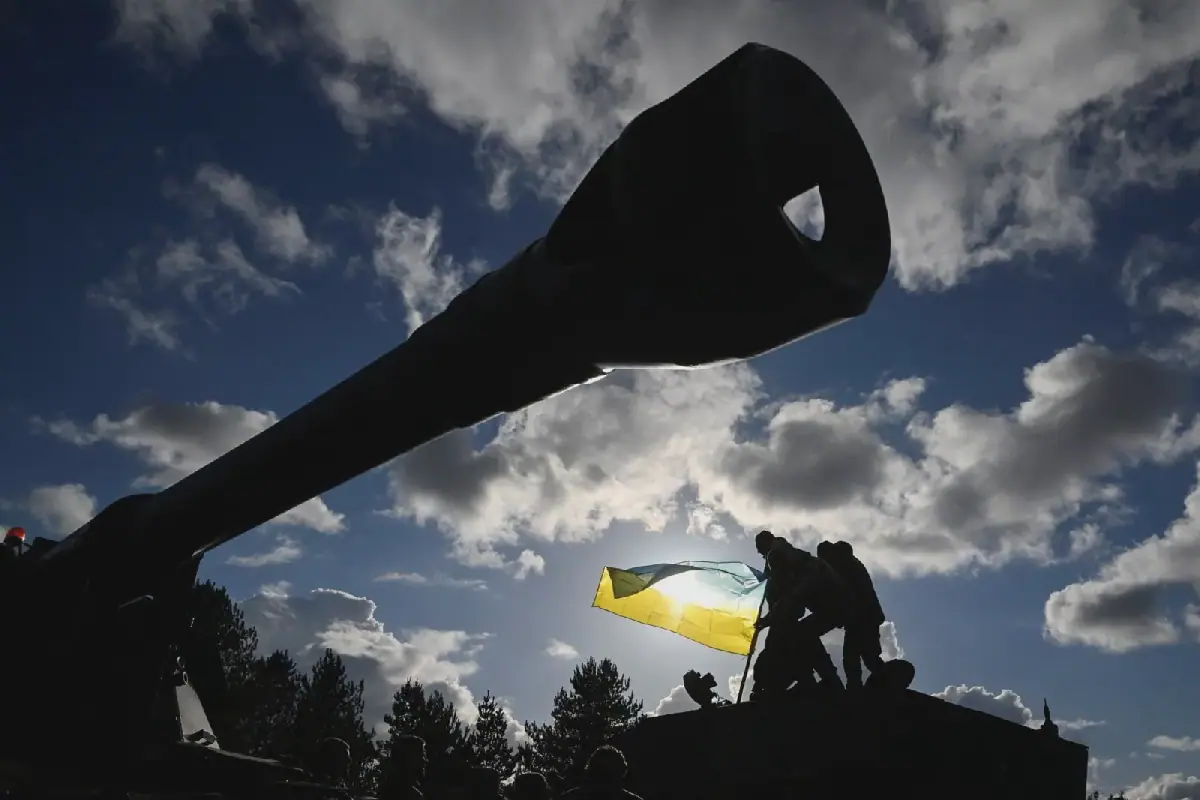
German Chancellor Friedrich Merz has issued a stark warning that Russia's ambitions in the region are not limited to Ukraine, emphasizing the need for Europe to establish clear boundaries with Moscow. During a Bundestag session to debate the next year's budget and aid to Kyiv, Merz stated that Russia "knows exactly what it wants and wants more than just Ukraine." He attributed the escalation of the conflict to Russian actions in Ukraine, the Baltic region, the Black Sea, Poland, and Germany.
Merz's comments come amid heightened tensions between Europe and Russia, with the German government allocating 11.6 billion euros in financial support to Ukraine for 2027. However, this move has faced criticism from far-right and left-wing parties, including the Alternative for Germany (AfD) and The Left. Merz also implicitly criticized the AfD, accusing them of having a different agenda, possibly aligned with Kremlin interests. He emphasized that anyone failing to understand the situation "either does not comprehend the world as it is or is following a very different agenda."
The Kremlin has responded to calls for European troops to be deployed to Ukraine, labeling such a move as "absolutely inacceptable." Dmitry Peskov, the Kremlin's spokesperson, made these remarks in response to comments by former British Prime Minister Boris Johnson, who advocated for the immediate deployment of Western troops to Ukraine. Peskov highlighted that Russian President Vladimir Putin had previously reiterated this stance, emphasizing that the presence of foreign troops on Ukrainian territory would be met with strong opposition.
Johnson's proposal has also drawn criticism from Dmitry Medvedev, a former Russian President and a hardline supporter of the Kremlin. Medvedev described Johnson as "degenerate and sloppy" and an "exceptional provocateur." He recalled Johnson's role in dissuading Kyiv from signing a peace treaty in 2022 and his current push for NATO troops to enter Ukraine. Medvedev's comments reflect the increasingly heated rhetoric between Russia and Western nations over the Ukraine conflict.
The conflict in Ukraine has led to a significant increase in tensions between Russia and the West, with both sides engaging in a war of words. The situation remains volatile, with concerns about the potential for further escalation. European nations, particularly Germany, are walking a tightrope in their dealings with Russia, balancing the need to support Ukraine with the risk of provoking a larger conflict.
The Russian government's stance on the deployment of Western troops to Ukraine remains firm, with Peskov reiterating that such a move would be seen as a direct challenge to Russia's interests. This stance has been echoed by Medvedev, who warned of severe consequences if a war between Russia and the West were to break out. The rhetoric from both sides suggests that a peaceful resolution to the conflict may be difficult to achieve in the near future.
As the situation in Ukraine continues to deteriorate, European leaders are under pressure to respond effectively to Russian aggression while avoiding further escalation. The German government's commitment to providing financial support to Ukraine is seen as a key aspect of this response. However, with tensions running high, it remains to be seen how the situation will develop in the coming months and what implications it will have for regional stability.
Key points
- Germany has allocated 11.6 billion euros in financial support to Ukraine for 2027.
- The Kremlin views the deployment of Western troops to Ukraine as "absolutely inacceptable."
- Friedrich Merz warns that Russia's ambitions extend far beyond Ukraine, urging Europe to set clear limits on Moscow's actions.
Reporting sources
- Friedrich Merz alerta: Rússia “quer mais do que apenas a Ucrânia” · RecordTV Cabo Verde