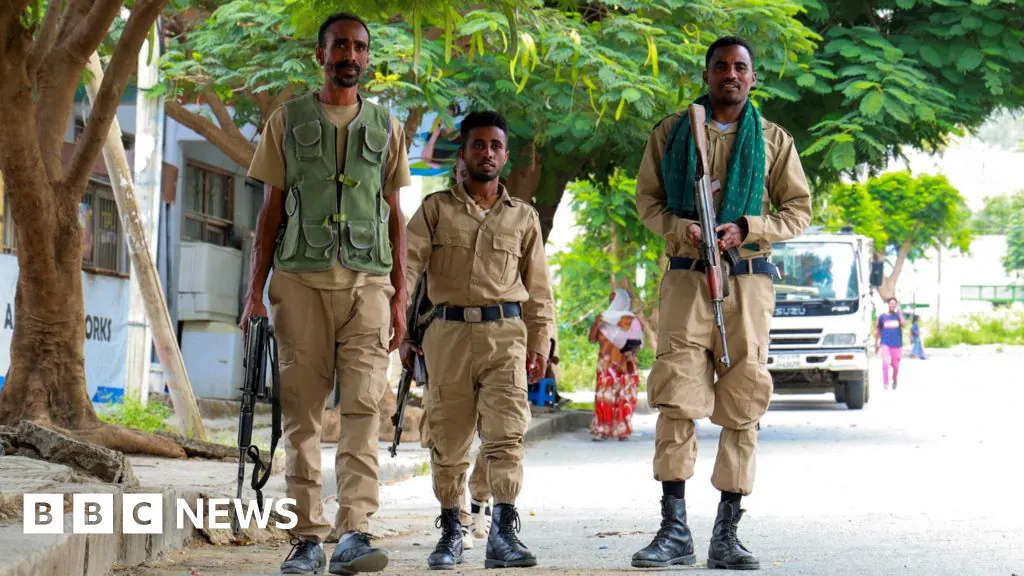
Fighting has broken out in Ethiopia's northern region of Tigray between regional forces and the national army, causing concern among residents who are still recovering from a brutal two-year war that ended in 2022. The conflict has led to panic buying, and internet and call services have been disrupted, making it difficult for people to access their money via digital apps in a largely cashless society. ATMs stopped working several months ago, further exacerbating the situation.
The conflict follows over six months of worsening relations between the government and the Tigray People's Liberation Front (TPLF), the party that runs Tigray. The African Union (AU) brokered a peace deal, known as the Pretoria Agreement, between the two sides, ending the war nearly four years ago. However, several issues have remained unresolved, inflaming tensions between the two sides. This year, both sides have been trading blame while troops have mobilized amid pockets of fighting.
The TPLF has been a dominant force in Tigray's modern political history, emerging as an armed movement in the 1970s fighting Ethiopia's military government. It became a major force in the overthrow of the Marxist regime in 1991 and went on to become the most powerful component of the Ethiopian People's Revolutionary Democratic Front (EPRDF). However, its influence was significantly watered down when Abiy Ahmed became prime minister in 2018 and replaced the EPRDF with the Prosperity Party.
The peace deal has faltered due to several key issues, including the status of western Tigray, which was lost by the TPLF to Amhara during the war. The TPLF wants western Tigray back and for those displaced from the territory to return, while the government says the future of the territory needs to be decided by a referendum. Disarmament is another major point of contention, with the government accusing the TPLF of hiding its arms.
The TPLF has gained several key allies, including Amhara's Fano militia and the Oromo Liberation Army, forming the Alliance for Survival. Members of the new alliance have different grievances but share a common objective: to remove Abiy's government from power. However, analysts caution that the alliance may be difficult to maintain due to its members' ultimately different interests.
The government has blamed the TPLF for starting the recent fighting and has criticized the new alliance, portraying it as an attempt to destabilize the country. It has also accused neighboring Eritrea of supporting the rebel alliance, which Asmara denies. The row has led to the two countries cutting diplomatic ties with each other.
The main diplomatic effort is being led by the AU, which has called for an immediate cessation of hostilities and a return to direct talks. The AU has asked former Nigerian President Olusegun Obasanjo to mediate the talks. Reports indicate that federal forces have been using drones and other military operations against Tigrayan forces, with residents in one recently targeted town reporting that the drones had hit two schools.
Key points
- The conflict in Tigray has led to a disruption of essential services, including internet and call services, and has made it difficult for people to access their money.
- The TPLF has gained several key allies, including Amhara's Fano militia and the Oromo Liberation Army, forming the Alliance for Survival.
- The government has accused neighboring Eritrea of supporting the rebel alliance, leading to the two countries cutting diplomatic ties with each other.