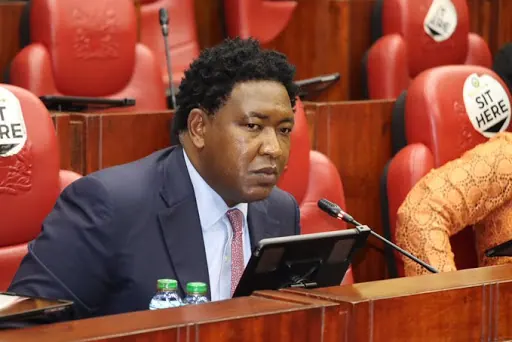
A proposed law giving senators direct oversight powers over county governments has sparked controversy in Kenya. The County Oversight and Accountability Bill, sponsored by Narok Senator Ledama Olekina, aims to strengthen Senate oversight of funds allocated to counties. However, stakeholders argue that the bill violates the Constitution and could create parallel structures of governance. The bill was passed by the Senate on July 21 and seeks to establish a senator-led oversight programme in each county.
The Council of Governors and county assemblies have expressed concerns over the bill, citing potential interference with the functions of existing county institutions. They argue that the proposed law undermines the constitutional architecture of devolution. The Office of the Attorney-General has also raised concerns, stating that the Constitution gives the Senate, as an institution, the power to oversee national revenue allocated to counties, not individual senators.
Solicitor-General Shadrack Mose said that allowing individual senators to exercise oversight over their respective counties would turn an institutional mandate into a personal role. The State Law Office also questioned provisions allowing senators to establish offices staffed by people personally recruited by them, citing potential creation of a parallel oversight structure at county and ward level.
The Council of Governors opposed the bill in its entirety, citing a Supreme Court decision that held that senators cannot exercise direct oversight over county governments. The County Assemblies Forum also raised concerns over a provision requiring county executive committee members to submit annual financial reports directly to individual senators, arguing that county executives are accountable to county assemblies, not individual members of Parliament.
Stakeholders also questioned the cost of implementing the proposed senator-led oversight offices, with the Kenya Law Reform Commission estimating that it could amount to a Money Bill. The commission's acting chief executive, James Nombi, argued that a Bill imposing a charge on public funds must comply with Article 114 of the Constitution governing Money Bills.
The National Assembly's Committee on Regional Development held a public participation forum to gather views on the bill. Committee chairman Peter Lochakapong said lawmakers would consider the submissions before making recommendations to the House. Many stakeholders expressed concerns that the proposed law does not align with the provisions of the Constitution.
The controversy surrounding the bill highlights the ongoing debate over devolution and governance in Kenya. The implementation of the proposed law could have significant implications for the country's governance structure. Key stakeholders will continue to engage with the bill, and its fate remains uncertain.
Key points
- The proposed law seeks to give senators direct oversight powers over county governments.
- Stakeholders argue that the bill violates the Constitution and could create parallel structures of governance.
- The bill's implementation could have significant implications for Kenya's governance structure.