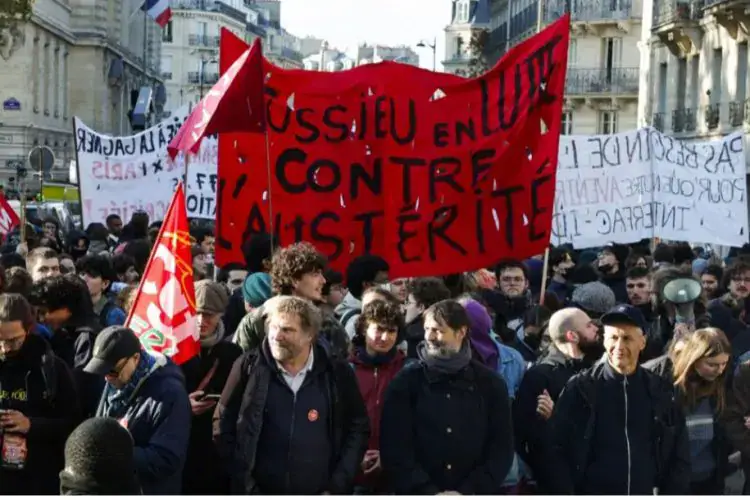
On November 5, 2026, thousands of workers from the public and private sectors, students, young people, and seniors took part in protests across France. The protests, which were organized by trade unions, student groups, and farmers' associations, including the Confédération paysanne, called for higher wages, lower prices, and better public services. The protests were marked by a significant police presence, with 70,000 police officers and gendarmes deployed to maintain order.
The protests were attended by between 500,000 and 700,000 people outside the capital, Paris, with between 40,000 and 80,000 people participating in Paris alone. The protests were sparked by concerns over rising prices, particularly for food and fuel, and demands for higher wages and better working conditions. The protesters also called for improved public services and education.
The protests were not limited to Paris, with demonstrations taking place across the country. In Réunion, a French overseas department in the Indian Ocean, around 2,500 people took part in protests, calling for measures to address rising prices and protect the purchasing power of residents. The protests were also marked by disruptions to transportation, with rail services affected and some trains expected to be cancelled.
The French government responded to the protests by deploying a large police presence and announcing measures to address some of the protesters' concerns. However, the government has faced criticism for its handling of the protests, with some accusing it of being heavy-handed in its response. The protests have also highlighted divisions within the government over the handling of the crisis.
The protests have been seen as a test of the French government's ability to respond to growing concerns over the cost of living and working conditions. The protests have also highlighted the challenges facing President Emmanuel Macron's government, which has faced criticism for its economic policies and handling of social issues.
Marine Tondelier, the general secretary of the environmentalist party, said that the protests were a demonstration of the impact of Macron's policies over the past decade. The protests have also been seen as a reflection of the growing frustration among workers, students, and other groups over the government's handling of economic and social issues.
The protests are ongoing, with trade unions and other groups calling for further action in the coming weeks. The government has announced that it will engage in talks with trade unions and other groups to address some of the concerns raised during the protests. However, it remains to be seen whether the government will be able to address the underlying issues driving the protests.
Key points
- The protests were attended by thousands of workers, students, and other groups across France, calling for higher wages, lower prices, and better public services.