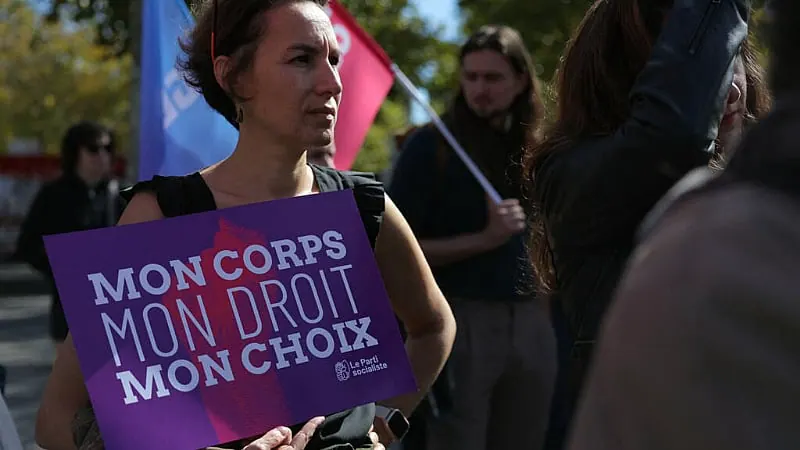
A recent survey by Le Planning Familial (MFPF) has highlighted the growing obstacles French women face in accessing abortion services, despite the right to abortion being enshrined in the country's constitution. The survey, published on International Safe Abortion Day, found that a lack of trained professionals and shortages of doctors are pushing waiting times beyond France's legal period of five days. Three out of four women who had an abortion in a health facility in 2026 waited more than seven days for an appointment.
The right to abortion was formally enshrined in the French Constitution on 8 March 2024. However, the survey revealed that women are still facing significant challenges in accessing abortion services. MFPF referred to "pathways full of obstacles", including refusals of support, pressure, and a lack of choice over the method of abortion. One in two women said a professional had refused to support them during the procedure, compared with 27 percent in 2024.
The survey identified geographical and rural inequalities as the biggest obstacle to abortion access, cited by 89 percent of those surveyed. Lack of information was the second largest obstacle (76 percent), followed by a lack of facilities or professionals (60 percent). Sarah Durocher, the head of MFPF, noted that "when you close a maternity unit, you close an abortion centre". She also pointed to the role of midwives, who "perform the majority of abortions today".
The organisation highlighted a "real geographical divide", with access generally harder in rural areas and places far from major cities. This is compounded by social inequalities affecting people with fewer resources or fewer opportunities to travel. Two thirds of women who had an abortion said they had experienced pressure or judgement during the procedure. One in five said they did not feel they had been given a full choice of abortion method.
The survey also identified difficulties in accessing information. The internet was the most common source, ahead of family and friends. Durocher noted that artificial intelligence (AI) was a mixed blessing, as it can direct people towards reliable sources, but can also be influenced by anti-abortion groups. Growing concerns about access to abortion services have been raised, with 62 percent of local associations surveyed saying abortion access was not easy in their department.
MFPF wants the special conscientious-objection clause for doctors and other health professionals to be removed, as it "contributes to the stigmatisation of an act". Durocher called for "a change in culture" to "make abortion an act like any other". The organisation is also calling for the legal time limit for abortion to be extended from 14 to 22 weeks, in line with other European countries such as Spain and the Netherlands.
Despite the constitutional right to abortion, Durocher warned that it could still be threatened by the rise of the far right. The far-right National Rally (RN) party recently won a record 14 seats in the Senate, effectively quadrupling its number in the 348-seat chamber. Durocher called for international mobilisation to protect the right to abortion, warning that if "the conservative right" comes to power, "abortion will obviously be attacked ... it won't be through legislation, but through access".
Key points
- Women in France face significant obstacles in accessing abortion services despite the constitutional right.
- Geographical and rural inequalities are the biggest obstacle to abortion access.
- The rise of the far right poses a threat to the right to abortion in France.