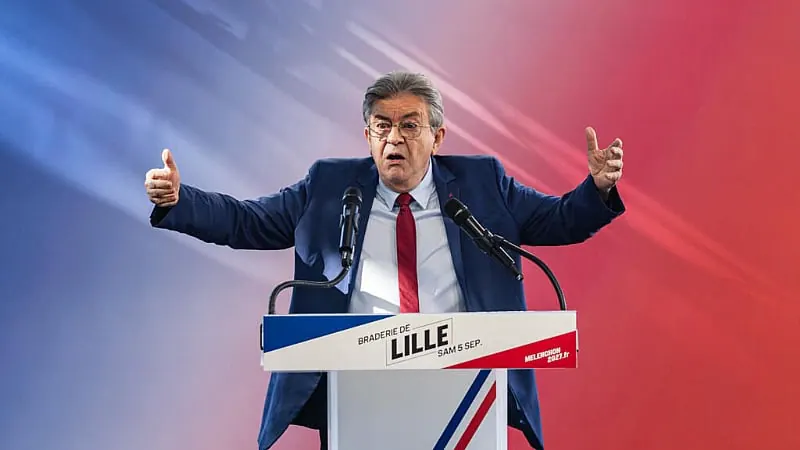
Student protests over resources and working conditions have erupted in schools across France, sparking a heated exchange between Prime Minister Sébastien Lecornu and far-left leader Jean-Luc Mélenchon. The protests, which began in the Paris area, have spread to other regions, with police arresting 10 high school students in the southern Alpes-Maritimes region on allegations of violence. Mélenchon, a top contender in the 2027 presidential election, has defended the protesters, accusing Lecornu's government of repressing them with "ferocity" and "an unmistakably racist undertone."
The clash between Lecornu and Mélenchon reflects the increasingly combative political climate ahead of the 2027 presidential election. Mélenchon, who finished third in the 2022 presidential election, hopes to advance beyond the first round of voting and qualify for the run-off. He has urged his supporters to become involved in the protests, saying "don't touch our young people." Lecornu has responded, saying that condemning violence and protecting students should not be a partisan issue.
The student protests have highlighted concerns over France's education system, with complaints about deteriorating schools, teacher shortages, and heavy class schedules. Politicians across the ideological spectrum are seeking to capitalize on the issue, with Mélenchon and other presidential hopefuls embracing the cause. Lecornu, meanwhile, is trying to build support for a 2027 state budget through a divided parliament.
Mélenchon, a 75-year-old veteran anti-capitalist, has a history of fiery rhetoric and has been a thorn in the side of President Emmanuel Macron's government. Macron is constitutionally barred from seeking a third consecutive term, and Mélenchon is hoping to appeal to younger voters who could be key to his chances. The far-right leader Marine Le Pen has also been gaining traction in the polls.
The protests have turned violent in some areas, with police reporting injuries and arrests. In the Alpes-Maritimes region, 10 high school students were arrested on allegations of setting fires, throwing projectiles, and committing other violent acts. Mélenchon has accused Lecornu's government of using excessive force, while Lecornu has emphasized the need to protect students and staff.
The exchange between Lecornu and Mélenchon has highlighted the deep divisions in French politics ahead of the 2027 presidential election. With Macron's government facing opposition from across the ideological spectrum, politicians are seeking to capitalize on issues that resonate with voters. The student protests have become a focal point for these tensions.
The 2027 presidential election is shaping up to be a crucial test for French politics, with Mélenchon and other candidates vying for support. The student protests and the government's response will likely continue to be a contentious issue in the run-up to the election. Key to Mélenchon's chances will be his ability to appeal to younger voters and capitalize on concerns over education and social issues.
Key points
- Mélenchon defends student protesters, accusing Lecornu's government of repressing them with "ferocity" and "an unmistakably racist undertone."
- Student protests highlight concerns over France's education system, including deteriorating schools, teacher shortages, and heavy class schedules.
- The clash between Lecornu and Mélenchon reflects the increasingly combative political climate ahead of the 2027 presidential election.