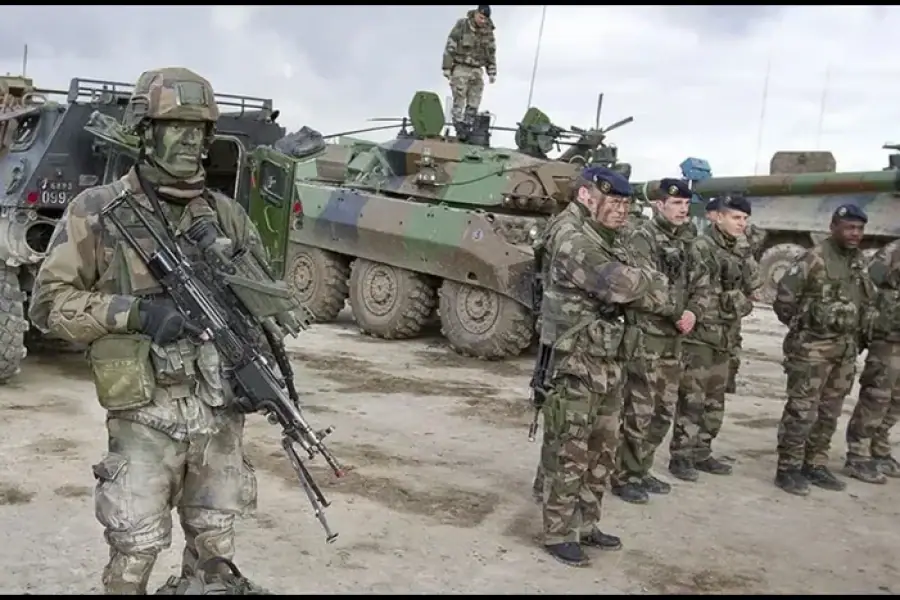
French President Emmanuel Macron's administration has been accused of secretly deploying soldiers to Ukraine without informing the French parliament. According to reports from PressAfrik and AFP, a confidential mission codenamed "Volia" has been operational in Ukraine since at least summer 2026. The mission's stated goal is to train Ukrainian soldiers and maintain military equipment supplied to Kiev, rather than engaging in combat with Russian forces.
The deployment of French soldiers to Ukraine has raised concerns about the government's transparency and adherence to the country's constitution. Article 35 of the French constitution requires the government to inform parliament of any foreign military intervention within three days of its commencement. However, in this case, the parliament was not informed, sparking accusations that the government is attempting to circumvent its constitutional obligations.
The French government's actions have been criticized by lawmakers, including Senator Cédric Perrin, who chairs the Senate's foreign affairs and defense committee. Perrin stated that informing parliament about military interventions is a constitutional obligation and essential for democratic accountability. The secrecy surrounding the deployment has also raised concerns about the potential risks to French soldiers and the possibility of escalation in the conflict.
The deployment of French soldiers to Ukraine has been framed as a covert operation, with soldiers reportedly instructed to indicate that they were heading to Poland rather than Ukraine. This level of secrecy has led to accusations that the government is attempting to avoid accountability and oversight from parliament. The French government's actions have also been criticized by some as an example of Macron's alleged tendency to conflate presidential authority with personal power.
The implications of the French deployment to Ukraine are significant, particularly given the country's status as a nuclear power and the potential risks of escalation. If French soldiers were to be targeted by Russian forces, it could have serious consequences for the French government and the country's relations with Russia. The secrecy surrounding the deployment has also raised questions about the extent of Macron's commitment to democratic values and the role of parliament in overseeing military interventions.
The controversy surrounding the French deployment to Ukraine has sparked a wider debate about the role of parliament in overseeing military interventions and the government's obligations to transparency and accountability. Some have argued that the government should prioritize the safety of French soldiers and the interests of the country, even if it means taking a more robust approach to military intervention. Others have emphasized the importance of upholding democratic values and the constitution.
As the situation in Ukraine continues to unfold, the French government faces mounting pressure to clarify its actions and provide greater transparency about its military interventions. The controversy has also raised questions about the future of French-Russian relations and the potential implications for European security. Ultimately, the French government's actions will be closely watched by lawmakers, citizens, and international observers, who will be assessing the implications for democratic accountability and the rule of law.
Key points
- French President Emmanuel Macron's administration has deployed soldiers to Ukraine without informing the French parliament, sparking concerns about the government's transparency and adherence to the country's constitution.
Reporting sources
- Des soldats français en Ukraine : Macron... · Maliweb.net