France's eight major public sector unions have called a strike to pressure the government ahead of the unveiling of the 2027 budget. The unions, which had already rejected the government's initial budget announcements, are demanding pay raises to keep up with inflation. The strike comes after Prime Minister Sébastien Lecornu proposed freezing the index used to calculate civil servants' base pay, a move the unions have strongly opposed.
The proposed pay freeze has sparked deep anger among public sector employees, who feel they are being unfairly targeted. CFDT general secretary Marylise Léon stated that public sector employees are "fed up with civil servant bashing." The index used to calculate base pay has not moved since July 2023, resulting in no pay raises for three consecutive years despite rising inflation.
The strike will involve various sectors, including teachers, public hospital workers, and employees of the public employment agency France Travail. According to the FSU-Snuipp primary teachers' union, 40 percent of staff in preschools and primary schools will participate in the strike. Public hospital unions have also called on workers to join, which may lead to reduced or postponed non-emergency services and scheduled outpatient appointments.
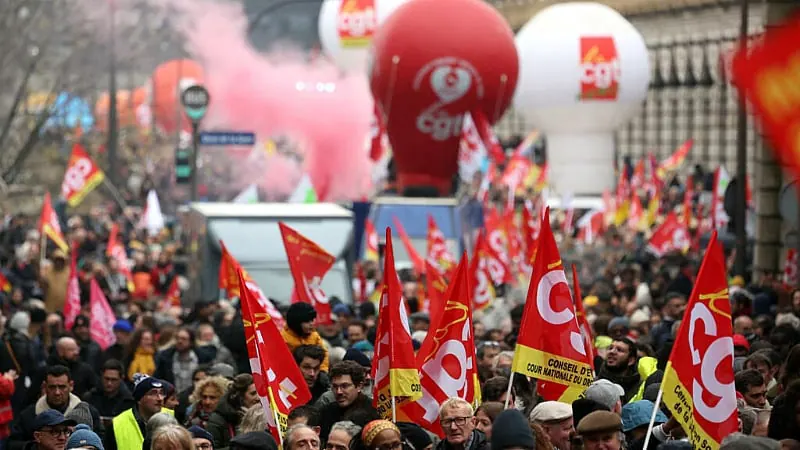
Demonstrations are planned across France, with the CGT union recording around 170 events. In Paris, two marches are expected to converge on Place de la Nation. A separate march for firefighters, who were heavily involved in responding to summer fires, is also planned. Other cities, including Lille, Arras, and Liévin, will also host demonstrations.
The main high school student union, USL, has called for high school blockades across France to coincide with the teachers' strike. The union's demands include addressing the lack of resources, overcrowded classrooms, and the shortage of teachers and staff. USL president Ryad Rani stated that the issues affect the entire country, not just the Île-de-France region.
Despite the strike, transport services will be largely unaffected. The SNCF railway company has announced that four out of five regional TER trains will run, with high-speed TGV and long-distance Intercités services operating as normal. The Paris metro, buses, and trams are also expected to run as planned, with only minor disruptions on the RER and suburban lines.
The strike and demonstrations reflect the growing tensions between the government and public sector unions over pay and working conditions. The outcome of the budget debate and the government's response to the unions' demands will likely have a significant impact on the industrial relations landscape in France. The unions' actions are aimed at putting pressure on the government to reconsider its proposals and find a solution that addresses the concerns of public sector employees.
Key points
- French public sector unions have called a strike to demand pay raises and oppose the proposed freeze on the index used to calculate civil servants' base pay.
- The strike involves various sectors, including teachers, public hospital workers, and employees of the public employment agency France Travail.
- Demonstrations are planned across France, with around 170 events recorded by the CGT union.