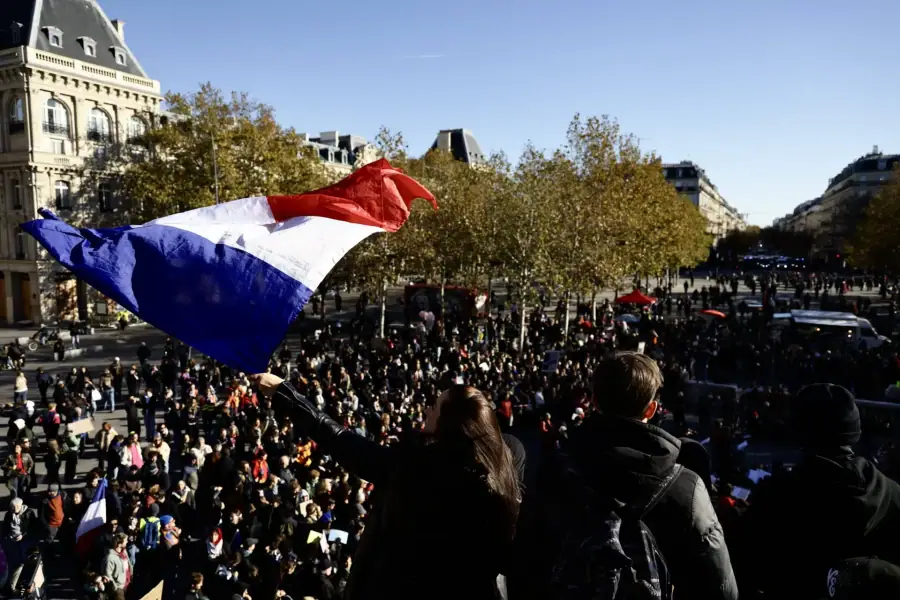
Tens of thousands of protesters took to the streets of France on Saturday, November 14, 2026, to express their frustration with rising living costs and proposed legislation that would grant greater protection to police officers. According to the French Interior Ministry, around 106,000 people participated in the demonstrations nationwide, with 24,000 attending in Paris. However, student unions estimated the number of protesters at 200,000, including nearly 100,000 in the capital.
The protests, which have been ongoing for five consecutive Saturdays, drew a diverse crowd of students, union members, and Yellow Vest activists. In Paris, a protester used a megaphone to chant "No justice, no peace." Others demanded the resignation of President Emmanuel Macron or shouted "Everyone hates the police." A group of protesters carried a giant puppet with the inscription "Lord Macron." The demonstrations were largely peaceful, but some incidents of violence and police brutality have been reported in recent weeks.
One of the main concerns driving the protests is a proposed law that would strengthen protection for police officers using their weapons. Supporters of the law, including far-right presidential candidate Marine Le Pen, argue that it is necessary to prevent police officers from being automatically suspected of using excessive force. However, activists claim that the law would amount to a "license to kill" and hinder investigations into police brutality.
Adrien, a 20-year-old cellist who participated in the Paris protest, expressed concerns about the proposed law. "We are scared when we participate in a demonstration, and this will only increase our fear if their impunity is reinforced," he said. The protests also drew people from various age groups, including 72-year-old Josette, who sang a protest song in Bordeaux. "I have two passions: fanfares and revolution," she said.
The protests have taken place against a backdrop of rising discontent with President Macron's government. Recent polls indicate that Macron's popularity is at an all-time low since his election in 2017. The government faces challenges in responding to protesters' demands, including reducing debt and addressing concerns about police brutality. The far-left candidate Jean-Luc Mélenchon is expected to come second in the presidential election next year.
The protests have been marked by clashes between police and protesters, with reports of police using tear gas and protesters throwing fireworks. In Toulouse, a 28-year-old asylum law specialist, Kenza, denounced the government's response to social unrest. "The repression of protesters is unacceptable, especially when it comes to children," she said. Lawyers have reported that police violence during recent protests has resulted in "mutilations," including injuries to hands, feet, and eyes.
The protests are set to continue, with unions calling for another strike on Tuesday. The government has offered a 0.6% increase in the minimum wage, which unions have rejected as insufficient. The largest protests in recent weeks took place during a nationwide strike last Thursday, when over half a million people participated, according to official figures.
Key points
- The protests were sparked by a range of issues, including inflation, police brutality, and proposed legislation that would grant greater protection to police officers.
- The demonstrations drew a diverse crowd of students, union members, and Yellow Vest activists, with estimates suggesting that up to 200,000 people participated nationwide.
- The protests have taken place against a backdrop of rising discontent with President Macron's government, with recent polls indicating that his popularity is at an all-time low.
Reporting sources
- Des manifestants français scandent des... · Maliweb.net