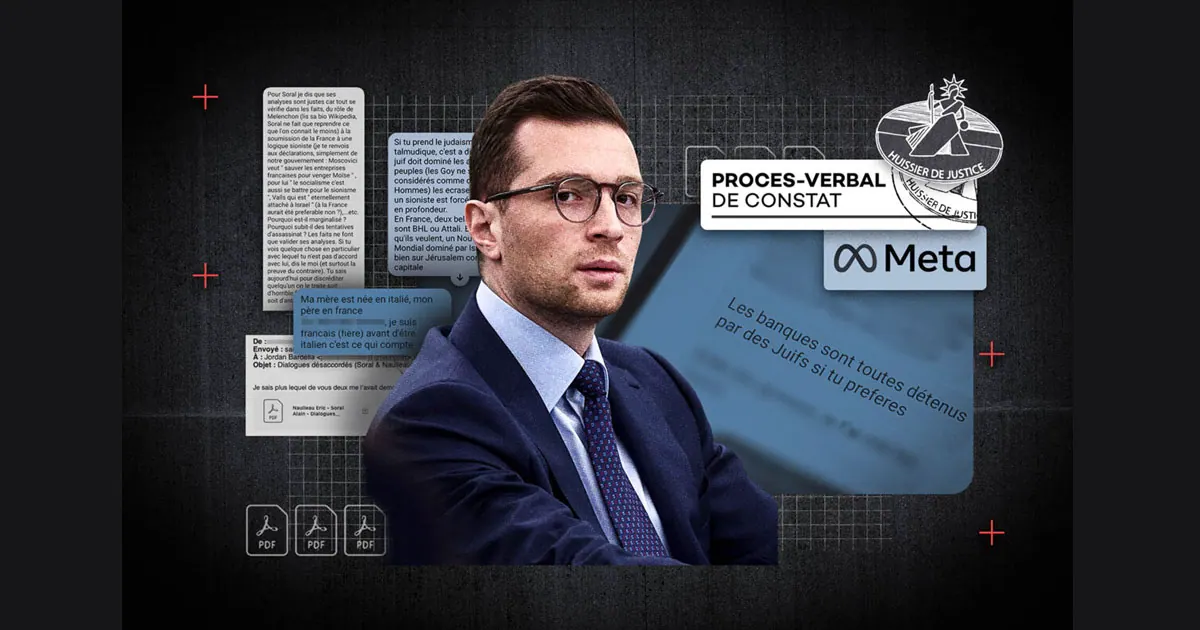
A recent investigation by Mediapart has exposed antisemitic remarks made by Jordan Bardella, president of the far-right National Rally party. The probe revealed that Bardella had made inflammatory comments on social media, including a post that read: "The banks are all owned by Jews. The Zionists are at the head of the banks. That's what they want, a new world order dominated by Israel, with Jerusalem as its capital."
The reaction to Bardella's remarks has been met with a mixed response from the French government and media. President Emmanuel Macron condemned the comments, calling them "gravissimes and inacceptables." However, some commentators have downplayed the significance of the remarks, attributing them to Bardella's youth and inexperience.
In contrast, left-wing parties, particularly La France Insoumise (LFI), have faced intense scrutiny over their statements on Israel and Palestine. LFI leaders, including Mathilde Panot and Manuel Bompard, have been accused of antisemitism for their support of the Palestinian people.
The double standard in the French political debate has been criticized by many, who argue that it undermines the fight against antisemitism. While Bardella's remarks have been widely condemned, the far-right has also been accused of using the issue to deflect attention from its own extremist views.
LFI has been subject to a "regime of semantic surveillance," with every statement being closely monitored and criticized. The party's leader, Jean-Luc Mélenchon, has faced backlash for his comments on Israel and Palestine, including a remark that was deemed antisemitic by some.
The controversy has highlighted the challenges of addressing antisemitism in France, particularly in the context of the Israeli-Palestinian conflict. While some have called for greater nuance and understanding, others have argued that antisemitism must be condemned in all its forms.
Ultimately, the French political debate on antisemitism remains complex and contentious, with different parties and interest groups vying for influence and legitimacy. As the country grapples with the issue, it remains to be seen how the various stakeholders will navigate the challenges and complexities of addressing antisemitism in a constructive and effective manner.
Key points
- The French far-right has been accused of benefiting from a double standard on antisemitism, with leniency shown to its leaders.
- La France Insoumise has faced intense scrutiny over its statements on Israel and Palestine, with some accusing the party of antisemitism.
- The controversy has highlighted the challenges of addressing antisemitism in France, particularly in the context of the Israeli-Palestinian conflict.