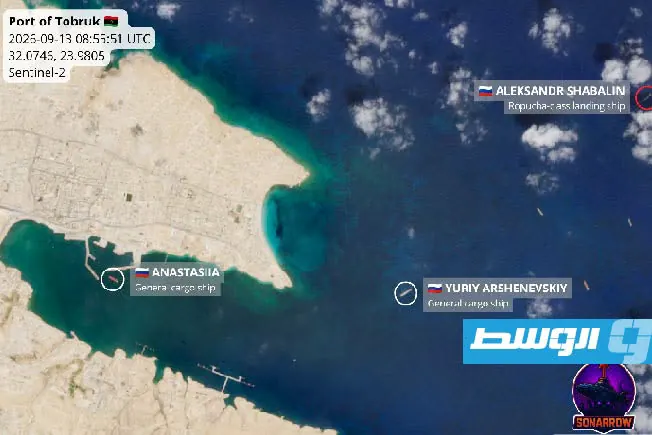
A recent report by the French newspaper "L'International Courier" has shed light on the growing involvement of foreign powers in Libya, transforming the country into a battleground for global influence. The report highlights the delivery of dozens of armored vehicles to the eastern Libyan city of Tobruk in mid-September. The shipment, carried out by two Russian cargo ships and a warship, has raised concerns about the escalating military presence of Russia in the region.
According to the report, Russia is expanding its military presence in Libya through six air bases and seeks to gain control of Tobruk's port and airbase. This move could potentially make Libya a new military and logistical hub for Russia, connecting the Mediterranean to the Sahel region and Sudan. Analysts believe that this development could open new avenues for hybrid attacks against Europe from the south.
The French newspaper suggests that the recent shipment to Tobruk may be linked to preparations for a potential armed conflict in western Libya. Meanwhile, other reports indicate that Ukrainian forces have been active in Libya, with Ukrainian trainers working on drones in the city of Misrata. A Ukrainian drone attack on a Russian gas tanker in March damaged the vessel, further escalating tensions between Ukraine and Russia in the region.
In response to Russia's growing influence, the US has been working to counter Moscow's moves in Libya. The US and Libyan naval forces recently participated in joint military exercises in Tunisia, aimed at enhancing maritime security through international cooperation. The drills, known as "Phoenix Express 2026," demonstrate Washington's commitment to preventing Russia from gaining unchecked influence in Libya.
Libyan leaders have expressed concerns about the country's involvement in global power struggles. In a speech to the UN General Assembly, Libyan Presidential Council head Mohamed al-Menfi stated that Libya seeks to establish balanced strategic partnerships that maintain its sovereignty and avoid replacing one form of external dependency with another.
The situation in Libya remains complex, with multiple foreign powers vying for influence. The French report highlights the risk of Libya becoming a proxy battlefield for global powers, with serious implications for regional stability. As the international community continues to navigate the complexities of the Libyan crisis, it remains to be seen how the country's future will unfold.
The developments in Libya have significant implications for regional and global security. With Russia, the US, and Ukraine all involved in the country's affairs, the risk of escalation and conflict remains high. The international community must work together to find a peaceful solution to the Libyan crisis, one that prioritizes the country's sovereignty and stability.
Key points
- Russia is expanding its military presence in Libya through six air bases and seeks to gain control of Tobruk's port and airbase.
- The US and Libyan naval forces recently participated in joint military exercises in Tunisia, aimed at enhancing maritime security through international cooperation.
- Libyan leaders have expressed concerns about the country's involvement in global power struggles, seeking to establish balanced strategic partnerships that maintain its sovereignty.