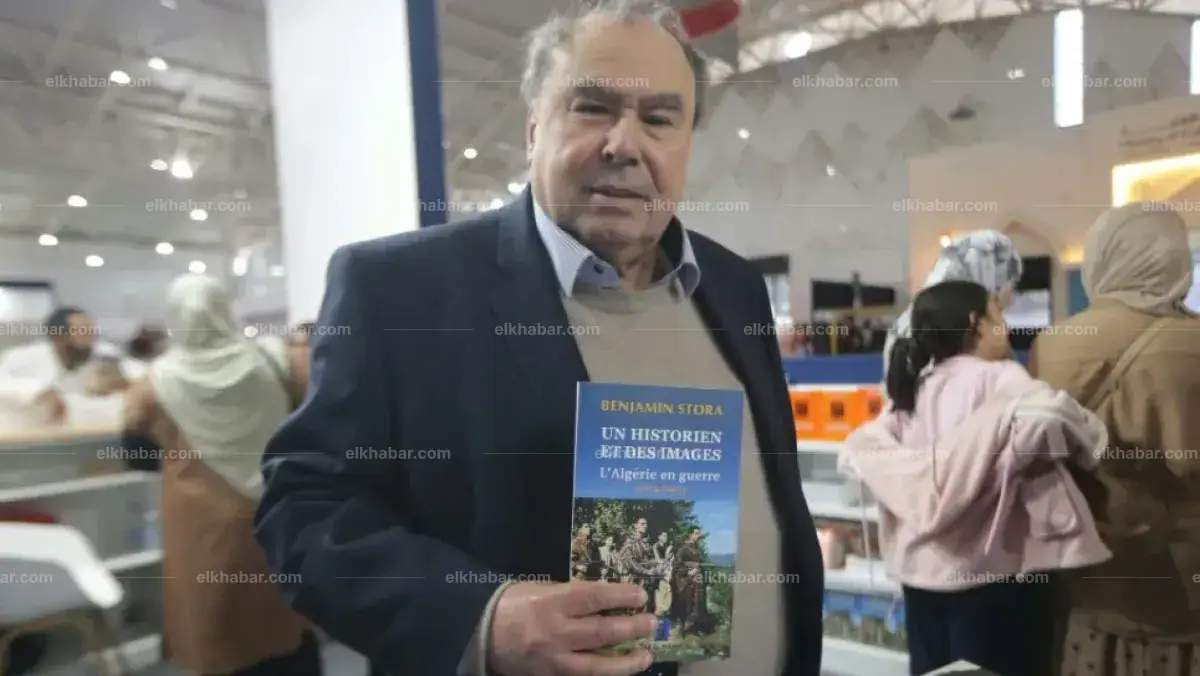
French historian Benjamin Stora recently visited Algeria to discuss his latest book and share his insights on the country's colonial past. During his visit, he met with the public and discussed the complexities of Algeria's history with French colonial rule. Stora's visit coincided with the anniversary of the Algerian Revolution, which began on November 1, 1954. He expressed his deep respect for the country's history and its people.
Stora's latest book, "Un historien et des images. L'Algérie en guerre 1954-1962," explores the role of images in shaping our understanding of historical events. The book is a departure from his previous works, which relied heavily on written archives and oral testimonies. Stora has long been interested in understanding how societies construct their identities and how these representations influence our understanding of history. His work with images aims to shed new light on this complex period in Algerian history.
Stora discussed the challenges of addressing Algeria's colonial past, which spans over 132 years. He emphasized that this process requires a long-term and patient approach, involving a comprehensive examination of land confiscation, massacres, and popular resistance. Stora also highlighted the importance of understanding the impact of colonialism on the Algerian people and the need for a nuanced approach to reconciliation. He expressed his hope that one day, a joint Algerian-French committee on historical memory will be reactivated to continue this important work.
The joint Algerian-French committee on historical memory has been inactive for some time, and Stora was asked about the prospects of its revival. He stated that while it is unlikely to happen in the current climate, he remains hopeful that it will be reactivated in the future. Stora emphasized that the committee's work is crucial in addressing the historical injustices of colonialism and promoting a deeper understanding between Algeria and France.
Stora evaluated the French government's efforts to address historical injustices, citing both successes and failures. He praised France's recognition of its role in the assassination of Algerian heroes and the return of the remains of the "Star" resistance fighter. However, he expressed disappointment that progress has been limited in sensitive areas such as nuclear testing in the Algerian Sahara and the use of chemical warfare.
Stora also discussed the case of Gisele Halimi, a French-Algerian activist who fought for women's rights and was denied a place in the Pantheon, France's national shrine. He expressed sadness that her contributions were not recognized and emphasized the importance of preserving the legacy of individuals like Halimi. Stora concluded that it is essential to build on the progress made so far and to ensure that these achievements are not undermined by extremist groups.
Stora's visit to Algeria highlighted the ongoing efforts to come to terms with the country's complex history. He emphasized the importance of historical memory and the need for a comprehensive approach to addressing the legacies of colonialism. As Algeria and France continue to navigate their shared past, Stora's work serves as a reminder of the importance of nuanced understanding and reconciliation.
Key points
- Stora emphasizes the need for a comprehensive approach to addressing historical injustices in Algeria's colonial past.
- The joint Algerian-French committee on historical memory has been inactive, but Stora remains hopeful that it will be reactivated in the future.
- Stora's work highlights the importance of preserving historical memory and promoting nuanced understanding between Algeria and France.