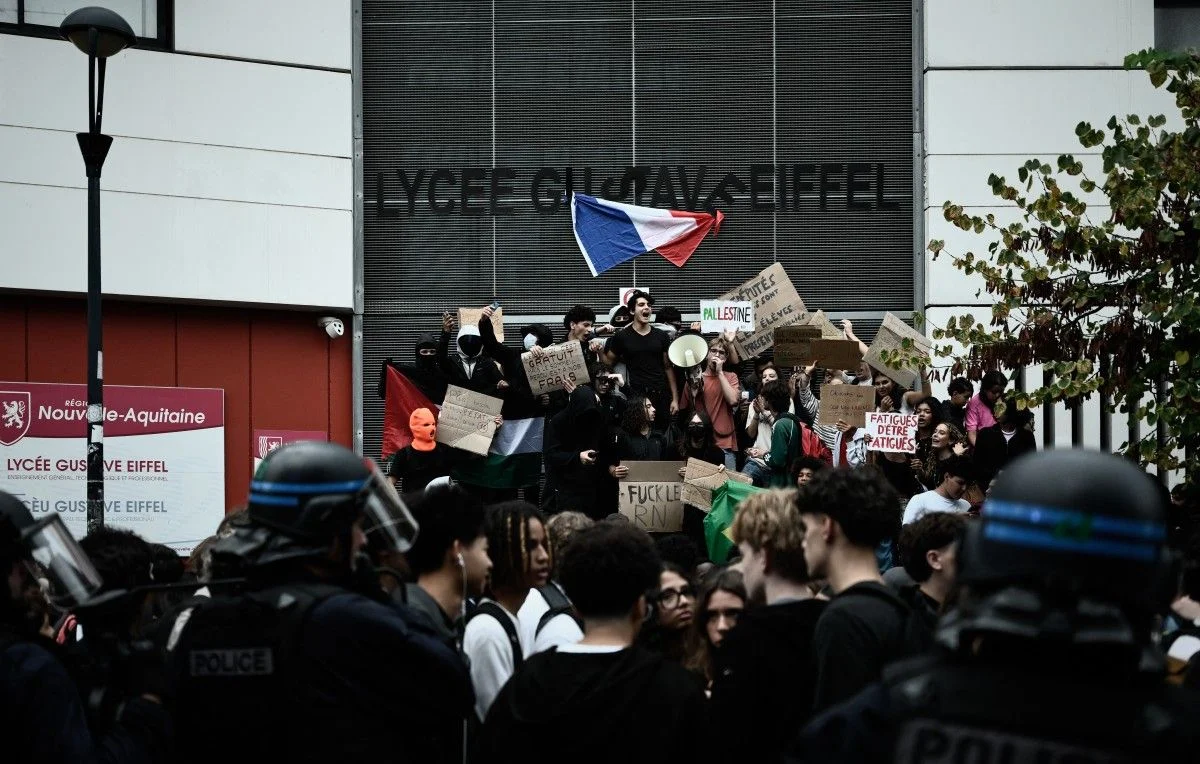
French high school students continued their protests on Tuesday, with approximately 200 schools closed, according to the Minister of National Education. This number represents a decline from the previous week. The movement, which began in late September, has affected several hundred of the country's 3,700 high schools. Students are demanding better study conditions, including replacing absent teachers, improving school facilities, and reducing overcrowded schedules.
The protests are supported by several unions and some left-wing parliamentarians. Over 70,000 people marched across the country on Thursday, October 9. On Tuesday, students organized blockades and protests in various locations, including the Paris region and Marseille. The demonstrations were marked by clashes between students and police, with several injuries reported.
Swedish climate activist Greta Thunberg joined the students on Tuesday, speaking outside the Paul-Éluard high school in Saint-Denis, north of Paris. She expressed her support for the students, stating that young people are not being heard and that their future is being taken away from them. The Minister of National Education, Édouard Geffray, called for calm and announced that some protest routes would be closed to prevent damage.
The government has promised to deploy around 3,000 replacement teachers to 114 of the most affected schools, with 35% of them assigned on Tuesday. President Emmanuel Macron urged the protesters to exercise restraint, stating that these issues require time and discussion. However, the protests have been marked by violence, with over 6,800 people, mostly minors, taken into custody since the beginning of the movement.
The Ministry of Justice reported that over 6,800 people have been placed in custody, while the police have opened 24 internal investigations into allegations of violence against protesters. Eight teachers were injured on Monday, and several school staff and a police officer were hurt in clashes involving fireworks. The situation remains tense, with a broader mobilization against the rising cost of living planned for Saturday, October 17.
The protests have disrupted the education system, with many schools forced to close. The students' demands for a 10 billion euro investment plan in high schools have not been met, leading to continued protests. The government has faced criticism for its handling of the situation, with many accusing it of not doing enough to address the students' concerns.
As the protests continue, there are concerns about the impact on the education system and the students' academic performance. The situation remains uncertain, with no clear resolution in sight. The government's response to the protests and the students' demands will be crucial in determining the outcome of the movement.
Key points
- Over 200 French high schools were blocked in protests over poor study conditions and a demand for a 10 billion euro investment plan.
- The protests, which began in late September, have been supported by unions and some left-wing parliamentarians.
- Over 6,800 people, mostly minors, have been taken into custody since the beginning of the movement.