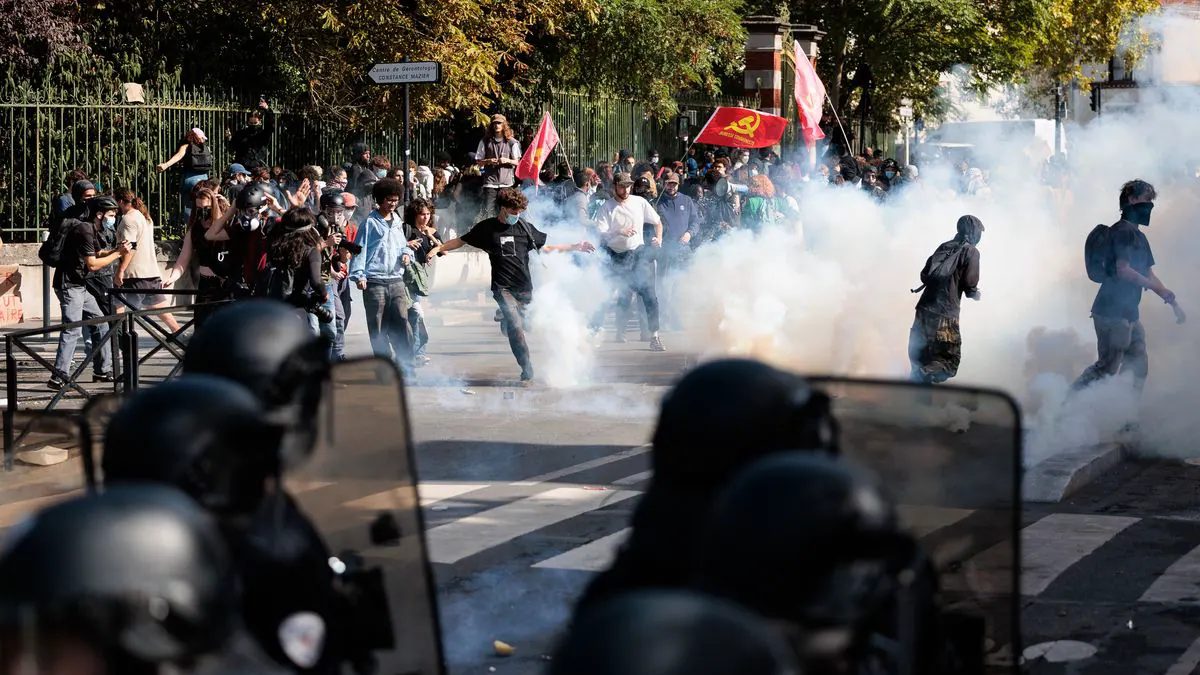
Protests by French high school students have spread to numerous cities across the country, resulting in clashes with police and the closure of several schools. According to the French authorities, 1,747 students were arrested on Friday, bringing the total number of arrests since Monday to over 5,000. The protests began on September 17 in Paris and quickly gained momentum, with students blocking school entrances and confronting police.
The students are protesting against long school hours, poor learning conditions, and a shortage of staff. They are also expressing their discontent with the heat in classrooms and other issues. However, the protests have taken a turn for the worse, with some students engaging in vandalism, looting, and disrupting traffic. The French government has stated that while it understands the students' demands, it condemns the violence.
The situation escalated, with 735 educational institutions closed and 158 reported cases of violence. The violence targeted security forces, teachers, journalists, and bystanders. The French Interior Minister, Laurent Nunez, reported that the situation was being closely monitored. The protests have raised concerns about the safety of students, teachers, and the general public.
The protests have spread to various parts of the country, with students demanding better learning conditions and more support from the government. The students' grievances include the need for more teachers, better infrastructure, and a more manageable workload. However, the protests have also led to concerns about the potential impact on the academic year.
The French government has urged students to return to school and engage in constructive dialogue to address their concerns. The government has also promised to take steps to address the students' demands and improve the education system. However, the protests continue, with students vowing to press on until their demands are met.
The situation in France has drawn comparisons with other European countries, where students and young people have also taken to the streets to protest against various issues. In Spain, for example, thousands of people have protested against housing shortages and economic inequality. The protests highlight the challenges facing young people in Europe and the need for governments to address their concerns.
The protests in France are expected to continue, with students planning further demonstrations and strikes. The government has promised to engage in dialogue with student leaders and address their demands. However, it remains to be seen whether the protests will lead to meaningful changes in the education system and the lives of French students.
Key points
- Over 5,000 French high school students arrested in recent protests
- Protests spread to numerous cities across France, resulting in clashes with police and school closures
- Students demand better learning conditions, more support from government, and address concerns about safety and academic year impact