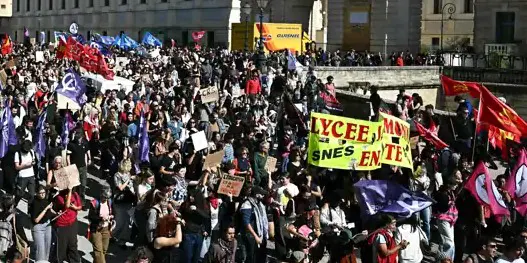
For three weeks, France has been experiencing high school student-led protests against educational inequalities, teacher shortages, and poor learning conditions. The mobilization has resulted in violent clashes with law enforcement, leaving many injured and causing disruptions in nearly 1,000 high schools. According to reports, the protests began on September 18 at the Saint-Exupéry high school in Créteil, where students blocked access to the school to denounce the lack of teachers.
The movement has since spread to other high schools, with students demanding improvements in infrastructure, reduced class sizes, better hygiene, and increased access to higher education. The Parcoursup platform, which manages university applications, has also been criticized for its complex procedures and potential to exacerbate inequalities. According to Thibaud Cojean, editor-in-chief of the online media outlet L'Étudiant, the mobilization reflects accumulated frustration among students, with the same demands being made for five years without significant change.
The protests have turned violent, with students suffering serious injuries, including fractures and trauma to the eyes, jaw, or teeth. The use of stun grenades and defense ball launchers (LBD) has been blamed in several testimonies. The spread of images of police interventions on social media has fueled outrage and contributed to the widening mobilization. In response to criticism, Interior Minister Laurent Nuñez announced the suspension of the use of stun grenades.
At least 18 investigations into alleged police violence have been opened. Prime Minister Sébastien Lecornu has promised decisions by the end of October to address the students' demands. However, the education budget plans to cut 835 teacher positions in colleges and high schools, despite a announced increase of €1.2 billion in sector credits. This has been met with skepticism by protesters, who feel that the measures do not address their concerns.
The difficulties facing the French education system make a rapid resolution to the crisis uncertain. The mobilization takes place in a tense political context, with the presidential election approaching. Issues of educational inequalities, education funding, and violence during protests are likely to become major topics in the upcoming political debate.
One notable case that has highlighted the severity of the violence is that of Eden, a 14-year-old who was seriously injured after being hit with a tear gas grenade in the mouth during clashes in Val-d'Oise. His mother expressed her distress over her son's injuries. In total, over 6,500 arrests and hundreds of injuries have been reported among students, police officers, and school staff.
The protests show no signs of abating, with students continuing to demand change. The government faces pressure to address the systemic issues plaguing the education system, including teacher shortages, poor infrastructure, and unequal access to education. The outcome of the protests and the government's response will likely have significant implications for the future of education in France.
Key points
- Over 6,500 arrests have been made and hundreds of injuries reported during the protests.
- The protests have disrupted nearly 1,000 high schools across France.
- The government has suspended the use of stun grenades amid criticism of police violence.