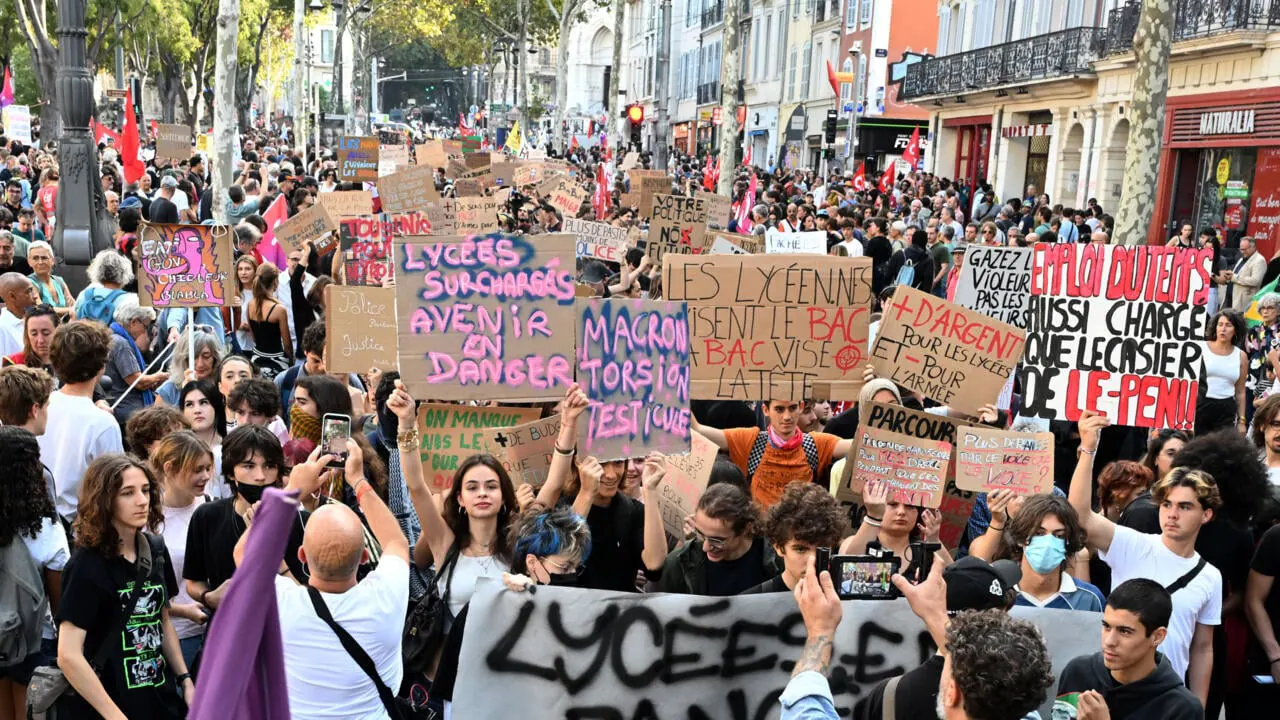
The French high school student movement, which began on September 21 at a high school in Créteil, has entered its third week, with widespread protests and demonstrations reported across the country. According to reports, over 410 actions were recorded in schools on September 29, with hundreds of high schools suspending classes in part or in full. The protests are focused on improving material conditions for students, including filling teacher vacancies and replacing absent teachers, class sizes, and school infrastructure.
Students are also criticizing the functioning of the Parcoursup orientation platform, which is used for university admissions. The movement has been marked by a significant police response, with over 5,000 people arrested between September 21 and October 2, according to the French Ministry of the Interior. The daily arrest rate increased dramatically, from 164 on September 28 to 1,948 on October 1. Amnesty International France has reported that 85% of those arrested are minors.
Amnesty International France has also documented several serious injuries during the protests, including a 15-year-old boy who lost a hand in Lens on October 5 after a disencirclement grenade exploded, a 14-year-old boy who was hit in the face by a tear gas launcher in Val-d'Oise on September 28, and a 16-year-old boy who lost the use of an eye in Tours on September 30 after being hit by a defense ball launcher. An investigation by the General Inspectorate of the National Police has been opened into the Lens incident.
Amnesty International France has called for the suspension of disencirclement grenades and defense ball launchers during protests, as well as a dialogue with high school students. While acknowledging that some violence has been committed by protesters, the organization is advocating for a more measured police response. The French Ministry of the Interior has released data on arrests, but these figures have not been consolidated into a judicial report.
The protests have highlighted concerns over teacher shortages, with many positions remaining unfilled and absences not being replaced. Students are also calling for improvements to school infrastructure, including better facilities and more support staff such as school nurses, social workers, and education assistants. The movement has gained significant attention, with many students and parents expressing frustration over the current state of the education system.
The French government has not yet responded to the specific demands of the student movement, but the issue is likely to be discussed in the coming weeks. The protests have been marked by a strong police presence, with many students and observers expressing concern over the level of force used. The student movement has also sparked a wider debate over the state of education in France and the need for reform.
As the movement enters its third week, students are showing no signs of backing down. The protests are continuing, with many students vowing to maintain pressure on the government to address their concerns. The situation remains fluid, with many stakeholders watching to see how the situation will unfold. The student movement has highlighted deep-seated issues in the French education system and the need for meaningful reform.
Key points
- Over 5,000 people arrested during French high school student protests
- Amnesty International France reports 85% of arrested protesters are minors
- Student protests highlight poor learning conditions and police response in France