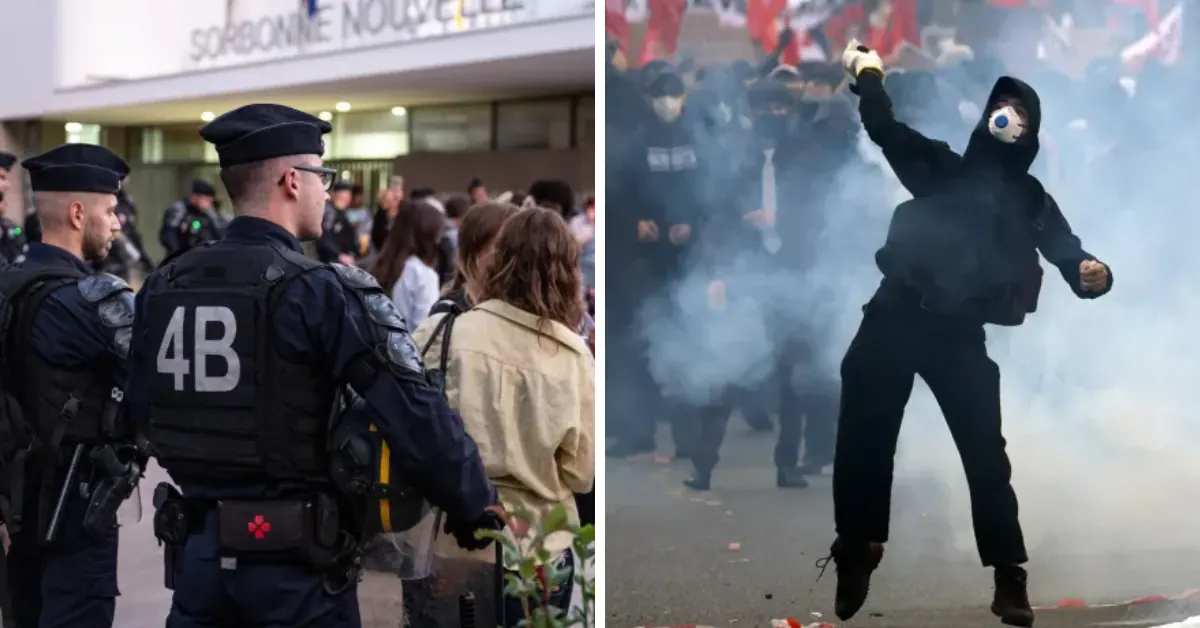
Tens of thousands of high school students took to the streets across France on Tuesday, in a new wave of protests and demonstrations against the government's education policies. The protests, which began in September, have been marked by violence and clashes with police, prompting the government to deploy over 2,000 police officers and gendarmes to maintain order. The protests have also been supported by some left-wing politicians and unions.
The protests are primarily driven by students' demands for better resources and working conditions in schools. They complain about overcrowded classrooms, lack of regular teacher replacements, poor building conditions, and high temperatures in classrooms. The students also object to long school days and difficult university admission procedures. The government has acknowledged some of these concerns but accuses radical left-wing groups of exploiting the protests and pushing them towards violence.
Prime Minister Sebastian Lecornu has accused the radical left of seeking to create chaos before the presidential election in April. He claimed that the violence was part of their political project to plunge the country into chaos. Lecornu's comments were in response to criticism from Mathilde Panot, leader of the left-wing party France Insoumise. The government has suspended classes until the end of the week in an effort to quell the protests.
The protests began at the Saint-Exupery high school in Creteil, a suburb of Paris, where teachers were protesting staff shortages and working conditions. The movement quickly gained momentum, with students joining in to support their teachers. The protests have since spread to over 30 cities across France, including Paris, with thousands of students participating.
The protests have been marred by incidents of violence, including an attack on a teacher in the city of La Ciotat. There have also been reports of police brutality, with human rights organizations criticizing the government's response to the protests. According to the government, over 5,000 people have been arrested, and 215 students and 700 police officers have been injured since the protests began.
Human rights organizations, including Amnesty International, have called on the government to address the concerns of the students and to ensure that the police response to the protests is proportionate and respectful of human rights. Amnesty International's Anne Sauvainel-Paras expressed concern about the use of tear gas and batons by police and called for an investigation into allegations of police brutality.
The government has announced that it will open 10 investigations into police conduct during the protests. The protests are expected to continue, with students and teachers demanding better working conditions and resources for schools. The government faces pressure to find a solution to the crisis before the presidential election in April.
Key points
- The French government has suspended classes until the end of the week in an effort to quell the protests.
- The protests are primarily driven by students' demands for better resources and working conditions in schools.
- Human rights organizations have called on the government to address the concerns of the students and to ensure that the police response to the protests is proportionate and respectful of human rights.