The French government's response to recent protests has drawn criticism from human rights groups and opposition politicians. Over the past three weeks, images of police brutality against minors have emerged, including adolescents being strangled, minors being handcuffed, and protesters being subjected to attempted drowning. These incidents have raised concerns about the government's commitment to upholding human rights and the rule of law. The protests began as a response to various issues, including education and economic policies.
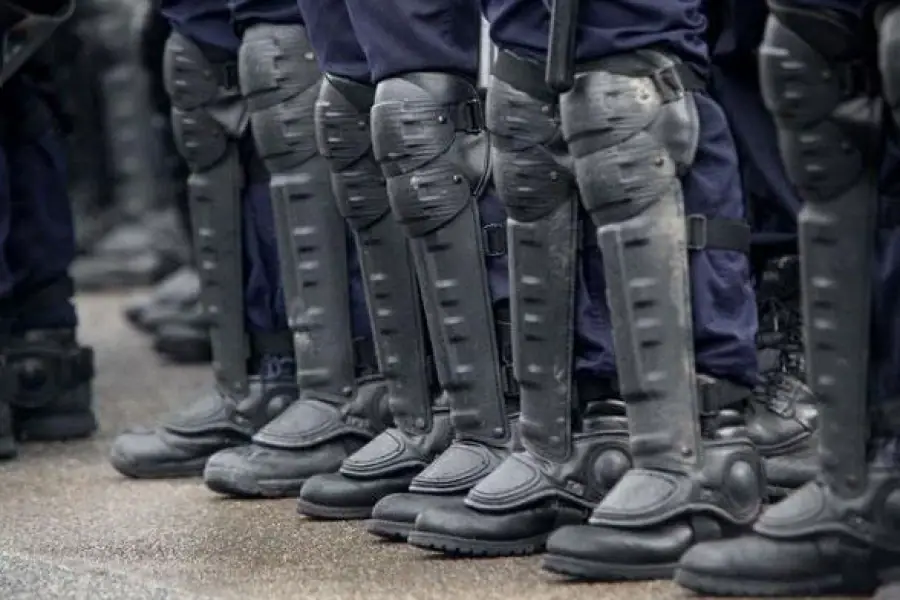
On October 24, the government announced that it would deploy military personnel from the Sentinelle operation to "secure public space" in addition to police forces. This move has been seen as a significant escalation of the government's response to the protests. The use of soldiers in maintaining public order is a rare occurrence in France and has raised concerns about the militarization of cities. The government has also announced that it will deploy units specialized in counter-terrorism and serious crime, including the RAID and GIGN.
The French Minister of the Interior, Gérald Darmanin, has announced that he will ban all "protest demonstrations of a nature to disturb public order," including those that are officially declared. This move has been seen as a significant restriction on the right to freedom of assembly and expression. The government has also imposed curfews in several cities, which have been criticized as an excessive measure. These restrictions have been justified as necessary to maintain public order, but critics argue that they are an overreach of government power.
The government has also used the justice system to crack down on protesters. Darmanin has instructed prosecutors to classify arrested protesters as "organized crime" suspects, which allows for longer detention periods and more invasive surveillance. The use of exceptional justice measures has raised concerns about the government's commitment to upholding the rule of law. The government has also announced that it will use facial recognition technology and drones to monitor protesters.
The government's response to the protests has been criticized by opposition politicians, including those from the La France Insoumise (LFI) party. LFI has been accused by the government and media of manipulating protesters, which the party denies. Some politicians, including Bruno Retailleau and Gérard Larcher, have called for the dissolution of LFI, which has raised concerns about the government's commitment to democratic principles.
There are concerns that the government may use exceptional powers to further restrict civil liberties. The government has not ruled out the possibility of imposing a state of emergency or invoking Article 16 of the Constitution, which would grant the president significant powers. This move has raised concerns about the potential for authoritarianism and the erosion of democratic institutions.
The situation in France has sparked international concern, with human rights groups and politicians expressing alarm at the government's response to the protests. The French government has faced criticism for its handling of the protests, which has raised questions about its commitment to upholding human rights and democratic principles. The government must balance the need to maintain public order with the need to respect civil liberties and democratic institutions.
Key points
- The French government has deployed the army and antiterrorism units to quell protests, sparking concerns of authoritarianism and human rights abuses.