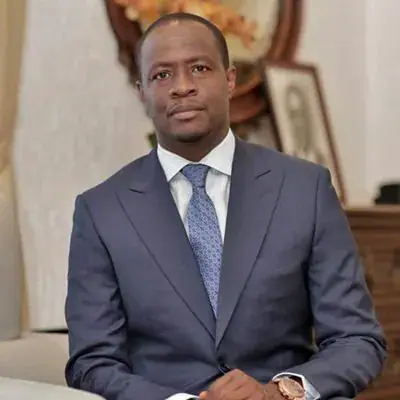
The French political landscape is increasingly marked by debates on immigration and identity, diverging from the United States' approach. While the US has elected officials from diverse backgrounds, including Muslim Americans, France is witnessing a surge in rhetoric targeting citizens of immigrant origin. The election of Abdul Al Sayed, a Muslim senator from Michigan, and Zohran Mamdani, a mayor of New York City, has highlighted the difference in approaches between the two countries.
French politician Édouard Philippe recently sparked controversy by stating that the integration of young people from immigrant backgrounds has failed. This comment was made in the context of recent social unrest in France. Philippe's statement was seen as discriminatory, as it singled out young people from immigrant backgrounds. This rhetoric has been criticized by many, including journalist Jean-Michel Apathie, who argued that it perpetuates a new form of racism.
The debate on immigration and identity in France has been fueled by the upcoming presidential election in 2027. The far-right and center-right parties have been engaging in a bidding war on immigration and security issues. This has led to concerns that France is moving towards a more exclusionary and xenophobic politics. Meanwhile, the US has shown a more inclusive approach, with Americans voting for candidates based on their policies rather than their background or religion.
Ségolène Royal, a French politician, has criticized Édouard Philippe's comments, arguing that they are particularly regrettable given the context of a terrorist attack in Trappes. Royal's comments highlight the need for a more nuanced and inclusive debate on immigration and identity in France. The French government has been accused of not doing enough to address the concerns of citizens from immigrant backgrounds.
The divergence between France and the US on immigration and identity has been attributed to the different histories and cultural contexts of the two countries. While the US has a long tradition of immigration and has historically been more inclusive, France has struggled to integrate its immigrant populations. The French government's response to recent social unrest has been criticized for being heavy-handed and not addressing the underlying issues.
The upcoming presidential election in France is expected to further polarize the debate on immigration and identity. The far-right and center-right parties are expected to continue their hardline stance on immigration, while the center-left and left-wing parties are likely to advocate for a more inclusive approach. The outcome of the election will have significant implications for the future of French politics and society.
The debate on immigration and identity in France has sparked concerns about the country's future. Many are worried that the current rhetoric will further marginalize citizens of immigrant origin and exacerbate social tensions. The French government has been urged to take a more nuanced and inclusive approach to addressing the concerns of all citizens, regardless of their background or identity.
Key points
- French politicians are stigmatizing citizens of immigrant origin, diverging from the US approach to immigration and identity.
- The French debate on immigration and identity is fueled by the upcoming presidential election in 2027.
- The divergence between France and the US on immigration and identity reflects different cultural and historical contexts.