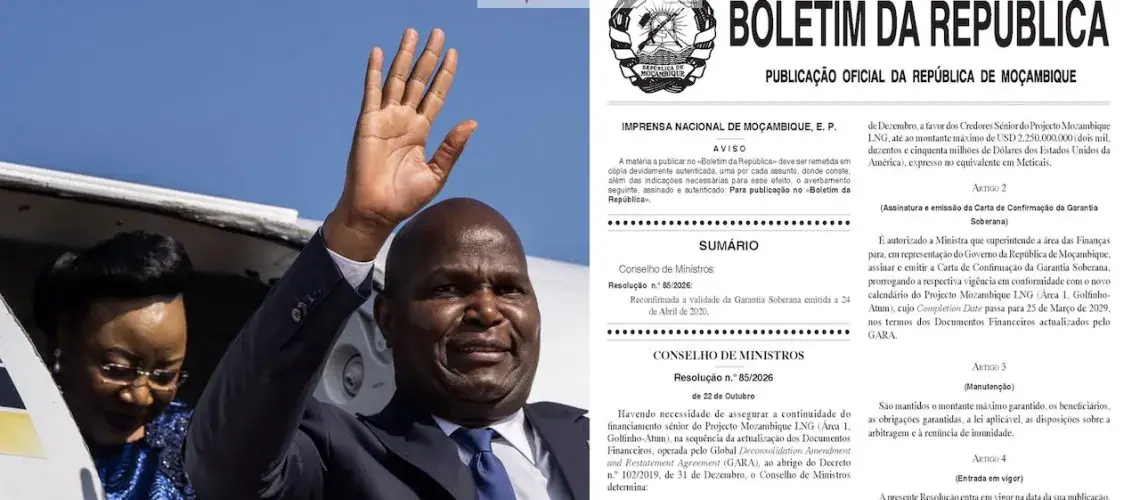
The Frelimo party, which has been governing Mozambique since 1975, is accused of concealing approximately $8 billion in debt related to the country's natural gas project in Cabo Delgado. According to reports, the party's objective is to maintain a sustainable public debt, which currently represents around 75% of the country's Gross Domestic Product (GDP). However, the International Monetary Fund (IMF) has reported that the debt has already exceeded 106% of the GDP.
The natural gas project in Cabo Delgado, specifically the Rovuma Basin, has been a significant investment for Mozambique. The project involves several major players, including the Empresa Nacional de Hidrocarbonetos (ENH), and has been divided into multiple phases, including the Coral Norte FLNG and Coral Sul FLNG projects, as well as the Mozambique LNG project. The project's development has been crucial for Mozambique's economic growth.
The debt concealment has raised concerns among economists and analysts, who argue that it may have severe consequences for Mozambique's economy. The country's economy has been struggling in recent years, and the hidden debt has likely contributed to the economic instability. Furthermore, the IMF's involvement in monitoring Mozambique's debt has highlighted the need for transparency in the country's financial dealings.
The Frelimo party's actions have been criticized by various stakeholders, including opposition parties and civil society organizations. They argue that the concealment of debt is a clear indication of lack of transparency and accountability in the government's financial management. The issue has also raised concerns about the potential risks of corruption and mismanagement of public funds.
The current government's efforts to maintain a sustainable public debt have been questioned by many, given the significant discrepancy between the reported debt and the actual debt. The IMF's involvement in monitoring Mozambique's debt has highlighted the need for transparency and accountability in the country's financial dealings. The organization's reports have also emphasized the importance of accurate reporting of debt to ensure the country's economic stability.
Mozambique's economy has been heavily reliant on foreign investment, particularly in the natural gas sector. The country's natural gas reserves have been a significant draw for investors, and the project in Cabo Delgado has been one of the largest investments in the region. However, the debt concealment has raised concerns about the country's ability to manage its finances and maintain economic stability.
The issue of debt concealment has significant implications for Mozambique's economic future. The country's ability to attract foreign investment and maintain economic stability will depend on its ability to manage its finances transparently and accountably. The Frelimo party's actions have highlighted the need for greater transparency and accountability in the government's financial management.
Key points
- Frelimo party accused of concealing $8 billion in debt related to natural gas project in Cabo Delgado.
- Debt concealment has raised concerns about Mozambique's economic stability and transparency in financial management.
- IMF involvement in monitoring Mozambique's debt has highlighted the need for accurate reporting of debt.