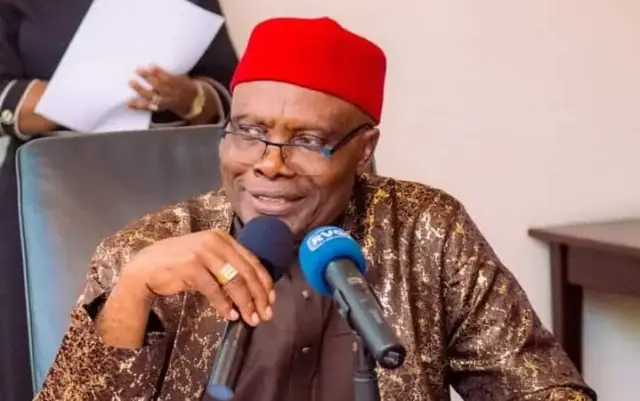
Former Senate President and Chairman of the Board of Trustees of the Peoples Democratic Party, Adolphus Wabara, has emphasized the importance of free, fair, transparent, and credible elections in Nigeria. He believes that if the 2027 general elections are conducted in this manner, Nigerians will have no reason to protest or challenge the results in court. Wabara's comments come as the country prepares for the upcoming elections.
Wabara cited the recent US midterm elections as an example of a transparent electoral process that strengthened democracy and earned public confidence. He noted that in the US, predictions made before the election came to pass, and the results were in accordance with the polls. In contrast, Wabara expressed concern over the Independent National Electoral Commission's conduct, alleging inconsistencies between its pronouncements and actions.
The former Senate President urged Nigerian politicians and stakeholders to put the country's interest above personal ambitions, warning against do-or-die politics and actions that could threaten national stability. He stressed that Nigeria is bigger than the ambitions of individual politicians and that the country must learn to accept democratic outcomes, regardless of which party or candidate wins.
Wabara argued that protests and post-election litigation can be avoided if electoral authorities conduct credible polls and ensure that announced results accurately reflect the votes cast. He emphasized the importance of ensuring that the Bimodal Voter Accreditation System functions effectively during the elections, as its credibility will be crucial to winning public trust in the outcome.
However, Wabara raised questions about the use of artificial intelligence in capturing polling booths, warning that any lack of transparency in the deployment of technology could generate suspicion and trigger post-election disputes. He urged INEC to ensure that the votes of Nigerians count and that the integrity of the electoral process takes precedence over who eventually emerges victorious.
Wabara maintained that the responsibility of protecting Nigeria's democracy rests on all stakeholders, urging politicians and electoral authorities to place national interest above personal and partisan ambitions. He stressed that sustaining democracy is crucial, noting that the worst civilian democratically elected government is better than a military government.
Wabara concluded by emphasizing the need for free, fair, and transparent elections in 2027, stating that this will help prevent bloodshed, military takeovers, and other forms of instability. He wished Nigeria well as the country approaches the 2027 general elections, urging stakeholders to work towards safeguarding democracy.
Key points
- Free and fair elections in 2027 will prevent protests and court challenges.
- Wabara cites US midterm elections as an example of a transparent electoral process.
- The use of artificial intelligence in capturing polling booths must be transparent to avoid disputes.
Reporting sources
- 2027: Free, Fair Polls Key To Stopping Protests — Wabara · Independent Nigeria