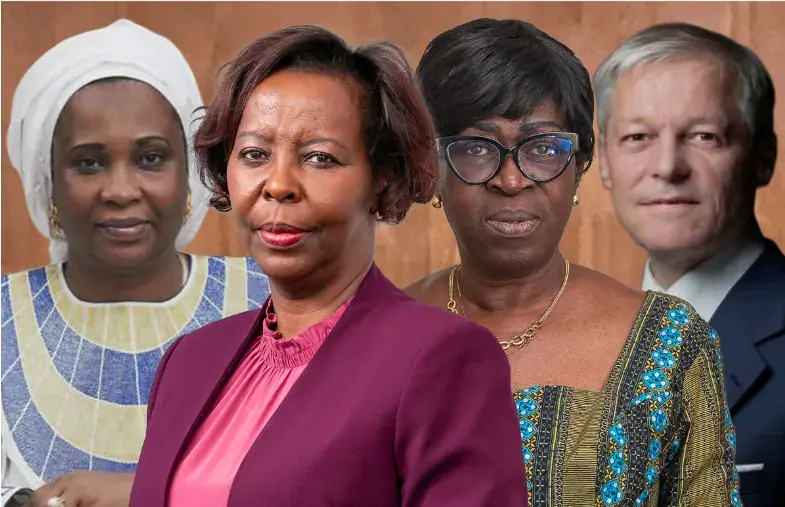
The 20th Francophonie Summit, taking place in Phnom Penh, Cambodia, on November 15-16, 2026, has become a diplomatic battleground for Rwanda and the Democratic Republic of Congo (DR Congo). The summit, attended by representatives of 90 states and governments, aims to prevent crises, promote peace, and support development. At the center of the conflict is the election of a new secretary-general, with four candidates vying for the position: Louise Mushikiwabo of Rwanda, Juliana Lumumba of DR Congo, Coumba Ba of Mauritania, and Dacian Ciolos of Romania.
The rivalry between Rwanda and DR Congo is rooted in their long-standing conflict in the eastern Congo. DR Congo views Mushikiwabo as a puppet of Rwandan President Paul Kagame and sees her potential re-election as an insult to its sovereignty. The country has threatened to withdraw from the organization if Mushikiwabo is re-elected. DR Congo's candidate, Juliana Lumumba, has struggled to demonstrate her capacity to lead the organization, and the country's weight in the vote may not translate to advantages due to the "one country, one vote" decision-making structure.
The French and Quebec governments are discreetly supporting Romanian candidate Dacian Ciolos, hoping to avoid a confrontation between Rwanda and DR Congo. This move may allow an European to take control of the organization, potentially diminishing African influence. The Senegalese President, Bassirou Diomaye Faye, has taken a cautious stance, refusing to take sides in the conflict. This approach reflects the mindset of many African countries, which do not want to offend Rwanda but also do not want to see DR Congo leave the organization.
The Mauritanian government is still hopeful about its candidate, Coumba Ba, and has sent its Foreign Minister, Mohamed Salem Ould Merzoug, to Phnom Penh to lobby for support. The divisions within Africa have created an opportunity for external influence, with the French and Quebec governments seeking to promote their own candidate. The outcome of the election will have significant implications for the Francophonie organization and African unity.
The conflict has highlighted the deep divisions within Africa and the challenges facing the Francophonie organization. The organization's future is uncertain, with the potential withdrawal of DR Congo and the influence of external powers. The election of a new secretary-general will be announced on November 16, 2026, but the outcome is already revealing the difficulties faced by African countries in presenting a united front.
The Francophonie organization, which aims to promote French language and culture, has been weakened by the divisions within Africa. The organization's credibility is at stake, with three countries from the Sahel region already announcing their withdrawal. The outcome of the election will determine the future of the organization and its ability to promote African interests.
French President Emmanuel Macron, who is set to arrive in Cambodia on November 14, 2026, has reportedly contacted Rwandan President Paul Kagame, potentially influencing the outcome of the election. The "battle" for control of the Francophonie organization has already exposed the deep divisions within Africa and the challenges facing the continent in promoting its interests.
Key points
- The Francophonie Summit has become a diplomatic battleground for Rwanda and DR Congo, with implications for African unity and the organization's future.
- The election of a new secretary-general has highlighted the divisions within Africa and the challenges facing the Francophonie organization.
- The outcome of the election will determine the future of the Francophonie organization and its ability to promote African interests.