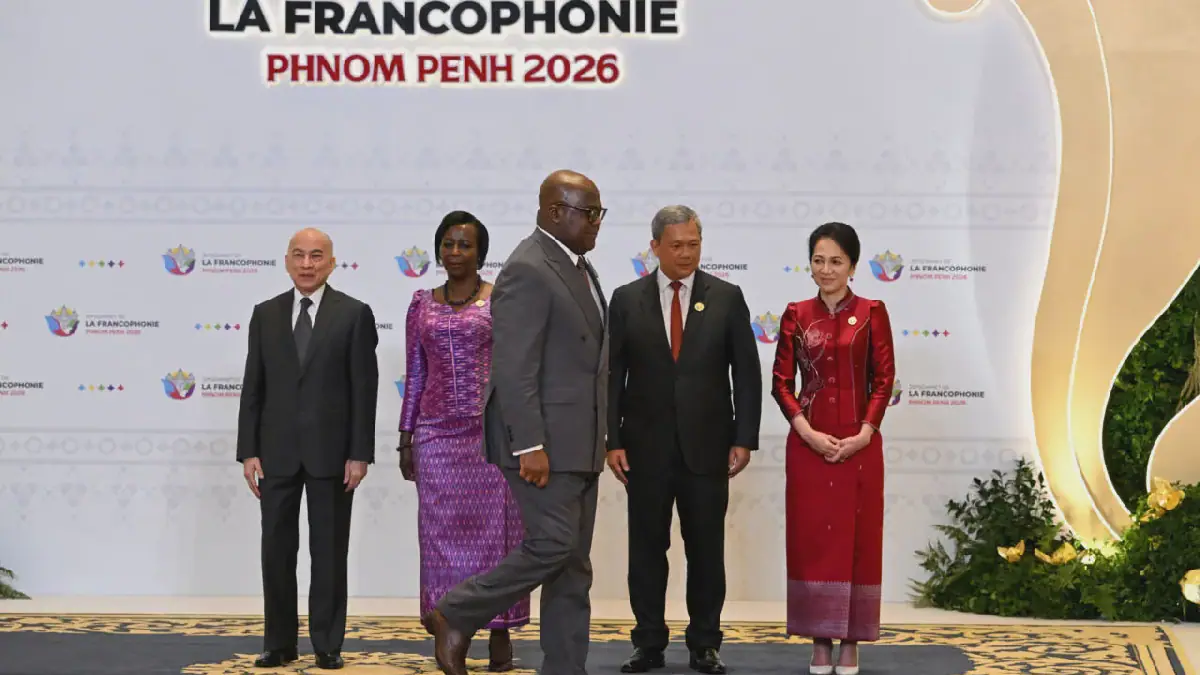
The Organisation Internationale de la Francophonie (OIF) summit in Phnom Penh, Cambodia, was set to elect a new secretary general but instead postponed the decision due to a dispute between the Democratic Republic of Congo (DR Congo) and Rwanda. The OIF, comprising 53 members and dozens of associates, had intended to choose a new leader during the talks. However, DR Congo threatened to walk out and possibly quit the organisation if Rwanda's current secretary general, Louise Mushikiwabo, was re-elected for a third term.
The dispute between DR Congo and Rwanda centres on Kinshasa's accusations that Kigali supports the M23 armed group's activities inside DR Congo, which Rwanda denies. DR Congo had put forward its own candidate for the secretary general position and threatened to quit the OIF if Mushikiwabo was re-elected. The organisation would have suffered a significant blow if DR Congo had left, as it is the second most Francophone country after France with 57.3 million speakers.
French President Emmanuel Macron, who attended the summit alongside DR Congo President Felix Tshisekedi and Rwanda's Paul Kagame, had called for unity among the member states. However, his efforts to defuse the row sparked anger in Rwanda and revived debate over the influence of former colonial power France in the organisation. The postponement of the vote allows for reforms to the appointment process and preserves consensus within the Francophone family.
The current secretary general, Louise Mushikiwabo, will remain in her position, but Rwanda will not field a candidate in the next election. DR Congo's Foreign Minister Therese Kayikwamba Wagner welcomed the postponement as a "wise compromise" that would help preserve the unity of the Francophonie. The decision was also hailed by a source in Macron's office as a solution that overcomes divisions.
Not everyone was pleased with the outcome, however. Former Romanian prime minister Dacian Ciolos, one of the four candidates for election, expressed disappointment, calling it a "very sad day" for the organisation. He emphasised the need to rebuild trust among member states to ensure the Francophonie remains relevant.
The postponement of the leadership vote comes at a time when the OIF is seeking to maintain its relevance and unity. The organisation has already faced challenges, including the withdrawal of Mali, Niger, and Burkina Faso after successive coups that saw Paris-friendly governments replaced by pro-Russian juntas.
The Francophonie summit's outcome highlights the complexities of international diplomacy and the challenges of maintaining unity among diverse member states. The OIF will continue to navigate these complexities as it seeks to promote the French language and culture around the world.
Key points
- The Francophonie summit postponed the election of a new secretary general due to a dispute between DR Congo and Rwanda.
- The current secretary general, Louise Mushikiwabo, will remain in her position, but Rwanda will not field a candidate in the next election.
- The postponement allows for reforms to the appointment process and preserves consensus within the Francophone family.
Reporting sources
- Francophonie summit postpones new leader vote amid DR Congo-Rwanda dispute · © Tang Chin Sothy, AFP