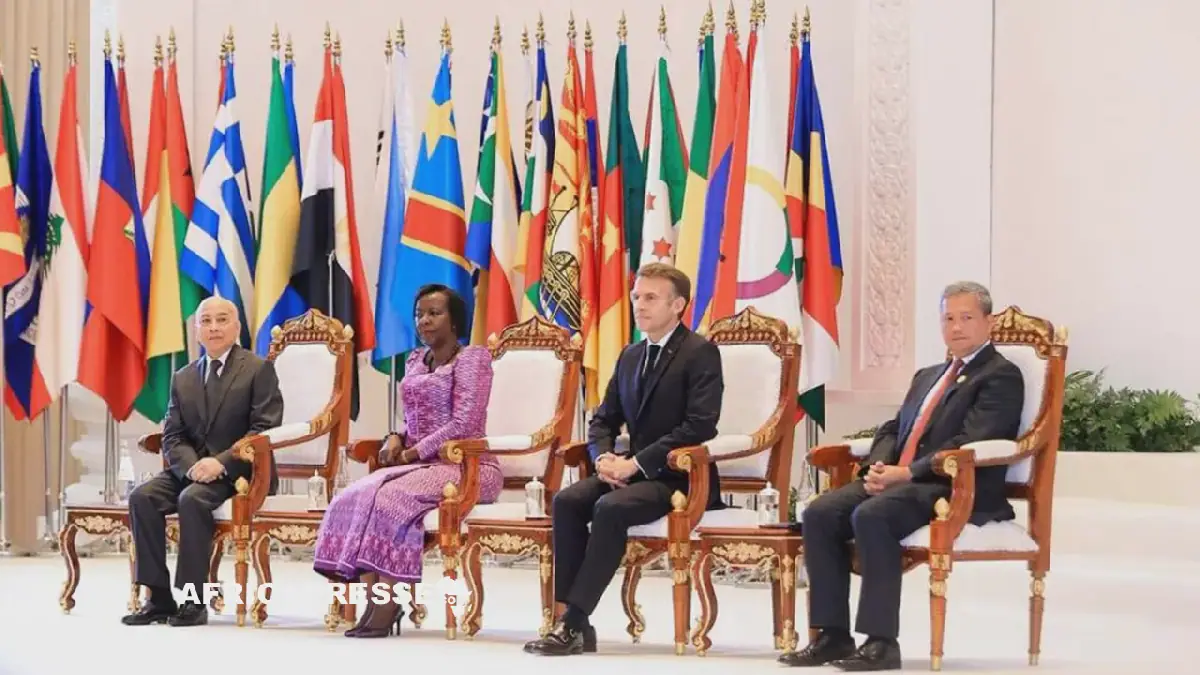
The 20th Francophonie Summit, held in Phnom Penh, Cambodia, has concluded without an agreement on the succession of Louise Mushikiwabo as Secretary General of the OIF. The election of her successor has been postponed to 2027, effectively extending Mushikiwabo's mandate since 2018. The decision was made due to a lack of consensus among member states, despite diplomatic efforts by France and Canada to bridge the gaps.
Four candidates were initially in the running for the position: Louise Mushikiwabo herself, Juliana Lumumba from the Democratic Republic of Congo, Dacian Cioloș, the former Prime Minister of Romania, and Coumba Ba, a former minister from Mauritania. However, the absence of a consensus is set against a backdrop of diplomatic tensions between the Democratic Republic of Congo (DRC) and Rwanda. The DRC had opposed Mushikiwabo's reappointment, citing Rwanda's alleged support for the M23 rebel group active in eastern DRC.
The DRC had even considered withdrawing from the OIF if Mushikiwabo remained in her position. This crisis occurs in a broader context of fragmentation, with Burkina Faso, Mali, and Niger having recently left the OIF, further weakening the cohesion of the Francophone community. The postponement of the election highlights the growing difficulties faced by the OIF in maintaining consensus among its members, amidst rising geopolitical tensions and diplomatic reconfigurations in Africa.
The OIF comprises 90 member states, governments, and observers, with Africa playing a central role due to its large number of member states and significant Francophone population. This demographic and political reality makes the management of regional rivalries within the organization particularly sensitive. The question of African representation within the OIF is likely to be a major theme in the next election.
The decision to postpone the election confirms that the OIF, often criticized for its limited political influence, remains a forum where the fractures of the African continent are reflected. The postponement, presented as a temporary solution, risks fueling criticism of the organization's ability to reform and address its internal contradictions. Louise Mushikiwabo will remain in office until her successor is chosen.
The OIF's challenges in maintaining consensus among its members are compounded by the complexities of balancing the ambitions of major Francophone countries in Africa with the diplomatic balances inherited from history. The organization's ability to navigate these challenges will be crucial in determining its future effectiveness and relevance.
The postponement of the Secretary General election to 2027 has significant implications for the OIF's institutional development and its capacity to address the evolving needs of its member states. The organization's leadership and its member states will need to work towards finding a consensus on the next Secretary General, while also addressing the broader challenges facing the Francophone community.
Key points
- The 20th Francophonie Summit has postponed the election of the OIF Secretary General to 2027 due to a lack of consensus among member states.
- The decision highlights the growing difficulties faced by the OIF in maintaining consensus among its members, amidst rising geopolitical tensions in Africa.
- The postponement has significant implications for the OIF's institutional development and its capacity to address the evolving needs of its member states.