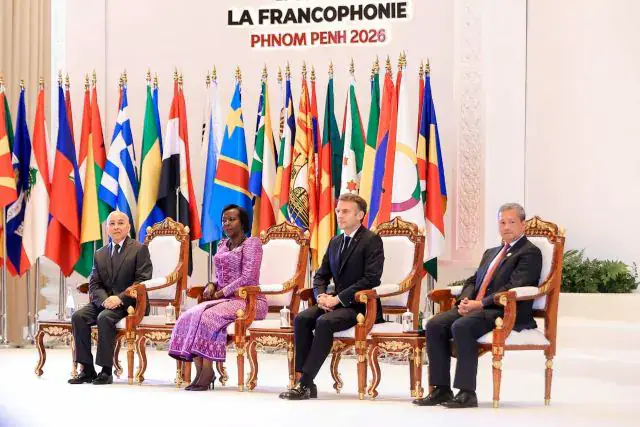
The 20th summit of the Organisation internationale de la Francophonie (OIF) has ended without a new secretary-general being elected, leaving Louise Mushikiwabo in the position for another year. The summit, held in Phnom Penh, was closely watched for the election of a new leader, but disagreements among member states prevented a consensus from being reached. Mushikiwabo, who has served two four-year terms, will continue to lead the organization.
Tensions between the Democratic Republic of Congo (RDC) and Rwanda dominated the summit, with the RDC accusing Rwanda of supporting the M23 rebel group, now known as the Front refondation de la nation (FRN). The RDC had threatened to leave the OIF if Mushikiwabo, a Rwandan national, was re-elected. The organization's inability to address this conflict and other issues, such as promoting the French language and culture, has raised questions about its effectiveness.
The OIF has struggled to assert its relevance in recent years, with some member states questioning its role in promoting democracy, human rights, and multilateralism. The organization's expansion to include new members with diverse interests has also created challenges. The departure of several member states, including Burkina Faso, Niger, and Mali, has further weakened the organization.
French President Emmanuel Macron had attempted to avoid a vote by asking Rwanda to withdraw its candidate, but Rwanda refused, citing sovereignty. Macron had previously played a key role in supporting Mushikiwabo's election in 2018. The Rwandan government has since emphasized its commitment to English, having joined the Commonwealth.
With Mushikiwabo no longer eligible to run, several candidates are expected to emerge for the next election. One potential candidate is Macky Sall, the former President of Senegal, who was previously considered for the position of UN Secretary-General. Sall's qualifications and experience make him a strong contender for the OIF leadership role.
The OIF's future direction will be closely watched, particularly in light of the challenges it faces in promoting the French language and culture. The organization's ability to adapt to changing global circumstances and address the concerns of its member states will be crucial to its success. The next summit will provide an opportunity for member states to reassess their priorities and work towards a more effective and cohesive organization.
The outcome of the Phnom Penh summit marks a significant turning point for the Francophonie, with implications for the organization's future direction and relevance. As the OIF continues to evolve, it will need to address the concerns of its member states and find a way to promote its core values and objectives.
Key points
- Louise Mushikiwabo will continue as OIF secretary-general for another year.
- Tensions between RDC and Rwanda dominated the summit.
- The OIF faces challenges in promoting its core values and objectives.
Reporting sources
- Que réserve l’après Phnom Penh à la Francophonie? · Wakat Séra