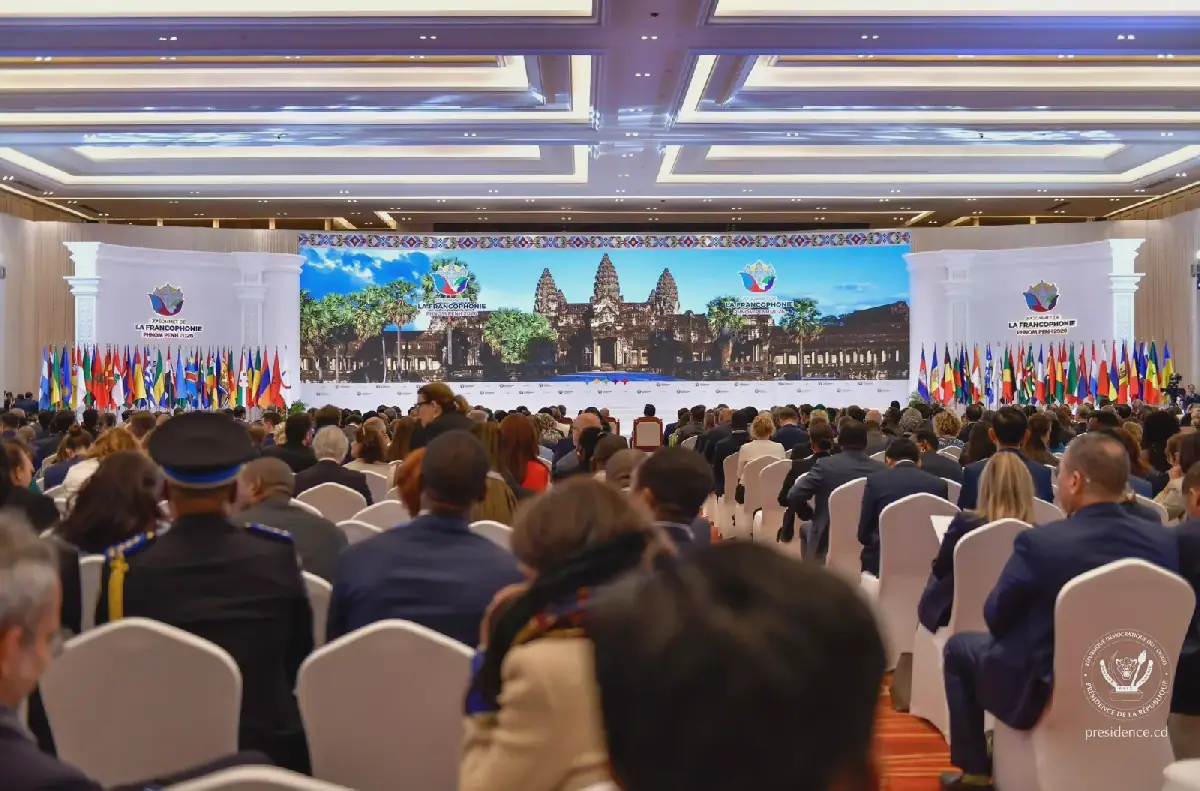
The 20th Francophonie Summit, held in Phnom Penh, Cambodia, has ended with a compromise on the leadership of the Organisation internationale de la Francophonie (OIF). According to reports from Radio Okapi, the summit was marked by a diplomatic standoff between the Democratic Republic of the Congo and Rwanda. The two countries had been at odds over the succession to the head of the OIF, with the DRC pushing for a change in leadership.
The compromise reached at the summit will see the current Secretary-General, Louise Mushikiwabo of Rwanda, remain in her position for an additional 12 months. This move has been seen as a strategic victory for the DRC, which had been seeking to block Mushikiwabo's bid for a third term. In exchange, the Rwandan government will not be able to present a candidate for the next election in 2027.
The DRC's government has welcomed the compromise, with Foreign Affairs Minister Thérèse Kayikwamba Wagner stating that the agreement was "non-negotiable" and presented an opportunity to reform the OIF's internal rules. The government's spokesperson, Patrick Muyaya, also praised the outcome, saying it demonstrated that the DRC's voice had been heard on the international stage.
However, not all parties are satisfied with the compromise. Opposition leader Martin Fayulu has questioned the legal basis for extending Mushikiwabo's term, suggesting that the OIF's administrative body should have been given control of day-to-day affairs instead. Meanwhile, Dacian Cioloș, a Romanian candidate who was unsuccessful in his bid for the top spot, expressed disappointment and highlighted the institutional weaknesses of the OIF.
The compromise has been hailed as a diplomatic success by some in the DRC. Former Foreign Minister Léonard She Okitundu praised the government's strategy, which he said had thwarted Rwanda's ambitions. The Agence Congolaise de Presse (ACP) also reported that a national deputy saw the outcome as a demonstration of the effectiveness of Congolese diplomacy.
The Francophonie Summit's outcome has significant implications for the DRC's role in the international organization. According to Le Potentiel, the country's continued participation in the OIF will allow it to play a more active role in shaping the institution's reforms. The African Union's Commission President, Mahmoud Ali Youssouf, has urged Francophone leaders to prioritize cohesion and avoid fragmentation.
The compromise reached at the Francophonie Summit reflects the complex geopolitics of the region. The Forum des As noted that the outcome was a "combat without a knockout," with Rwanda maintaining its influence but the DRC securing a clear timeline for the leadership transition. The development has been seen as a test of the DRC's diplomatic clout and its ability to assert its interests on the international stage.
Key points
- The Francophonie Summit has ended with a 12-month transitional period for the OIF leadership, with Louise Mushikiwabo remaining as Secretary-General.
- The compromise reached at the summit has been seen as a strategic victory for the DRC, which had been seeking to block Mushikiwabo's bid for a third term.
- The outcome has significant implications for the DRC's role in the international organization, allowing it to play a more active role in shaping the OIF's reforms.