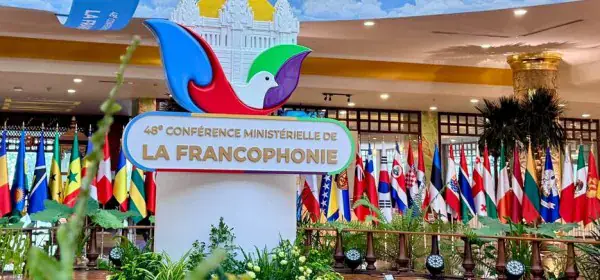
The Francophonie, an organization of 90 French-speaking countries, is set to elect a new leader at its 20th Summit in Phnom Penh, Cambodia. The election has become a contentious issue, with allegations of French interference. On November 13, it was reported that Emmanuel Macron had written to Rwandan President Paul Kagame, urging him to withdraw the candidacy of Louise Mushikiwabo, a Rwandan national, in favor of Dacian Ciolos, a Romanian candidate.
The move has been criticized as an attempt by Macron to exert influence over the election. Macron had previously stated that France no longer has an "African policy," but critics argue that this move demonstrates that France still seeks to exert control over African affairs. The Francophonie's leadership election is significant, as the organization plays a crucial role in promoting peace, stability, and development in its member countries.
The Democratic Republic of Congo (DRC) had initially nominated Juliana Amato Lumumba for the position but later withdrew its support, backing Ciolos instead. This decision has been seen as a strategic move by the DRC to prevent Mushikiwabo's re-election. Mushikiwabo has been the Secretary-General of the Francophonie since 2018 and has implemented reforms within the organization.
Critics argue that Ciolos, a former European Commissioner for Agriculture, lacks experience in African affairs. During his tenure as Commissioner, Ciolos implemented policies that had a negative impact on African farmers, including subsidizing European agricultural exports to Africa. His candidacy has raised concerns about the Francophonie's priorities and its commitment to African development.
The DRC's decision to support Ciolos has been seen as a mistake, as it may harm the country's interests in the long run. The Francophonie has provided significant support to the DRC, including training 8,000 teachers and supporting 445 women entrepreneurs. If the DRC were to leave the organization, it would likely suffer significant consequences.
The main criticism of Mushikiwabo is her nationality, with some arguing that the Francophonie should be led by an African national. However, her supporters argue that her experience and leadership skills make her the best candidate for the position. The election outcome will have significant implications for the Francophonie and its member countries.
The Francophonie leadership election highlights the complex relationships between France and its African former colonies. The outcome will determine whether the organization will continue to prioritize African development and interests or succumb to external pressures. African countries hold the majority of votes in the Francophonie and can influence the election outcome.
Key points
- French President Emmanuel Macron's influence on the Francophonie leadership election has sparked controversy in Africa.
- The Democratic Republic of Congo's decision to support Romanian candidate Dacian Ciolos has been seen as a strategic move to prevent Rwandan candidate Louise Mushikiwabo's re-election.
- The Francophonie leadership election has significant implications for African development and the organization's priorities.