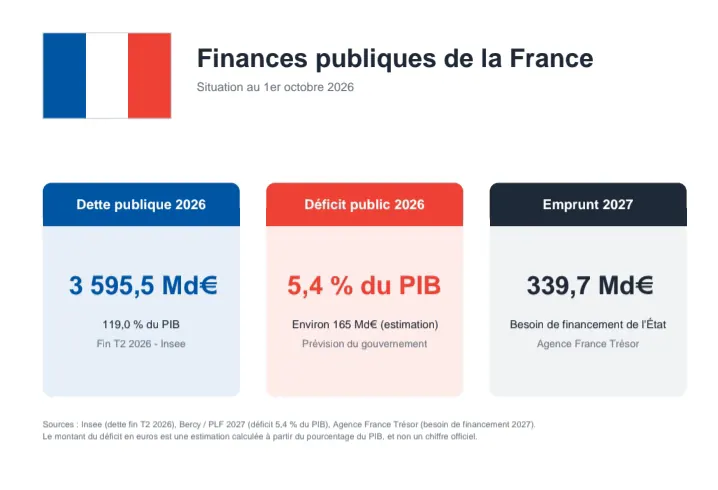
France is grappling with an unprecedented budget crisis, with its public debt reaching a historic high of 3,595.5 billion euros, equivalent to 119% of its Gross Domestic Product (GDP). This development has raised concerns about the country's financial stability, with many experts warning that France is on the brink of financial crisis. The debt has been escalating, with a 59.6 billion euro increase in just three months, following a 75.8 billion euro rise in the first quarter.
Despite the alarming debt levels, France plans to borrow a record 340 billion euros from the markets in 2027, according to the Agence France Trésor. This move is seen as a clear indication of the country's deepening financial woes. The French government's reliance on borrowing to finance its needs and refinance maturing debts has become a pressing concern. The country's debt trajectory is expected to continue its upward trend, with 2027 poised to be even more challenging.
The problem is further complicated by rising interest rates, which have increased the cost of borrowing for France. The country has been borrowing at an average rate of 3.55% since the beginning of 2026, up from 3.14% in 2025. This is expected to result in a significant interest bill of 72.9 billion euros in 2027. The French government is caught in a vicious cycle, where it borrows to finance current spending, refinances maturing debts, and pays interest on its debt, requiring additional resources.
The president of the Cour des comptes, Amélie de Montchalin, has warned that time is running out for France to address its financial challenges. She emphasized that every month of delay exacerbates the debt burden and reduces the government's ability to restore its finances. De Montchalin called on policymakers to make swift decisions to address the crisis. Meanwhile, social pressure is mounting, with hundreds of thousands of civil servants protesting against the erosion of their purchasing power and proposed measures for 2027.
The French government's debate on addressing the financial crisis has become increasingly complex. Reducing spending is likely to face resistance, while increasing taxes will burden taxpayers. Continuing to borrow will further escalate the debt and interest payments. Ultimately, France must confront the consequences of its deficits. The country is no longer just facing a debt problem but a full-blown, unprecedented crisis in its public finances.
The consequences of France's financial predicament are far-reaching. The country's addiction to borrowing and its reluctance to implement necessary adjustments have contributed to its current financial woes. With its debt levels continuing to soar, France is now staring at the very real prospect of financial crisis. The situation demands urgent attention from policymakers to prevent a catastrophic outcome.
As France navigates this critical juncture, it must confront the reality of its financial situation. The country's ability to manage its debt and restore its financial stability will depend on the effectiveness of its policy responses. With the clock ticking, France must take decisive action to mitigate the risks and prevent a financial crisis that could have far-reaching consequences for its economy and citizens.
Key points
- France's public debt has reached a historic high of 3,595.5 billion euros, equivalent to 119% of GDP.
- The country plans to borrow a record 340 billion euros from the markets in 2027.
- Rising interest rates have increased the cost of borrowing for France, with an expected interest bill of 72.9 billion euros in 2027.