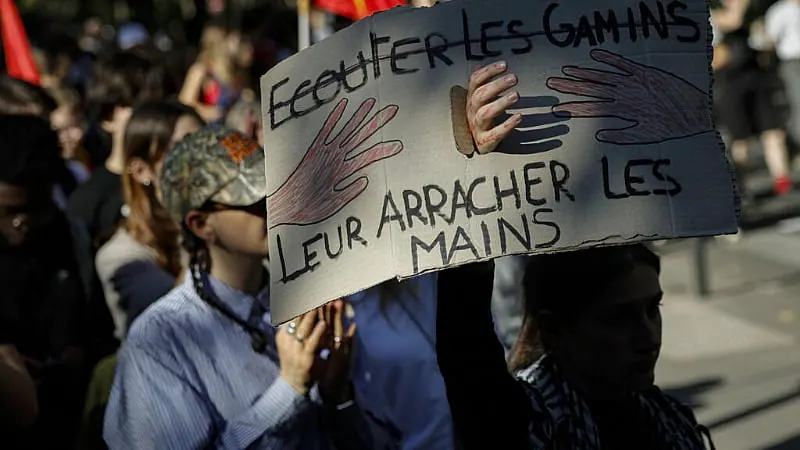
French Interior Minister Laurent Nunez announced the suspension of stun grenades following an incident in the northern city of Lens on Monday, where a teenager lost a hand. Nunez stated there was a "strong possibility" that the non-lethal stun grenade caused the injury. He ordered the suspension until the events surrounding the incident are clarified. This decision comes amid a wave of student protests that have been ongoing for over two weeks, exposing deep-seated public anger ahead of next year's elections.
The student protests in France are primarily driven by concerns over dilapidated infrastructure, teacher shortages, overloaded schedules, and a lack of funding in education. Students blame these poor learning conditions for France's declining scores in the OECD's Programme for International Student Assessment (PISA). Since 2015, French 15-year-olds have seen a significant drop in reading and math scores, with a 43-point decline in reading over the past decade. These scores have fallen faster than the OECD average.
The protests have shown no signs of easing, with over 500 schools closed a day after demonstrations swept across the country. Unions have called for further street marches later in the week. French Prime Minister Sébastien Lecornu acknowledged the "legitimate" demands of France's students but described the unrest as the most violent student demonstrations in decades. The government faces pressure to address student complaints of understaffing, lack of investment in ageing school buildings, and regional inequality.
The left-wing CGT trade union, France's second-largest, has pledged to support the student union's call for further street protests. The CGT will continue to back the young people who have mobilized and protect them from violence and police repression. Meanwhile, far-right and far-left parties are leading in the presidential race to replace President Emmanuel Macron, with the election just six months away.
The protests in France have sparked copycat actions in other European countries. In Belgium, students in the city of Liege have launched protests, resulting in at least 107 arrests this month. Teachers are also on strike in Belgium. In Portugal, the main teachers' union FENPROF launched an indefinite strike in mid-September against overtime, with teachers refusing to work beyond 35 hours a week.
The underlying causes of the French protests reflect problems familiar to teachers and students in other countries, including deteriorating school conditions, teacher shortages, excessive workloads, and widening inequalities in access to education. In Spain, teachers' unions have been protesting conditions in state schools, with teachers in Madrid planning a strike on October 14 to press demands including reduced hours, smaller class sizes, and higher salaries.
A total of 18 investigations have been referred to the police inspectorate, according to Nunez. The minister's decision to suspend the use of stun grenades during the high school students' movement aims to address concerns over police use of force during the protests. The protests and subsequent suspension of stun grenades highlight the challenges faced by the French government in balancing public demands with maintaining order.
Key points
- France suspends stun grenade use amid student protests over education
- Student protests in France driven by concerns over infrastructure, teacher shortages, and funding
- Protests spread to other European countries, including Belgium, Portugal, and Spain