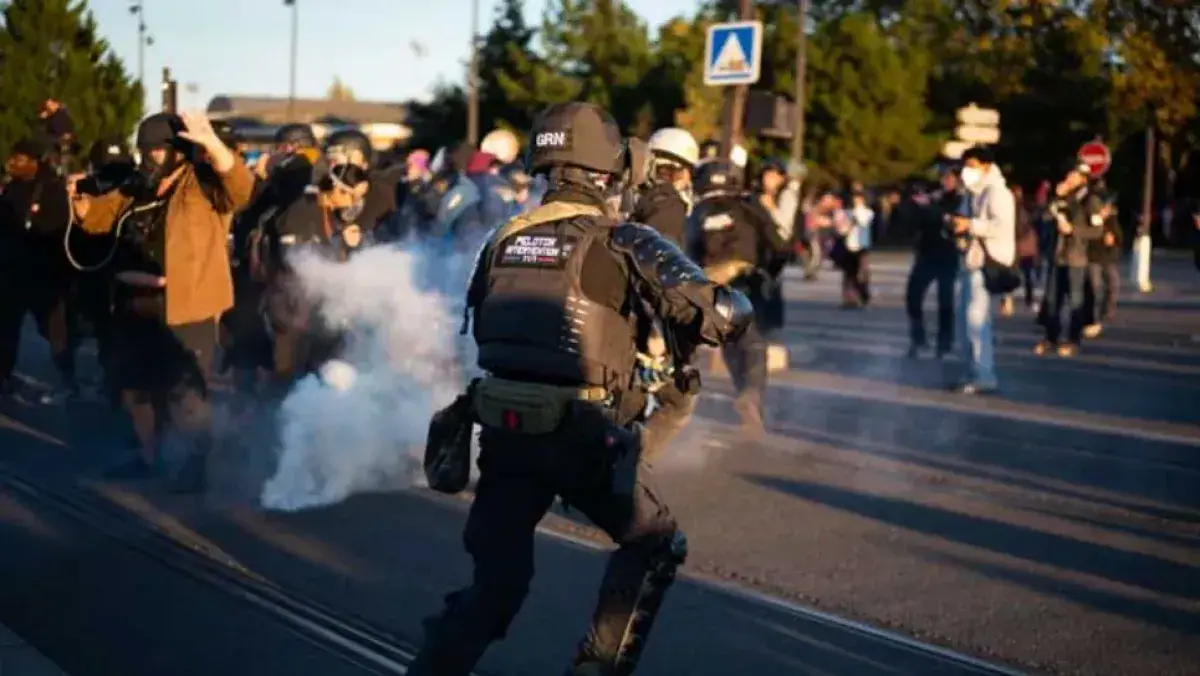
Hundreds of thousands of people across France took part in protests and marches on Thursday in response to calls from union groups. The protests, held under the slogan "the final straw," demanded higher wages, reduced living costs, and improved education and public services. This movement comes after weeks of unrest that have shaken the government of President Emmanuel Macron, just five months before the presidential elections.
The protests are a culmination of weeks of demonstrations by high school students over poor education conditions and a university orientation system. These student protests coincided with widespread demonstrations over the high cost of living and inequality, which reached a peak on October 17. This unrest led to some of the worst disturbances in France in years.
According to the French Interior Ministry, 600,000 people participated in the protests nationwide. However, the General Confederation of Labour (CGT), one of the organizing unions, reported that 1.6 million people took part. The call for a strike included unions from public and private education, railways, public hospitals, and postal services.
The unions are demanding that the government and employers increase the minimum wage, which has remained unchanged since 2012. They also want general salary increases, tax reforms, and improved education conditions for students. The protests saw some clashes between students and police, with the use of tear gas and water cannons to disperse protesters.
Despite the largely peaceful nature of the student protests, there were reports of police using excessive force. This has led to internal investigations after several teenage protesters were seriously injured and thousands detained.
Protesters expressed their frustration with the current social and economic conditions. A 61-year-old woman at a Clermont-Ferrand march said there was a general feeling of anger, adding that "the final straw" had been reached. A 31-year-old woman in Marseille expressed her fears about the rising cost of living, saying she could no longer afford decent food.
Similar protests have taken place in other European countries in recent weeks, including Denmark, Germany, Italy, and Greece. In Athens and Thessaloniki, Greece, about 4,000 people participated in demonstrations, according to police and the French news agency.
Key points
- The protests in France were sparked by a combination of factors, including the rising cost of living, poor education conditions, and inequality.
- The demonstrations were organized by union groups and drew hundreds of thousands of participants across the country.
- The protests also reflect a broader trend of social unrest in Europe, with similar demonstrations taking place in other countries.