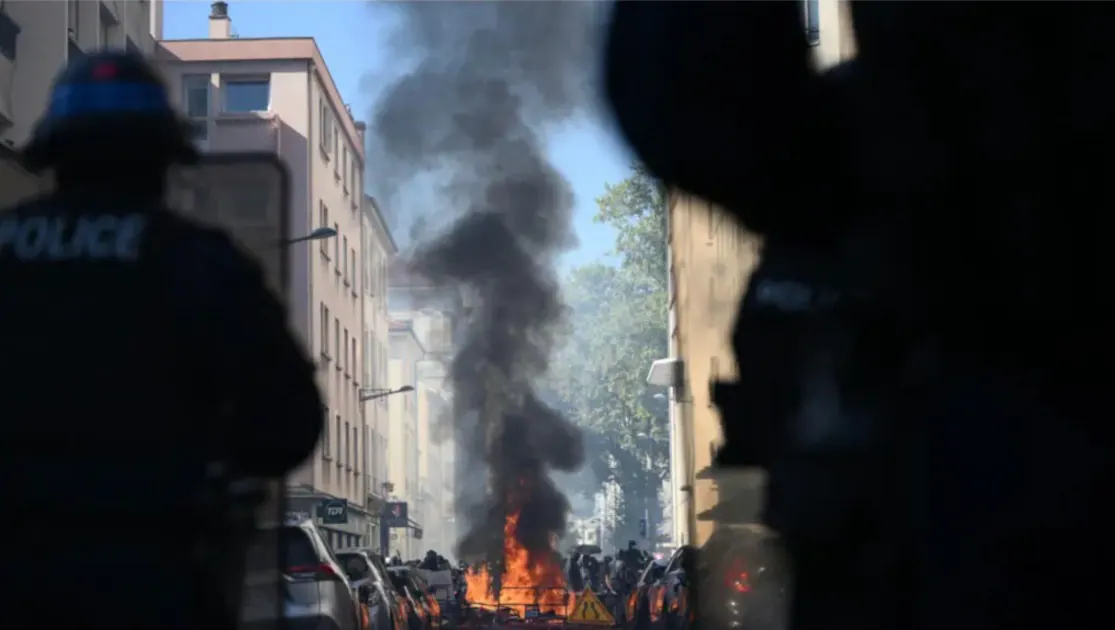
High school students across France took to the streets on Tuesday, October 6, as a nationwide protest movement entered its third week. The demonstrations, which began in September in the Paris region, have now spread to several cities, including Paris, Marseille, Lyon, Nantes, and Nîmes. Students, teachers, and parents joined the protests, calling for improved learning conditions, reduced class sizes, and better school infrastructure. The protests also highlighted concerns over France's university admissions system, Parcoursup.
The High School Students Union reported that around 1,800 schools had been blocked or closed for the day, although the Education Ministry had not confirmed this figure. In Paris, students gathered outside several schools, while demonstrations also took place in other major cities. In Marseille, students were joined by teachers, parents, and trade union members. Some universities closed as a precautionary measure. The protests have raised concerns over the police response, with several teenagers seriously injured during clashes.
A 15-year-old boy in the northern city of Lens lost his hand and part of his lower arm on Monday after a police dispersal grenade exploded, according to local officials and French media. An investigation is underway to establish the exact circumstances of the incident. This incident followed other injuries to teenagers during the protests. As of October 5, 190 students, 650 police officers and gendarmes, and 78 school staff had been injured since the movement began, according to Le Monde.
French authorities have reported thousands of arrests, with the Interior Ministry recording about 6,100 arrests since the protests began, most involving minors. More than 1,800 people were facing prosecution, according to Reuters. The government has faced growing pressure over education funding and police violence, with Prime Minister Sébastien Lecornu ordering ministers to prepare proposals addressing students' demands.
The government is considering measures to replace absent teachers, review the length of the school day, and improve ageing school buildings. Ministers have been asked to submit initial proposals by the end of October. Education Minister Édouard Geffray stressed that protecting students was the government's "priority" and described the Lens incident as a serious tragedy.
The government has called for the protests to remain peaceful, while student groups say they intend to continue mobilizing until their demands receive a concrete response. The protests have highlighted the need for improved education funding and police accountability. The incident in Lens has raised concerns over the use of force by police during the protests.
The protests are expected to continue, with students and teachers demanding action from the government. The government will need to balance the need to maintain order with the need to address the concerns of students and teachers. The outcome of the protests and the government's response will be closely watched in the coming weeks.
Key points
- A 15-year-old boy lost his hand in a police clash in Lens, France.
- The protests have resulted in thousands of arrests and numerous injuries.
- The government is considering measures to address students' demands, including replacing absent teachers and improving school infrastructure.