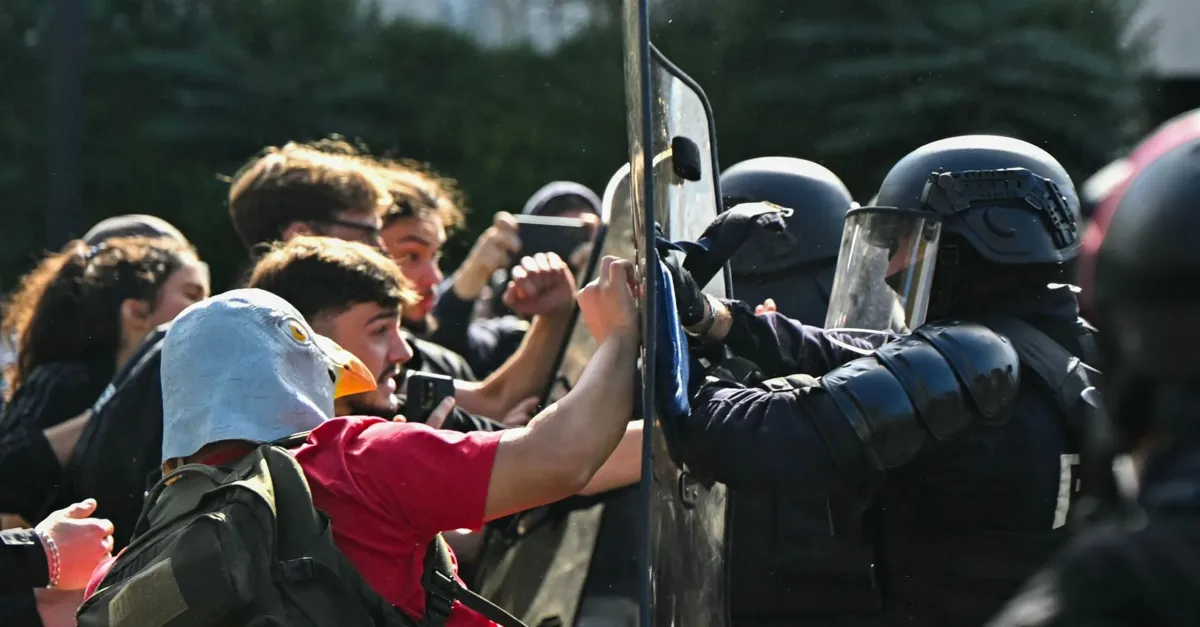
Student protests in France have escalated into a full-blown crisis, with demonstrations spreading across the country and sparking concerns about internal stability and European security. The protests, which began as a response to government austerity measures, have now engulfed over 1,000 secondary schools, with over 3,000 people detained in a single week. The French Ministry of Interior reported that 65 staff members and 170 students were injured, and over 100 schools suffered significant damage.
The protests have been marked by violent clashes, with fires set at educational buildings in Nantes and Lyon, and an attempted arson attack on the town hall in Bordeaux. Public transportation in Marseille and the tram network in Strasbourg were also disrupted. The protests coincide with the government's announcement of an austerity package for 2027, which has been met with criticism from students and teachers. Despite assurances that education funding will increase by €1.1 billion, concerns about the impact on the education system remain.
The crisis has its roots in a long-standing decline in the French education system, with a September report by the OECD highlighting a sharp decline in performance, particularly in reading and mathematics skills. The report also noted a shortage of teachers, poor classroom conditions, and significant disparities between students from affluent and disadvantaged backgrounds. The French Ministry of Education has acknowledged that 10% of class time is lost due to teacher absences and school closures.
The government has sought to shift the blame for the protests to the far-left, with Prime Minister Sebastian Lecornu accusing the France Unbowed party of leader Jean-Luc Mélenchon of exploiting student anger for party gain. Mélenchon has denied any involvement, calling for peaceful protests and criticizing the government's handling of the education system. The far-right leader Marine Le Pen has also weighed in, describing the protests as "professional agitators" and calling for new laws to tackle the unrest.
The protests have sparked concerns across Europe, with Germany's Handelsblatt questioning whether France is becoming the "most troubled country in the eurozone." The spread of protests has also raised concerns about the potential for extremist movements to gain traction in the 2027 elections. European diplomats have warned that a weakened French government could compromise the country's position on key issues, including Ukraine funding and EU budget negotiations.
Despite concerns about stability, investors have shown no clear signs of pulling back, according to Louise Margret, head of Business France. However, the situation remains volatile, with Mélenchon's France Unbowed party polling at 17% and potentially setting up a runoff election against Le Pen in 2027. The government faces a delicate balancing act in addressing student concerns while maintaining order and stability.
As the protests continue, the French government faces mounting pressure to address the underlying issues driving the unrest. With concerns about education, inequality, and economic stability all coming to the fore, the coming months will be critical in determining the course of French politics and its implications for Europe. The situation remains fluid, with many stakeholders watching closely to see how the government responds to the crisis.
Key points
- Over 1,000 French schools have been affected by student protests.
- The protests have sparked concerns about internal stability and European security.
- The French government faces criticism for its handling of the education system and austerity measures.