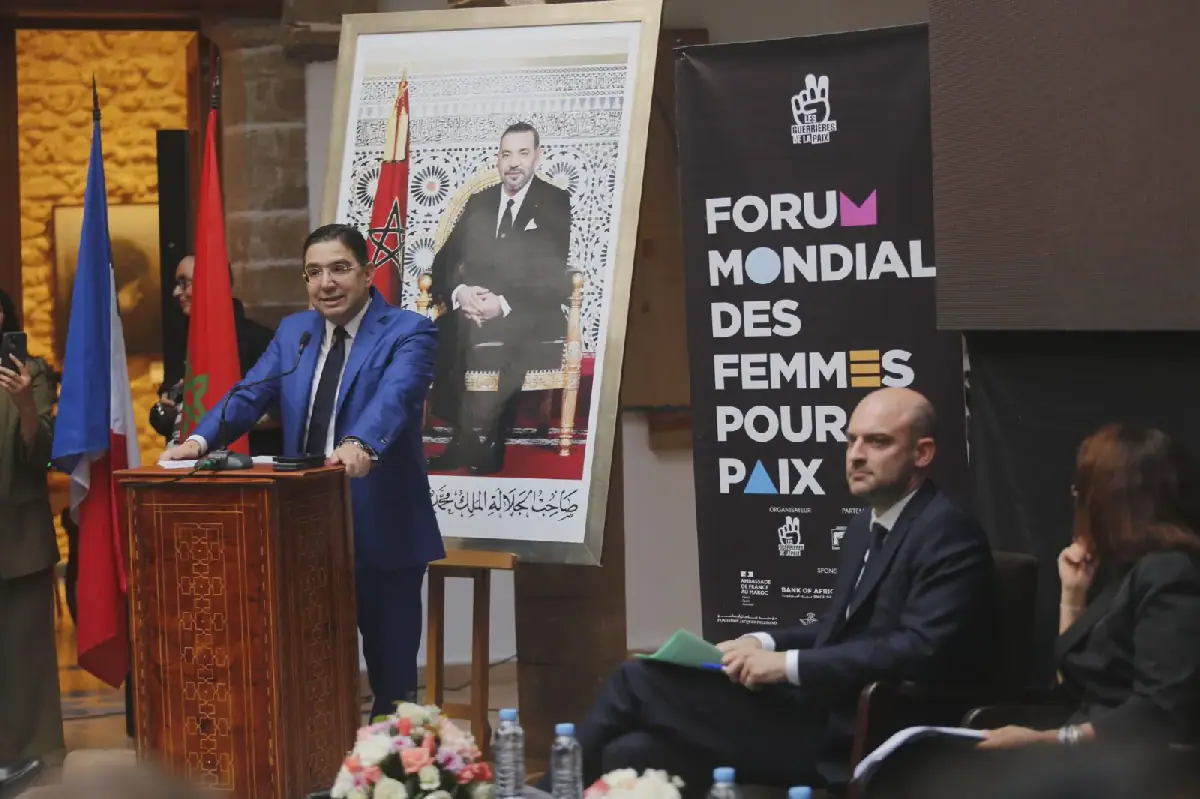
French Foreign Affairs Minister Jean-Noël Barrot has reaffirmed France's support for Morocco's territorial integrity and sovereignty over its southern provinces in Western Sahara. During bilateral talks with Moroccan Foreign Minister Nasser Bourita in Essaouira, Barrot stated that the present and future of the Sahara lie within the framework of Moroccan sovereignty. This position aligns with France's recent stance at the UN Security Council session on October 30, 2026.
Barrot's remarks reiterate France's longstanding position on the matter, emphasizing that the Autonomy Initiative is the sole basis for negotiations aimed at definitively settling the dispute. This initiative has garnered support from over 135 countries, which view it as the most feasible political solution to end the dispute over Western Sahara. The French Foreign Minister's statements underscore the country's commitment to supporting Morocco's sovereignty over the region.
The UN Security Council's October session on Western Sahara saw a contentious debate, with Russia vetoing a US-drafted resolution that sought to advance the UN-led political process toward a final settlement. The resolution aimed to change the name of the peacekeeping mission, MINURSO, to MINUSO, reflecting a shift in the mission's mandate. Russia's veto, backed by Algeria, was met with regret from France, which voted in favor of the US draft.
France's Ambassador to the UN, Jérôme Bonnafont, echoed Barrot's sentiments, affirming that the present and future of Western Sahara fall within the framework of Moroccan sovereignty. This stance is consistent with France's decision to recognize Morocco's territorial sovereignty and integrity over its southern provinces in Western Sahara. The French position has significant implications for the regional dynamics and the ongoing dispute.
The dispute over Western Sahara has been a longstanding issue, with Morocco's Autonomy Plan being viewed as a viable solution by many countries. The plan, which was presented in 2007, offers a degree of autonomy to the region while maintaining Moroccan sovereignty. The international community's response to the plan has been varied, with some countries expressing support and others calling for a more comprehensive solution.
The recent developments have significant implications for the region, with France's reaffirmation of support for Morocco's sovereignty being seen as a crucial development. The stance is likely to influence the ongoing diplomatic efforts to resolve the dispute, with Morocco and France being key players in the region. The international community will be closely watching the developments, as the dispute continues to have far-reaching consequences.
The situation in Western Sahara remains complex, with multiple stakeholders and competing interests at play. The French position on the matter is clear, with the country reiterating its support for Morocco's sovereignty over the region. As diplomatic efforts continue, the international community will be closely monitoring the developments, hoping for a peaceful and lasting resolution to the dispute.
Key points
- France reaffirms its support for Morocco's territorial integrity and sovereignty over Western Sahara.
- The Autonomy Initiative is cited as the sole basis for negotiations to resolve the dispute.
- The international community continues to seek a peaceful and lasting resolution to the Western Sahara dispute.