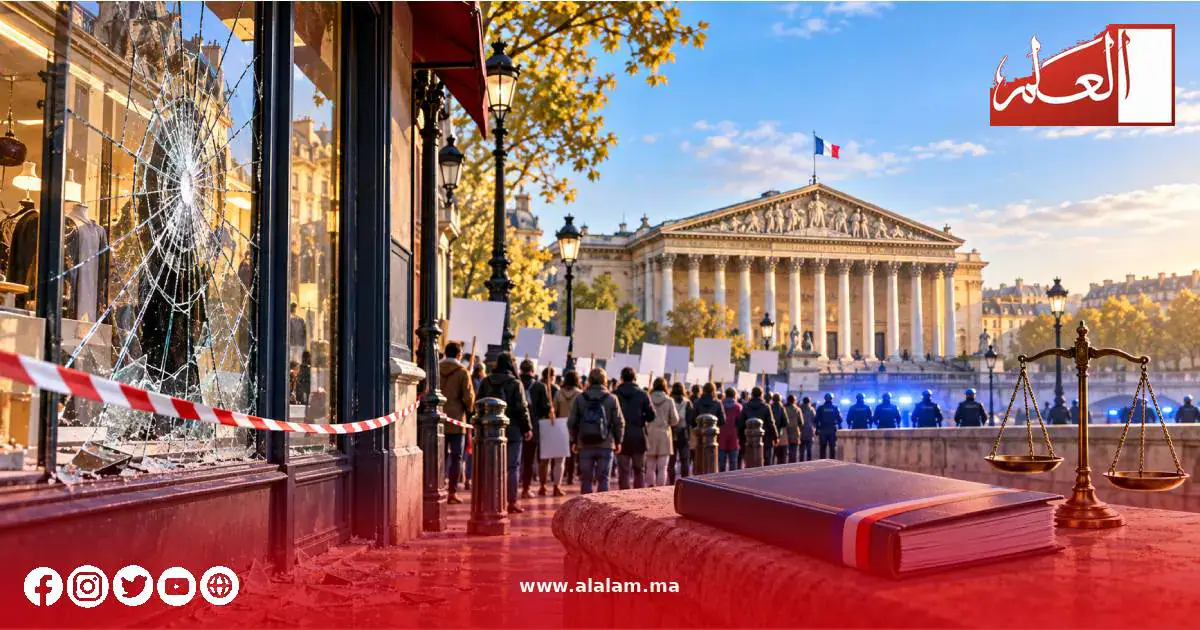
French President Emmanuel Macron convened a Defense Council meeting at the Élysée Palace on October 28, 2026, to assess security measures taken during recent protests and prepare for upcoming demonstrations. The meeting came as France continues to experience social unrest, with protests and strikes planned for October 31 and November 5. Macron emphasized the need to maintain public order, engage in social dialogue, and provide economic assistance to those affected.
The French government has introduced economic support measures for businesses damaged during the protests. French Trade Minister Serge Babin announced that affected stores could receive up to €10,000 in direct aid, provided they have fewer than 50 employees and an annual turnover of less than €10 million. The government also offers interest-free loans ranging from €5,000 to €50,000, with repayment terms of up to 36 months.
A new law, known as "casseurs-payeurs" or "rioters pay compensation," has been adopted by the French Senate with 229 votes in favor. The law aims to facilitate compensation for victims of violence and vandalism and hold perpetrators accountable for damages. However, critics argue that some provisions may infringe on civil liberties or unfairly broaden financial responsibility.
The law introduces a solidarity-based civil liability clause, which could hold individuals participating in groups associated with violence or vandalism liable for up to €10,000 in damages. The measure is intended to prevent the state and society from bearing the costs of damages caused by specific individuals. However, concerns have been raised about the scope of responsibility and potential impacts on peaceful protests.
The law also allows for the seizure of social benefits to cover civil compensation after meeting certain legal conditions. This provision has sparked debate, with supporters arguing that it ensures compensation is not waived due to the perpetrator's limited financial resources, while opponents warn of negative consequences for families and children relying on these benefits.
Additional measures included in the law permit administrative decisions to ban individuals from participating in specific protests and expand the use of drones, video surveillance, and algorithmic image analysis. While proponents argue that these measures help prevent violence and identify perpetrators, critics express concerns about privacy, freedom of expression, and the right to protest.
The law has been passed to the National Assembly for further discussion and potential amendments. While it has not yet become a finalized law, it has sparked concerns about potential constitutional issues, particularly regarding solidarity-based liability, seizure of social benefits, and administrative bans on protests.
Key points
- The French government is taking a multi-faceted approach to address social unrest, including economic support measures and legislative actions.
- The new law aims to hold perpetrators of violence and vandalism accountable for damages and provide compensation to victims.
- The law has sparked controversy and concerns about its potential impact on civil liberties and the right to protest.