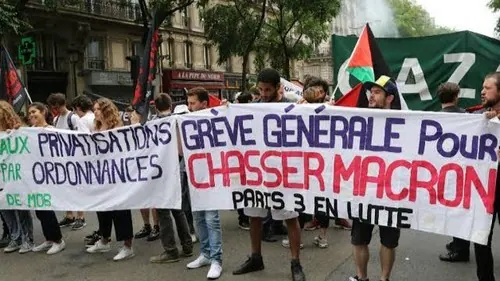
France is in the grip of a severe social crisis, with protests, strikes, and blockades erupting across the country. The unrest, which began in September, has been fueled by a range of issues, including economic hardship, concerns over police brutality, and a lack of investment in public services. The situation has become increasingly volatile, with thousands of people taking to the streets to express their discontent. The government has responded with force, leading to concerns over human rights abuses.
The crisis began in mid-September at a high school in Créteil, Val-de-Marne, where students protested over poor conditions, including overcrowding and a lack of teachers. The protests quickly spread to other schools and universities, with students demanding better resources and an end to government austerity measures. The movement has gained momentum, with thousands of students and young people joining the protests. The government has faced criticism for its heavy-handed response, including the use of tear gas and arrests.
The situation escalated on October 6, when hundreds of thousands of people took part in protests across 180 cities, including Paris, where nearly 100,000 people marched. The protests were marked by clashes between police and protesters, with many people injured. The government responded by deploying large numbers of police and gendarmerie, and by using force to disperse the protests. The use of force has been widely criticized, with human rights groups and the UN calling for an end to the violence.
The consequences of the unrest have been severe, with over 6,800 people arrested and 760 police and gendarmerie injured. Many schools and universities have been damaged or closed, and there have been reports of police brutality and abuse. The government has announced an investigation into the use of force by police, and has suspended the use of certain types of crowd control measures. However, the situation remains volatile, and there are concerns that the unrest could continue for some time.
The crisis has also had a significant impact on the country's infrastructure, with many roads and highways blocked, and public services disrupted. The economic consequences of the unrest are also likely to be severe, with many businesses forced to close and thousands of workers unable to get to work. The government has faced criticism for its handling of the crisis, with many people questioning its commitment to social justice and human rights.
The French president, Emmanuel Macron, has faced intense criticism for his handling of the crisis, with many people questioning his leadership and his commitment to social justice. Macron's approval ratings have plummeted, and there have been reports of divisions within the government over how to respond to the crisis. The situation is likely to continue to pose a significant challenge to the government, and to Macron's leadership.
The unrest has also raised concerns about the impact on France's international reputation, with many countries watching the situation closely. The UN and human rights groups have called for an end to the violence and for the government to respect human rights. The situation is likely to continue to be a major challenge for the French government, and for Macron's leadership, in the coming weeks and months.
Key points
- The French government has suspended the use of certain types of crowd control measures, including grenades assourdissantes, amid concerns over police brutality.
- The crisis has had a significant impact on France's infrastructure, with many roads and highways blocked, and public services disrupted.
- The situation has raised concerns about the impact on France's international reputation, with many countries watching the situation closely.