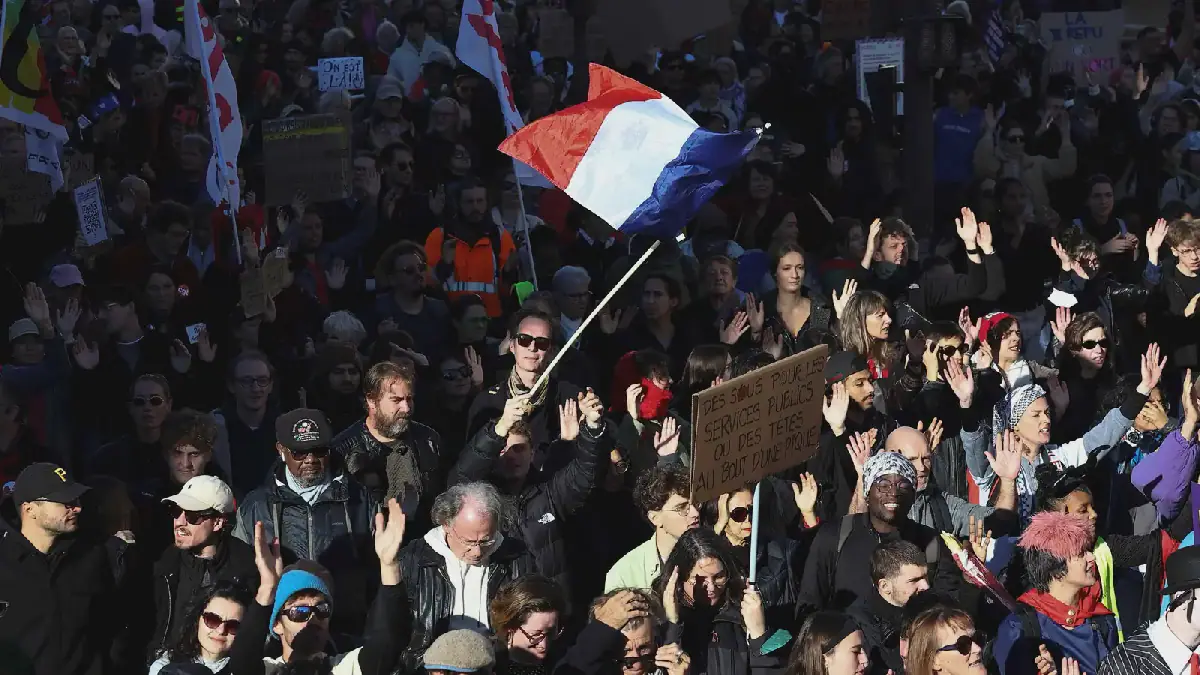
France is set to experience a new wave of protests on Saturday, November 14, with around 50 marches planned across the country. According to French Interior Minister Gérald Darmanin, 70,000 police and gendarmes will be deployed to maintain order. This number is the same as the one deployed during previous weeks to monitor protests and secure public spaces. The protests are expected to take place in various cities, including Paris, where between 30,000 and 60,000 people are expected to participate.
In Paris, the main protest against the rising cost of living is set to start at noon in the Republic Square, heading towards the Nation Square and then the Bastille Square. The route has been planned to allow families with children to leave the protest early and avoid any potential clashes with security forces. The protests come amid multiple social and human rights demands, including opposition to a proposed law on the use of force by law enforcement. Human rights organizations argue that the law could give police a "license to kill".
The protests in Paris and other cities, including Bordeaux, Toulouse, and Rennes, will focus on various issues such as children's rights, labor demands, and climate change. Local authorities have banned some protests from entering city centers, and separate demonstrations are planned in Marseille and Lyon. The protests are not limited to the weekend, with the French Democratic Confederation of Labor announcing its participation in a strike on Tuesday, November 17, in response to the government's delay in discussing public sector workers' pay.
The French government has faced criticism for postponing discussions on public sector workers' pay until December 11. The move has been seen as a setback for the government, which had managed to secure an understanding with some unions during a social conference last Monday. The conference resulted in an agreement to increase the minimum wage, but the postponement of further discussions has reignited tensions between the government and labor unions.
The protests are also driven by concerns over a proposed law that would allow law enforcement to use force in certain situations. Human rights organizations argue that the law would undermine accountability and transparency in policing. The government has defended the law as necessary to maintain public order, but critics argue that it would give police excessive powers.
The deployment of 70,000 police and gendarmes is a significant show of force, reflecting the government's concerns about the potential for violence and disruption during the protests. The authorities have also taken measures to prevent clashes between protesters and security forces, including the creation of a special unit to handle crowd control.
The protests in France are a reflection of growing concerns over the country's economic and social situation. The rising cost of living, coupled with concerns over police accountability and labor rights, has fueled public discontent and sparked widespread protests. The government's response to these concerns will be closely watched, as it seeks to balance the need to maintain public order with the need to address the underlying issues driving the protests.
Key points
- The protests are driven by multiple social and human rights demands, including opposition to a proposed law on the use of force by law enforcement.