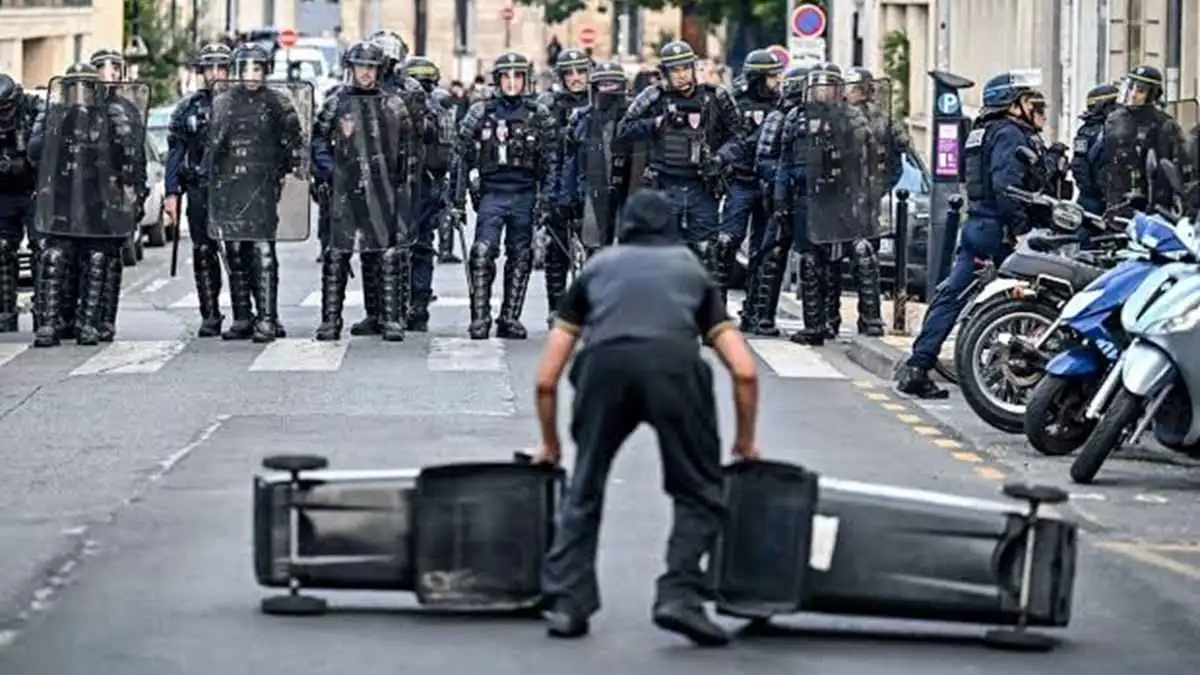
France is set to experience a national day of student protests on Tuesday, October 6, as various groups and unions call for increased investment in the education sector and express solidarity with students. The protests come after a week of demonstrations that saw hundreds of schools closed, at least 190 students injured, and over 5,000 people arrested. The unrest began in Paris and has since spread across the country.
The protests are primarily driven by concerns over overcrowding in classrooms, poor condition of school buildings, and a shortage of teachers. Students and unions have been pressing the government for reforms and increased funding to address these issues. The protests have been marked by clashes between students and police, with reports of injuries and arrests. One student was seriously injured in the hand during a confrontation, while another suffered a head injury from a tear gas canister.
In response to the protests, French Prime Minister has announced measures aimed at addressing some of the students' demands. However, the Union of Lycée Students (USL), one of the main groups organizing the protests, has stated that the government has not provided "anything concrete" to address the students' concerns. The USL has called for citizens to join the protests, describing the situation as a "political impasse" and accusing the government of "unprecedented repression" of the movement.
Other organizations, including the SNES-FSU teachers' union, have also expressed support for the student protests. The union has encouraged its members to participate in the demonstrations. Jean-Luc Mélenchon, leader of the far-left La France Insoumise party, has described the protests as the "strongest student movement in secondary and higher education" since 1968, when France experienced widespread unrest and strikes involving millions of workers.
The protests began in September in Paris and have since spread to other parts of the country. Students are demanding action on a range of issues, including overcrowding, poor infrastructure, and teacher shortages. The government has faced criticism for its handling of the protests, with accusations of excessive force and repression. The situation remains tense, with many students and teachers vowing to continue their protests until their demands are met.
The national day of protests is expected to see widespread disruptions, with many schools and universities likely to be affected. The protests are also likely to draw attention to the broader issues facing the French education system, including funding, infrastructure, and teacher shortages. The government has faced pressure to address these issues, but it remains to be seen whether the protests will lead to significant reforms.
As the protests continue, there are concerns about the impact on the education sector and the potential for further disruptions. However, students and unions remain committed to their demands, and it appears that the protests will continue until some progress is made. The situation will be closely watched by educators, policymakers, and observers, as it has implications for the future of education in France.
Key points
- The protests are driven by concerns over education funding, overcrowding, and teacher shortages.
- The government has faced criticism for its handling of the protests, with accusations of excessive force and repression.
- The protests have been marked by clashes between students and police, with reports of injuries and arrests.