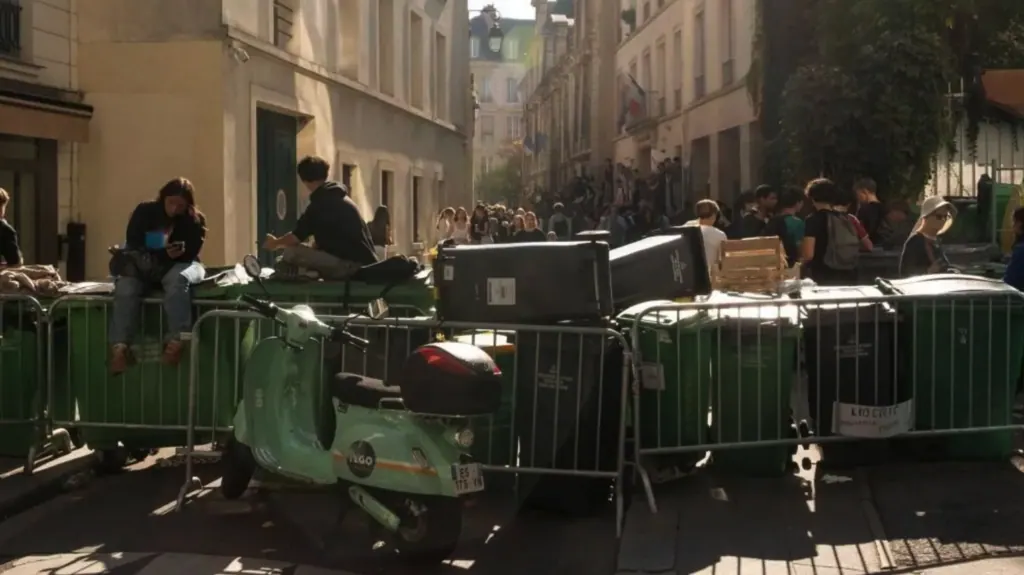
France is bracing for significant protests on Tuesday as students and supporters demand more investment in education. The protests, which began in September in Paris and have spread across the country, are driven by concerns over overcrowded classrooms, run-down buildings, and a lack of teachers. Students have been blockading hundreds of schools, leading to clashes with police and resulting in numerous injuries and arrests. The protests have been marked by violent confrontations, including the use of tear gas and the reported injury of a 14-year-old boy who suffered a double jaw fracture.
The protests have gained momentum, with the Union Syndicale Lycéenne (USL), a major organiser of the protests, calling for a nationwide day of action. The USL has accused the government of offering "nothing concrete" to address the students' demands, despite Prime Minister Sébastien Lecornu's announcement of measures to address the difficulties faced by secondary school students and education staff. The measures aim to bring about "visible changes" in schools, but the USL and other organisations have expressed scepticism and urged continued action.
The protests have been marked by serious injuries, including the reported blowing off of a 15-year-old boy's hand during a confrontation near a school in the northern city of Lens. Another student, Eden, 14, was badly hurt in Saint-Ouen-l'Aumône after reportedly being struck on the head by a tear gas grenade. Eden's mother has spoken out, describing the incident as "shameful", "appalling", and "horrific". The incident has highlighted concerns about the use of force by police and the impact on students.
The government has announced that 24 schools have been "burned and ransacked" since the start of the protests, and Education Minister Édouard Geffray has condemned the violence. However, the government has also stated that it will not make concessions to violence and has expressed support for students and staff who have been assaulted, as well as police officers and gendarmes who have been injured. The situation remains tense, with many students and supporters vowing to continue their protests.
The protests have drawn support from various organisations, including the teachers' union SNES-FSU, which has urged its members to join Tuesday's protest. The radical-left La France Insoumise (LFI) party leader Jean-Luc Mélenchon has described the protests as the "most powerful high school and university student youth movement" since 1968. The movement has been marked by widespread participation, with students from both high schools and universities joining the protests.
According to the authorities, 5,060 people have been arrested since the start of the movement, with 87% being minors and 13% being adults. The protests have not only seen schools blockaded but also rubbish bins set on fire, leading to concerns about public safety. The government has vowed to maintain order while also addressing the students' concerns.
As the protests continue, the government faces pressure to find a solution to the crisis. The students' demands for more investment in education remain unaddressed, and the situation remains volatile. The outcome of Tuesday's protests and the government's response will be closely watched, as the country seeks to find a way to resolve the crisis and restore calm to its schools.
Key points
- Over 5,000 people have been arrested since the start of the protests in France.
- A 14-year-old boy suffered a double jaw fracture after being struck by a tear gas grenade.
- The protests have drawn support from various organisations, including teachers' unions and left-wing parties.